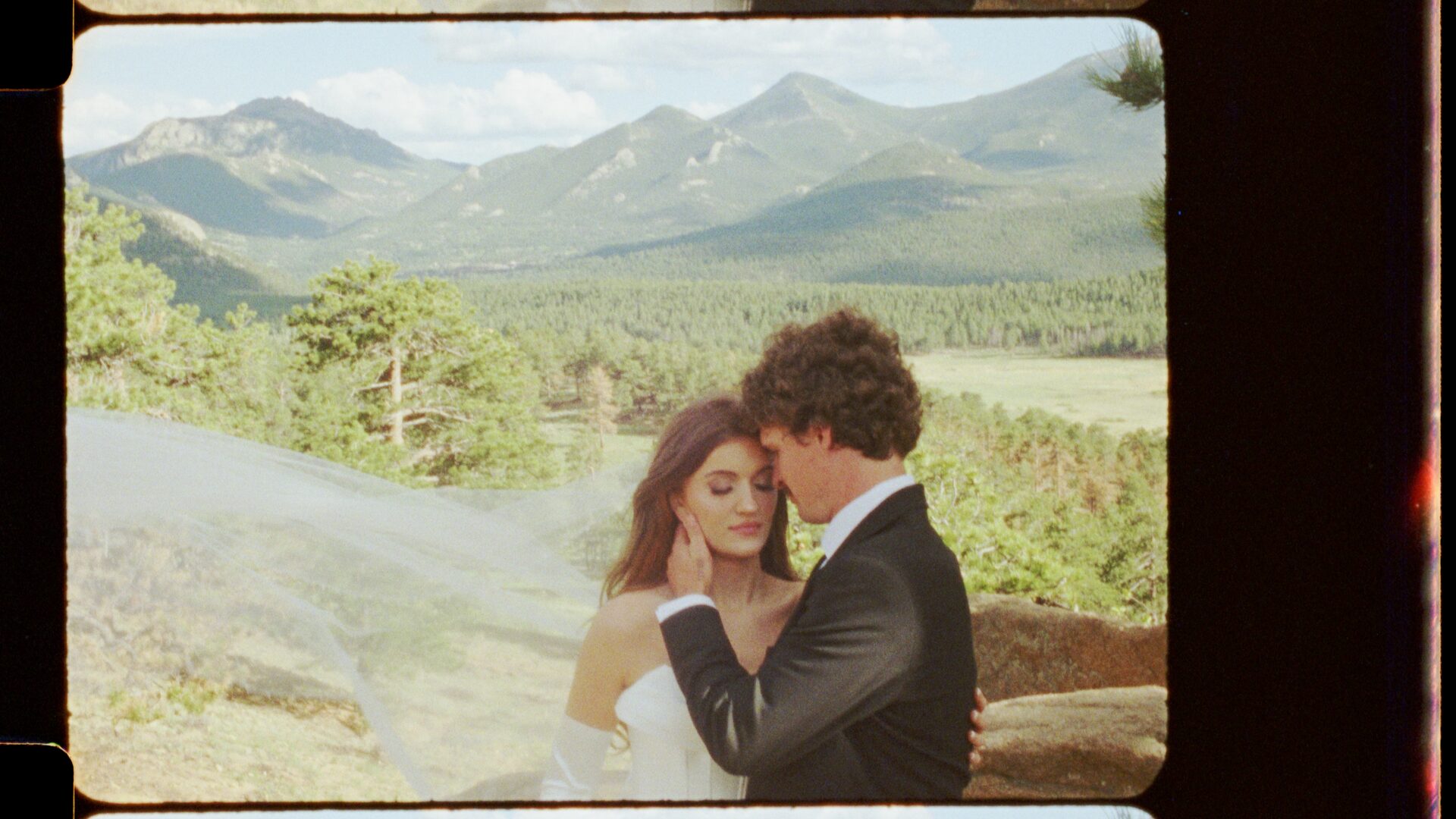
What 16mm Wedding Videography Actually Is
16mm wedding videography is wedding film captured on 16mm motion picture film, the same gauge that ran through cameras for classic cinema, music videos, and documentary work for the better part of a century. It is genuine film, light passing through a lens and exposing a frame of celluloid, then developed and scanned at a lab. There is no digital sensor in the path and no preset doing an impression of film after the fact.
The number refers to the width of the film. A 16mm frame is roughly three times the area of a Super 8 frame, and that extra real estate is where everything good comes from. More space for light means finer grain, more detail, and a wider range between the deepest shadow and the brightest highlight. It is the difference between a format built for home movies and a format built for the big screen.
We film ours on a Bolex, paired with high end prime lenses, which is part of why the frames carry the character they do. If you want the deeper technical breakdown of frame size and glass, we wrote a full 16mm vs Super 8mm comparison that lays the two formats side by side.
Why 16mm Looks the Way It Does
Three things surprised me most when these rolls came back, and all three are reasons couples fall for it.
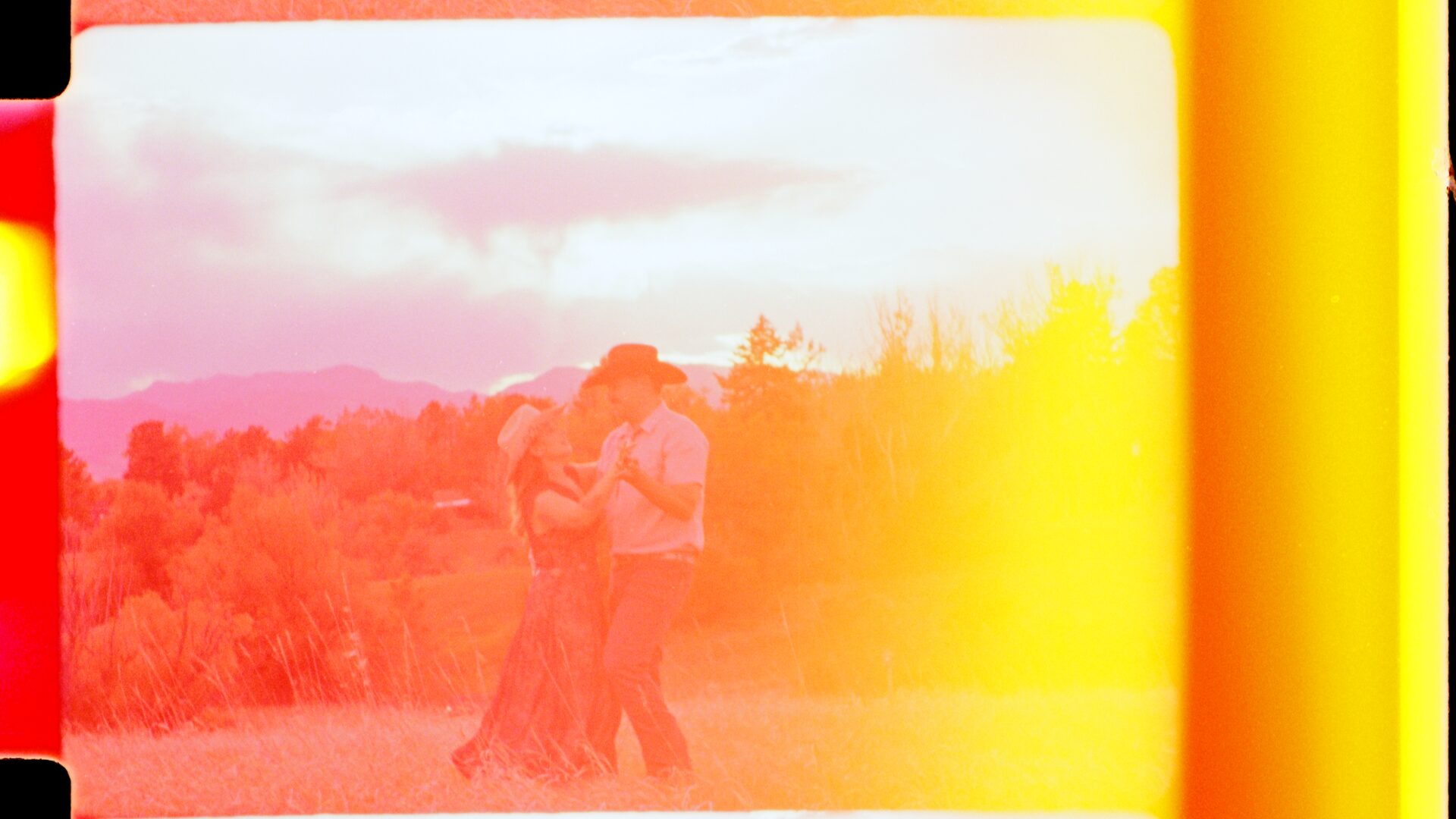
The light leaks have movement
I keep coming back to this. Because 16mm loads on open spools rather than a sealed cartridge, light behaves differently when it sneaks in. Instead of the quick, hard flash you get on Super 8, the leak builds, lingers, and then drifts off the frame. It feels less like an accident and more like the film breathing. You cannot fake that in a grade, and you cannot get it from a cartridge.
The exposure latitude is enormous
This is the technical one that matters on a wedding day, where you cannot stop the moment to fix your light. The film holds onto detail in the shadows and resists blowing out the highlights in a way that genuinely surprised me. Even on the rolls where I was not exposing perfectly, the image had room to recover. That forgiveness is exactly what you want when the sun is doing whatever it wants behind a mountain.
Even at 18 frames per second, the motion is smooth
We filmed these two rolls at 18 frames per second on purpose, to match the cadence of our Super 8 work. I expected to need 24 frames for it to feel right. It did not. The motion came back noticeably smoother than Super 8, which tends to carry a little jitter from the way cartridge film travels through the camera. Here, the film runs cleaner, and the result is footage that glides.
The industry will tell you that you can slap a preset on digital and get the 16mm look. I can pick that out almost instantly. And I think, somewhere underneath, couples can pick it out too.
Brandon Krage, Motus Weddings"But Isn't That Just 8mm?"
This is the question I hear most, and it is a fair one. Super 8 and 16mm are cousins. Both are real motion picture film, both give you grain and warmth, and both are a world away from digital. The honest difference is scale and polish.
| Super 8 | 16mm | |
|---|---|---|
| Frame size | Smaller, more grain | ~3x larger, finer grain |
| Feel | Loose, nostalgic, home movie | Cinema, polished, timeless |
| Motion | A little jitter | Smooth, even at 18 fps |
| Exposure latitude | Narrower | Wide, forgiving |
| Best when you want | A memory | A film about that memory |
Neither one is better in the abstract. They are different tools. But when a couple tells me they want the "8mm look" and then I show it next to Super 8, the larger format usually answers the question on its own. That is the whole reason this page exists.
Why Most Wedding Videographers Don't Shoot 16mm
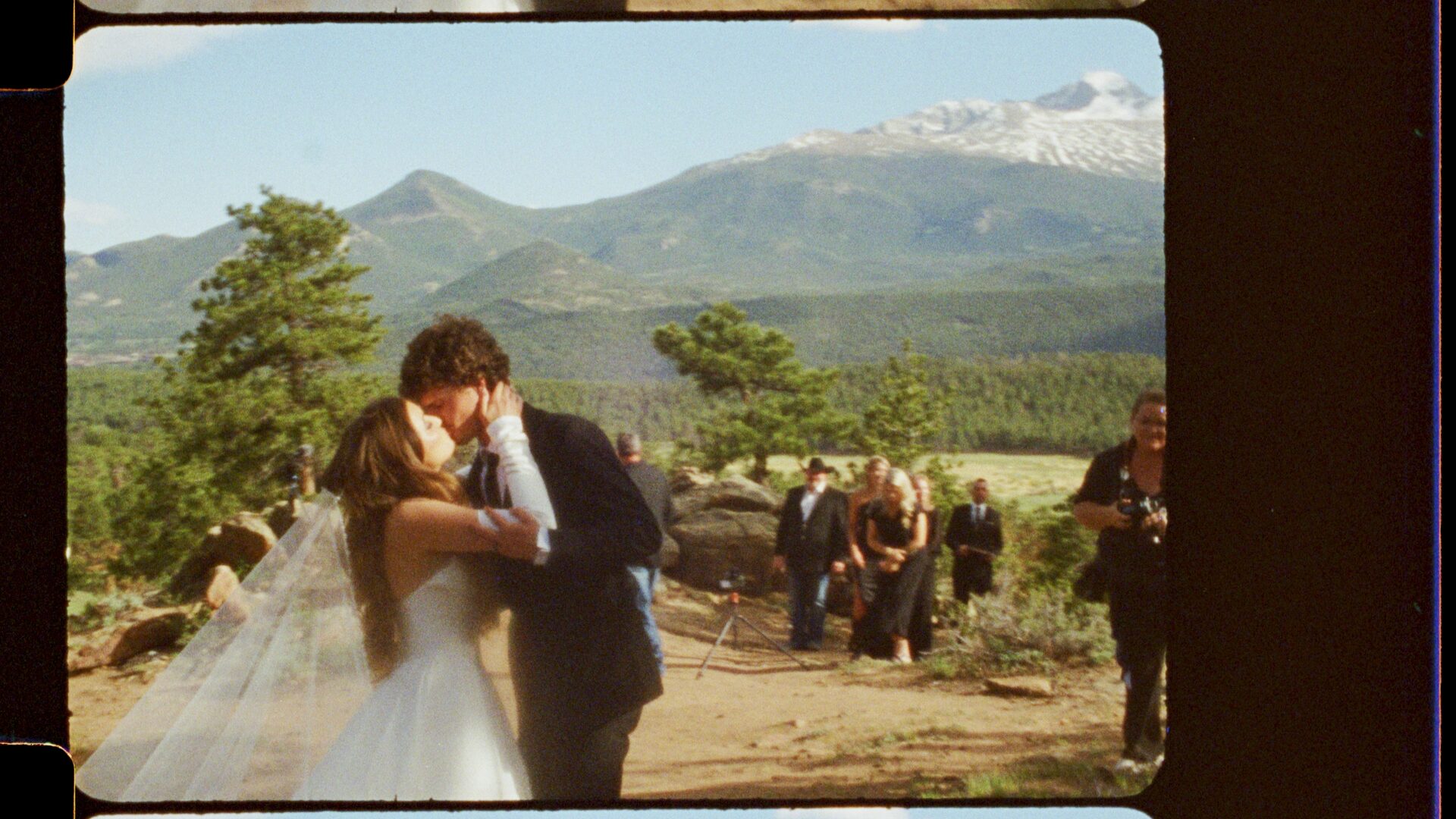
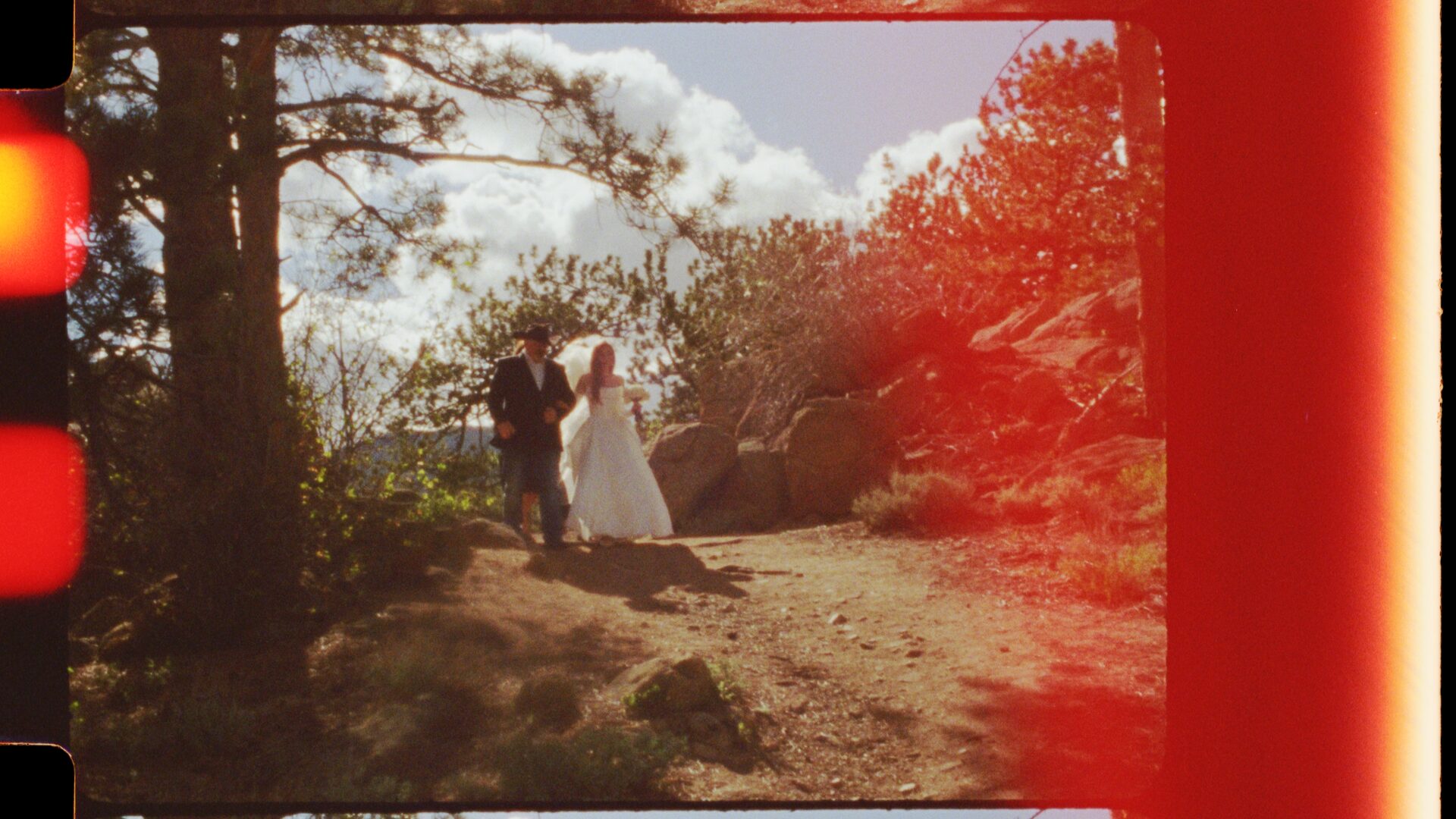
Here is my honest take. I think a lot of filmmakers avoid 16mm because it is harder and it takes more skill, and the image quality is so high that there is nowhere to hide. A Super 8 camera is close to automatic. A 16mm camera asks more of you.
Our learning curve was real, even with years of experience on other film formats. The first engagement rolls taught me the camera's quirks. One of the biggest is the viewfinder. To pull focus you drop the lens to a wide aperture so you can actually see, then you have to bring it back to your shooting aperture before you roll, because you film through a separate viewfinder, not through the lens. A couple of times during a ceremony I started rolling still set to the wrong aperture. The remarkable part is how recoverable 16mm is. It just meant more careful color work later, and the footage held up.
The other lesson was film stock. I started on 50D, which is less sensitive to light, and in lower light I was already stopped all the way down and still underexposing a little. Metering taught me what I needed, so for the second roll I moved to the more sensitive 250D and got a real handle on exposure. My takeaway, which goes against the instinct to protect highlights at all costs, is to meter for skin tones and trust the film. Even when I exposed fuller, I was nowhere near blowing the highlights. 16mm simply has that much room.
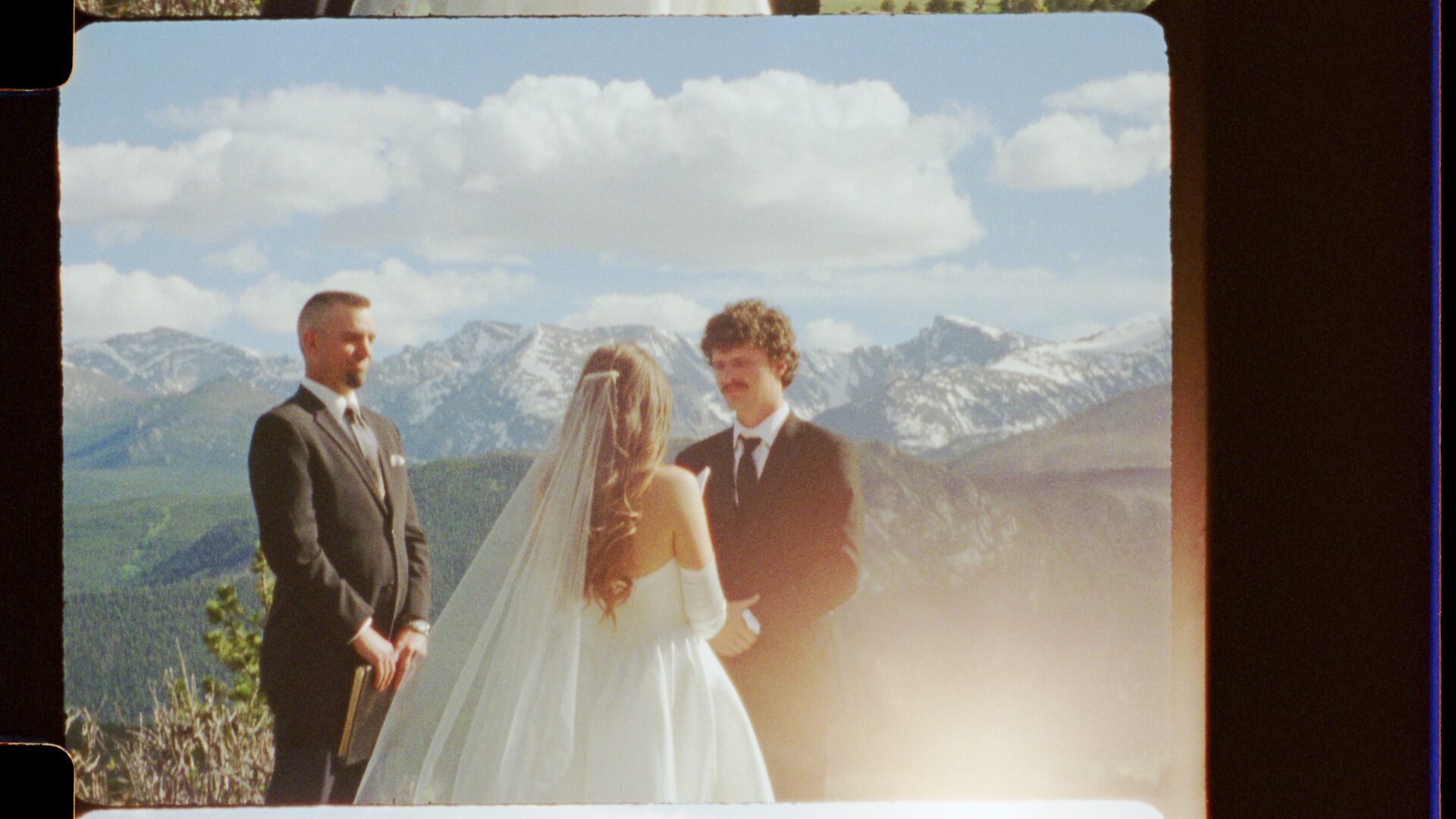
People are afraid of 16mm because it is harder and it takes more skill. But the image is outstanding, and the warmth and the way it handles highlights are more dreamy, more romantic, than anything digital gives you. That is the whole trade. You only get there by knowing the camera, and that is exactly why it is worth hiring someone who already does.
What Your 16mm Coverage Looks Like with Motus
We are an adventure wedding photography and film studio based in Colorado, and we have been documenting couples on both digital and real film for years. 16mm is the newest format in our kit and the one we are most excited about right now. Here is how it fits into a wedding day.
It is a layer, not your whole video
It does not replace your digital film. Each roll holds only a few minutes, so the format rewards intention. We point it at the moments that carry the most weight, the first look, the vows, the light at the end of the day, while your digital coverage carries the full timeline from start to finish. In the final edit, the film and digital sit together in one story.
It pairs naturally with Super 8
Many couples love a blend of Super 8 motion picture film and 16mm in the same film, the loose nostalgia of one against the cinema polish of the other. We are happy to talk through which formats serve your day, and we will always be straight with you about it.
It is a choice you make, not a line item we hide
Film stock, processing, and scanning cost more per minute than Super 8 or digital. So we never quietly fold 16mm into a package. It is a premium addition you choose intentionally, and we will walk you through exactly what it adds before you commit. If you want to see where it fits, our collections and pricing are the place to start, and you can browse recent work in our portfolio.
Most of our 16mm so far has come from adventure sessions and mountain weddings, including Emma and Ryan's Rocky Mountain National Park elopement. If that is the kind of day you are planning, this format was practically made for it.
[BRANDON: embed your scanned 16mm reel here once ready. Use a youtube-nocookie.com iframe with a title attribute, then add a matching VideoObject schema block in the head: name, description, thumbnailUrl, uploadDate, embedUrl, duration, publisher.]
[BRANDON: additional 16mm frames and the second Rocky Mountain engagement session slot in here. Keep filenames descriptive and hyphenated, add explicit width and height, and front loaded alt text.]
Your Questions About 16mm Wedding Videography, Answered
What is 16mm wedding videography?
16mm wedding videography is wedding film shot on 16mm motion picture film, the same format used for decades in cinema and documentary work. A 16mm frame is several times larger than a Super 8 frame, so the footage holds more detail, finer grain, and a wider exposure range. It is real film running through a camera on the day, not a digital file with a filter applied.
Is 16mm better than 8mm or Super 8 for a wedding?
Better is the wrong word. They are different. Super 8 has a smaller frame and a looser, more nostalgic home movie feel. 16mm has a much larger frame, finer grain, smoother motion, and far more exposure latitude, so it reads as cinema rather than memory. Most couples who say 8mm are picturing the polish that 16mm actually delivers.
Does 16mm wedding film have sound?
The 16mm film we shoot is silent. The image is the point. We pair your film with audio captured separately on the day, your vows, your music, the moments that carry sound, and edit it together so the finished film feels whole. The grain and motion stay pure film while the sound lives alongside it.
Does 16mm replace my digital wedding video?
No. 16mm is a texture layer, not a full replacement for digital coverage. Your digital film captures the full day from end to end. The 16mm runs alongside it for the moments that deserve real film. Most couples love how the two formats sit together in one finished story.
How much does 16mm wedding videography cost?
16mm film stock, processing, and scanning all cost more per minute than Super 8 or digital, so 16mm is a premium addition you choose intentionally rather than something quietly bundled in. Reach out with your date and vision and we will walk you through exactly what it adds and whether it is the right fit for your day.
Can you film a whole wedding on 16mm?
We film selected moments on 16mm rather than the entire day. Each roll holds a few minutes of footage, so 16mm rewards intention. We point it at the moments that matter most, the first look, the vows, the light at the end of the day, while digital carries the full timeline.
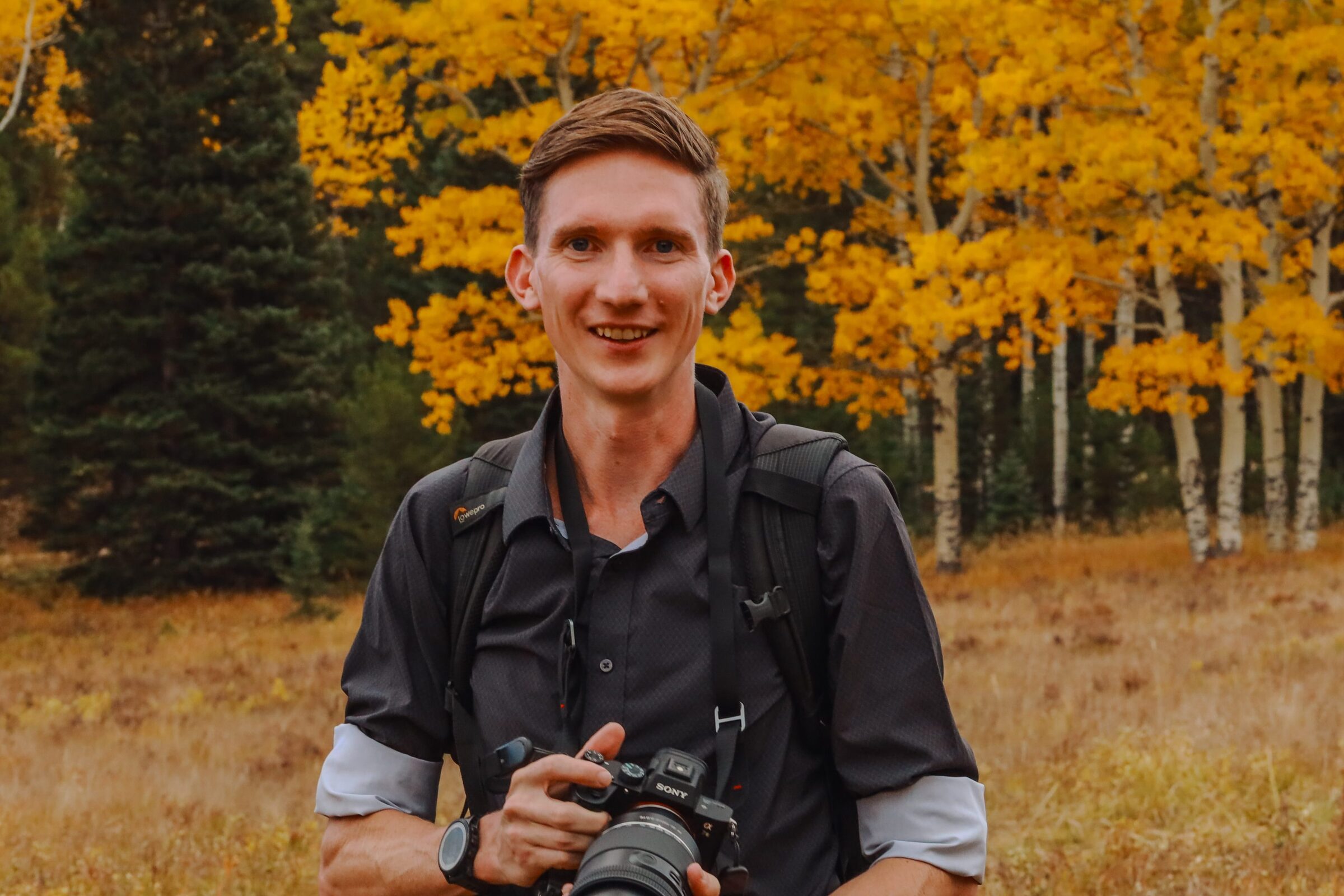
Brandon is the filmmaker behind Motus Weddings, an adventure wedding photography and film studio based in Colorado and traveling worldwide. He has been documenting couples on digital and real film since 2020, across Super 8, 35mm, medium format, and now 16mm cinema film. He shoots 16mm on a Bolex with prime glass and still archives every original reel he has ever filmed.