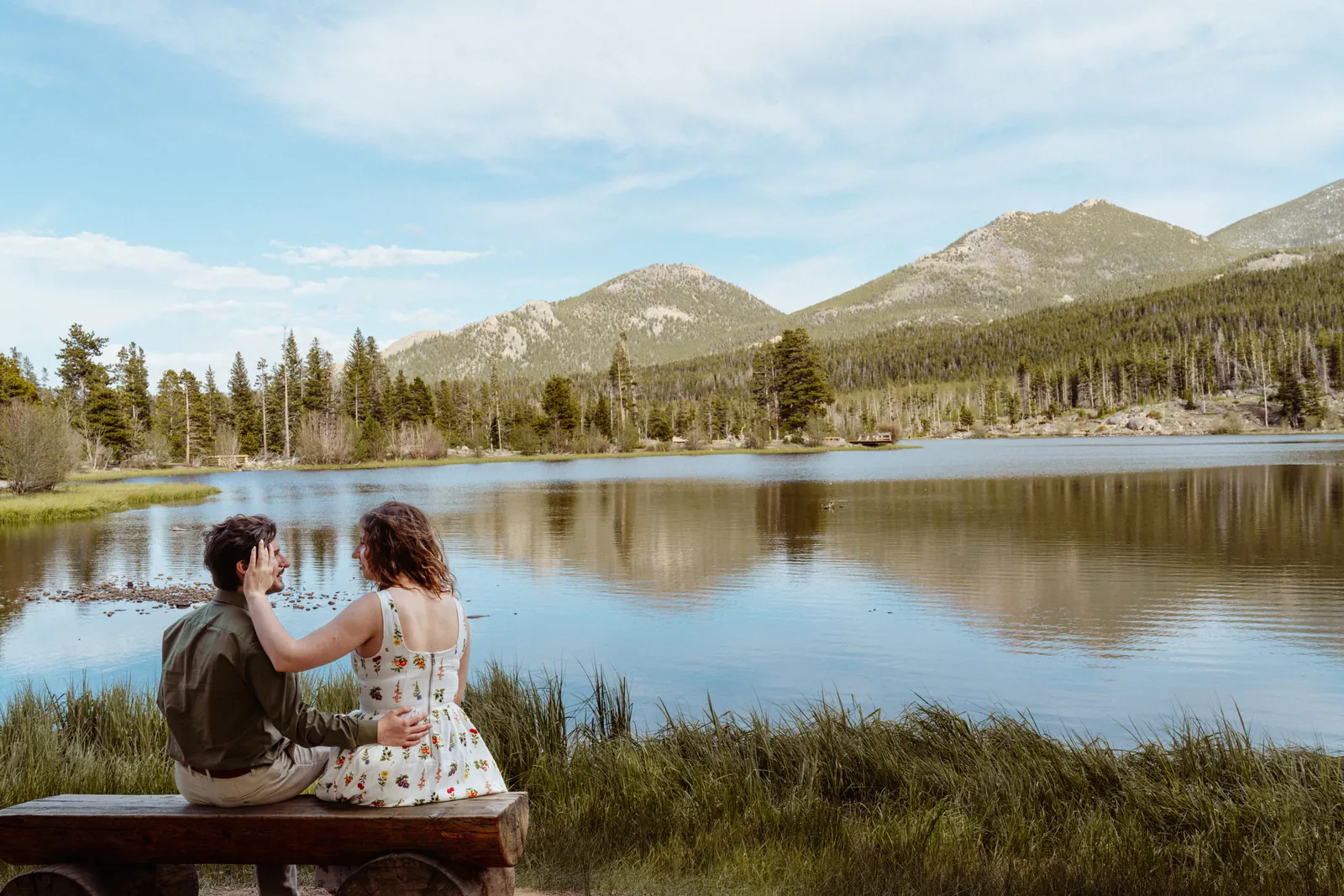
The honest answer to what a Colorado elopement cost comes to is a range, not a number, and any guide that hands you one figure is guessing on your behalf. The legal floor is about $30. That is the marriage license, and in Colorado you can legally marry yourselves with nothing else. Everything above that floor is a series of choices you make, and each one has an honest range attached to it. This guide walks every line item, tells you what moves the total most, and shows you three sample budgets so you can see where your own day is likely to land.
Most cost guides stop at "somewhere between a few thousand and fifteen thousand dollars" and leave you to figure out why. We would rather show the math. By the end you should be able to build your own estimate and know which trade-offs are worth making.
The Legal Floor: About $30
Here is the number nobody can inflate. To be legally married in Colorado, the only mandatory cost is the marriage license, which runs about $30 across county clerk and recorder offices. That is the entire legal requirement. No venue, no officiant, no witnesses.
Colorado is one of the few states with true self-solemnization, meaning the two of you sign your own license and the marriage is fully valid. There is no officiant fee because you do not need an officiant. There is no waiting period, no residency requirement, and no blood test. Both of you appear together at any county clerk with photo ID, pay the fee, and the license is valid the moment it is issued. For context, the national average marriage license fee sits closer to $60 to $80, so Colorado is on the low end.
You will want a certified copy or two afterward for name changes and paperwork, and some counties charge a few dollars each for extras. Budget a little cushion, but the honest floor stands: about $30, and you are married.
The step-by-step license process, the 35-day validity window, and how self-solemnization actually works on the page are covered in our Colorado marriage license guide for eloping couples.
Location and Permit: $0 to $400
Where you stand to say your vows is often free, and sometimes it is not. The land itself has no rental fee the way a venue does, but the permit to hold a ceremony there can range from nothing to a few hundred dollars depending on who manages the land.
What the permit actually costs
The numbers we verified sit inside a predictable band. Rocky Mountain National Park charges a $300 special use permit for a wedding, plus the standard park entrance fee of about $30 per vehicle, and starting in 2026 a per-person fee applies to non-US-resident guests. National forest ceremony sites are set at the ranger district level, so two spots in the same forest can differ: the Maroon Bells Amphitheater in White River National Forest runs around $200, while some Dillon Ranger District permits start near $75. Colorado state parks generally land in the $75 to $250 zone, with places like Golden Gate Canyon around $160 to $210 and Lory State Park near $100 per day.
Some dispersed public land and many overlooks carry no ceremony permit at all for two people with no setup. That is where the $0 end of the range comes from. The trap is assuming "just the two of us" always means no permit. Inside a national park, even a party of two needs an approved permit. Sort this out early, because a denied or forgotten permit is the one budget line that can derail the whole day.
Which land types require a permit, what each costs, and how far ahead to apply are broken down by agency in our Colorado elopement permits guide.
Travel and Lodging: The Biggest Swing Factor
This is the line item that moves your total more than any other, and it is almost entirely within your control. Travel and lodging can be near zero if you already live on the Front Range and drive up for a sunrise, or it can be several thousand dollars if you are flying in, renting a vehicle, and staying a week in a mountain town in peak season.
How season changes the number
Across Colorado lodging, the same cabin or town rental can cost two to three times more in July, August, and fall color season than it does in the shoulder months. A weeknight in late April or early November is a different economy than a Saturday in September. If your dates are flexible, timing is the cheapest lever you have. Our guide to when to elope in Colorado lays out the month-by-month trade-offs between weather, crowds, and cost.
What to actually budget
For a Front Range couple staying local, travel and lodging might be a single night somewhere nice, or nothing at all. For a couple traveling in, plan on flights, a rental vehicle that can handle mountain roads, and two to four nights of lodging. Turning the elopement into a small trip is common and often where couples happily spend, because the days around the ceremony become the honeymoon.
Attire and Rings
Attire and rings are two lines that behave very differently, so it helps to separate them.
What you wear
Attire is genuinely open-ended. Some couples wear a dress and suit they already own or would buy for other occasions, which keeps this near zero as a dedicated elopement cost. Others choose something made for the day. Across Colorado couples, elopement attire ranges widely, from a couple hundred dollars for something simple to well into four figures for a designer gown. One practical note for the mountains: whatever you wear, plan for layers, real shoes for the hike in, and weather that can turn. The dramatic photo of a jacket over a gown at 11,000 feet is not a compromise, it is the point.
Rings
Rings are a cost you would carry into any wedding, elopement or not, so they are less an elopement expense than a life expense. The range is as wide as the jewelry market itself. What matters for budgeting is simply to name the number early so it does not surprise the total.
Florals
Florals are one of the easiest lines to scale up or down. A single well-made bouquet and a boutonniere from a Colorado florist typically runs in the low-to-mid hundreds. Skip it, forage nothing (picking wildflowers on public land is often prohibited, so do not plan on it), and this line is zero. Add an installation, an arch, or ceremony florals and it climbs quickly into four figures.
For a two-person elopement, most couples land at a bouquet and a boutonniere or nothing at all. Flowers photograph beautifully and wilt by nightfall, which is worth remembering when you weigh this against lines that last.
Hair and Makeup
Hair and makeup is optional, and plenty of couples do their own. If you hire a professional, expect a range across Colorado artists that reflects travel and timing. Elopements often start at sunrise in a mountain town, which can mean an early call time or a travel fee for the artist to come to your lodging, and both nudge the price up. Booking someone based near your location, rather than flying an artist in, is the usual way to keep this reasonable. If it matters to you to feel like the most yourself version of yourself in every frame, this is a small line that pays off in how you carry yourself all day.
Officiant: Optional in Colorado
This is the line most couples are surprised to cross out entirely. In Colorado you do not need an officiant, because the state allows you to solemnize your own marriage. You sign your own license and you are married. That means the officiant line can genuinely be $0.
If you want someone to lead a ceremony for the feeling of it, you have choices that do not cost much or anything: a friend or family member can lead an informal ceremony while you self-solemnize the paperwork, or you can hire a professional officiant, which typically runs a few hundred dollars. But none of that is required. The legal marriage happens with your two signatures. The details of who can solemnize and how it works on paper are in our marriage license and self-solemnization guide.
THE SHORT VERSION
Legal floor: about $30 for the license. Add a permit ($0 to $400), travel and lodging (your single biggest variable), attire and rings, florals, hair and makeup, an optional officiant, food, and documentation. A realistic Colorado elopement lands anywhere from the low four figures to the low five figures. What decides where you fall is mostly how far you travel, which season you pick, and how you choose to document the day.
Food and Celebration
How you eat and toast is entirely a matter of taste and can cost almost nothing or become a highlight. For two people, this might be a packed picnic and a bottle of something good carried up the trail, which is charming and nearly free. It might be a reservation at a standout restaurant in town that night, which is a dinner-for-two cost you can picture. Or, if a few guests come along, it might be a small private dinner or a chef at your rental, which moves into four figures.
The honest read is that food scales with guest count and formality, not with the ceremony itself. A two-person elopement almost never needs a catering budget. A small gathering of ten does start to.
Photo and Video: The Line That Outlasts the Day
Every other line item on this list ends when the day ends. The flowers wilt, the meal is eaten, the light goes down. Documentation is the one thing you carry forward. A decade from now, the photographs and the film are how you will remember standing where you stood, how the light fell, how it felt. That is the case for treating this line differently from the others.
How to think about the range
Across Colorado photographers and filmmakers, coverage ranges enormously based on hours, whether you want photo, video, or both, whether the coverage includes a hike or a full day of movement through the mountains, and whether analog film is part of it. A brief sunrise session with one person sits at one end. A full day with photo and film, moving from a dawn ceremony to a sunset toast, sits at the other. This is genuinely a range where you get what you plan for.
We are not going to put our own numbers in a cost guide, because the right coverage for your day depends on your day. What we will say plainly is that this is the line couples most often wish they had chosen deliberately rather than by default, and it is the one worth protecting when you trim elsewhere.
What full-day photo and film coverage looks like, and where it lands for different kinds of elopements, is laid out on our investment page. If you are still shaping the day itself, the elopements page shows the work.
Three Sample Budgets
Here is how the lines add up in practice. These are three honest profiles built from the ranges above, not quotes. Yours will move depending on season, distance, and what you choose to protect.
The minimal elopement: low four figures
This is a Front Range couple who drives up for a sunrise, self-solemnizes, and keeps it to the two of them. You are paying the $30 license, little or no permit if you choose a spot that does not require one, no travel to speak of, attire you largely already own, a simple bouquet or none, no hired officiant, a celebratory dinner in town, and a focused block of documentation. This is a real, complete, legal elopement that lands in the low four figures. What it buys is the day itself and something to remember it by, with nothing extra.
The middle elopement: mid four to low five figures
This is the most common shape we see. You travel a few hours or fly in, stay two to three nights in a mountain town in a good-but-not-peak window, get a permit for a location worth the drive, wear something chosen for the day, bring a bouquet and a boutonniere, book hair and makeup, have a lovely dinner, and choose a fuller block of photo and film coverage. This profile lands somewhere in the mid four figures to low five figures. What it buys is a location you traveled for, a couple of unhurried days around the ceremony, and documentation that covers more than a single hour.
The full experience: low five figures
This is a longer trip built around the day. You fly in, stay most of a week, choose a location with a permit, bring a small group of the people who matter most, plan attire and florals with intention, book hair and makeup, arrange a private dinner, and commission full-day photo and film, often including analog film. This profile sits in the low five figures. What it buys is essentially a small, personal wedding trip: multiple days, a handful of loved ones, and documentation across the whole of it.
What Moves Cost the Most
If you want to control your total, three levers do most of the work.
Travel distance. The gap between driving up for the morning and flying in for a week is larger than almost any other decision on this list. Everything else is measured in hundreds. Travel is measured in thousands.
Season. The same lodging, the same town, the same vendors can cost noticeably more in peak summer and fall color than in the shoulder seasons. If your dates flex, this is free money. Our when to elope guide shows which months trade cost for weather.
Documentation choices. Whether you want an hour or a full day, photo only or photo and film, digital only or analog too, this line has the widest deliberate range of any single choice you make. It is also the line most tied to what you keep.
Where Couples Regret Cutting
Trimming is smart. Trimming the wrong line is the regret we hear about most. Couples rarely wish they had spent more on flowers, which were beautiful and gone by dinner. They rarely wish they had bought more elaborate attire.
What they wish, when they wish anything, is that they had given the day more documentation. The couple who booked one hour and then had the most extraordinary light an hour later. The couple who chose photo only and later wanted the sound of their own vows on film. This is the line that cannot be redone, because the day cannot be redone. Cut the florals, pack a picnic, wear what you own. Protect the record of the day.
Elopement vs Wedding Cost, Honestly
Yes, an elopement almost always costs less than a traditional wedding, usually by a wide margin. There is no venue rental for a large space, no catering for a hundred plates, no rented tables and chairs and linens, no floral scale for a room. Those are the lines that make weddings expensive, and an elopement simply does not have them.
But the truer way to see it is not as a discount, it is as a reallocation. The money that would have gone to feeding a hundred guests can instead go toward a location worth traveling for, a longer trip, or documentation you will keep for the rest of your lives. Couples who elope well are not spending less on principle. They are spending on the parts of the day that are actually theirs, and skipping the parts that were mostly for the crowd. That framing tends to make the whole budget feel less like a sacrifice and more like a set of choices you are glad you made.
We are building a Colorado elopement cost calculator into the Motus planning companion, so you can move the levers in this guide yourself and see your own range in real time. It is on the way. For now, this guide plus our full elopement guide will get you a solid estimate.
Colorado Elopement Cost: Common Questions
How much does it cost to elope in Colorado?
The legal minimum is about $30 for the marriage license, because Colorado lets you marry yourselves with no officiant or witnesses. A realistic full elopement usually lands between the low four figures and the low five figures once you add a permit, travel, lodging, attire, florals, and photo and video. The biggest variables are how far you travel and how you document the day.
What is the cheapest way to elope in Colorado?
The lowest-cost path is a self-solemnized ceremony on the Front Range: pay about $30 for the license, choose a location that does not require a permit, drive up rather than fly, wear what you own, and skip florals and a hired officiant. You can be legally married for close to the cost of the license alone, then add only the pieces that matter to you.
Do you need a permit to elope in Colorado, and what does it cost?
It depends on the land. Many overlooks and dispersed public sites need no permit for two people, so the cost is zero. National parks require a permit even for a party of two, with Rocky Mountain National Park at $300 plus entrance. National forests and state parks vary by district, often $75 to $250. Always confirm with the specific land manager.
Is eloping cheaper than a wedding in Colorado?
Almost always, and usually by a wide margin. There is no large venue rental, no catering for a hundred guests, and no rented decor at scale. Most couples redirect part of that difference into a location worth traveling for, a longer trip, or documentation they keep forever. An elopement is better understood as a reallocation of budget than as a simple discount.
How much should I budget for elopement photography in Colorado?
Coverage ranges widely based on hours, whether you want photo, video, or both, and how much analog film you want running through it. A brief sunrise session sits at one end and a full day of photo and film at the other. Because it is the one line that outlasts the day, plan it deliberately. You can see what different levels of coverage look like on our investment page.
Does a Colorado marriage license really only cost $30?
Yes. The license runs about $30 at Colorado county clerk offices, with no waiting period and no residency requirement. Some counties charge a few dollars for extra certified copies you may want afterward. That fee is the entire legal cost of getting married in Colorado, since the state allows you to self-solemnize without paying an officiant.
About the Author
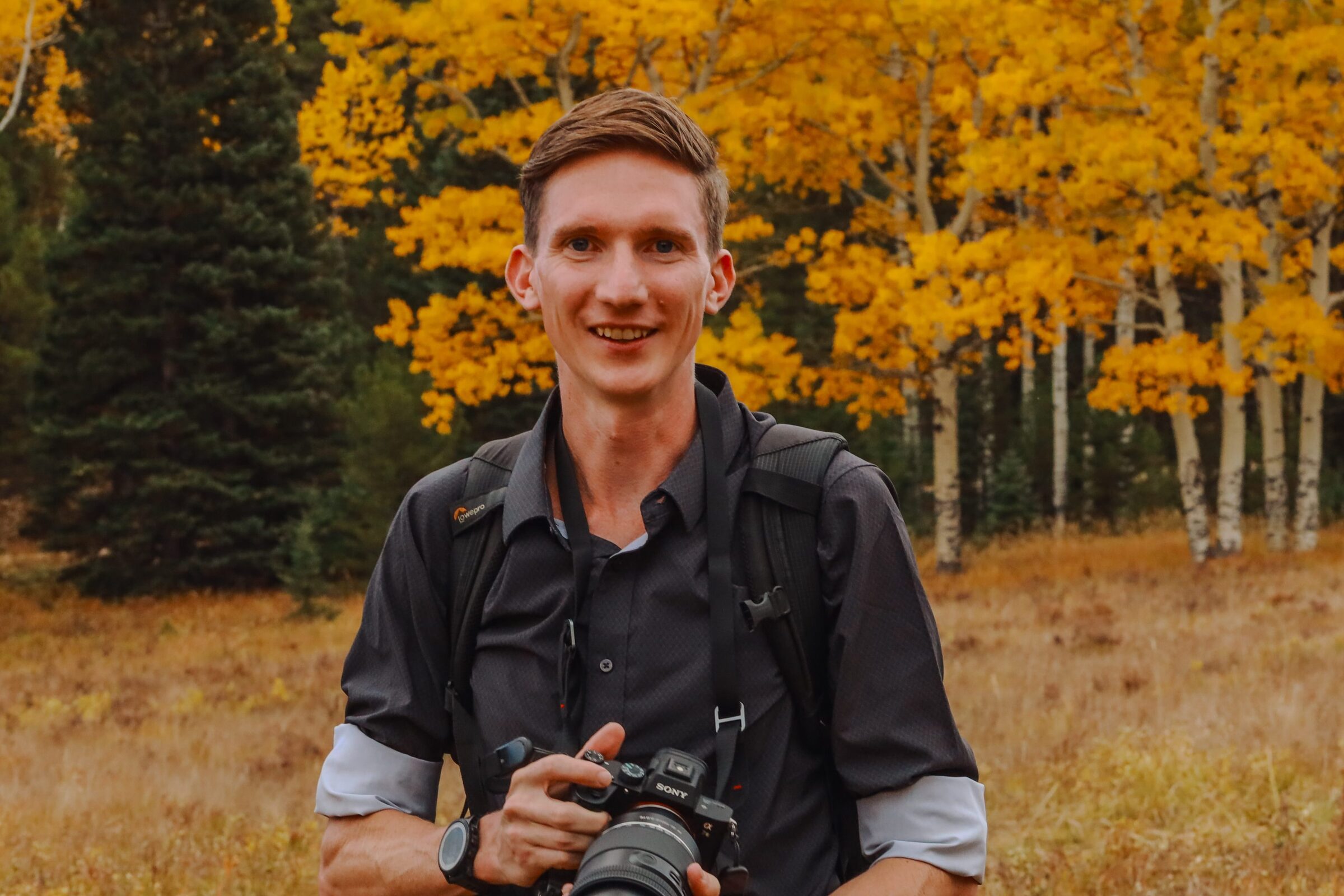 Brandon Krage is the filmmaker and owner of Motus Weddings, a husband-and-wife adventure wedding studio he runs with Aby from Colorado. He photographs and films weddings and elopements on digital, 35mm, Super 8mm, and 16mm cinema film, with Rocky Mountain National Park as home turf. More about Brandon and Aby.