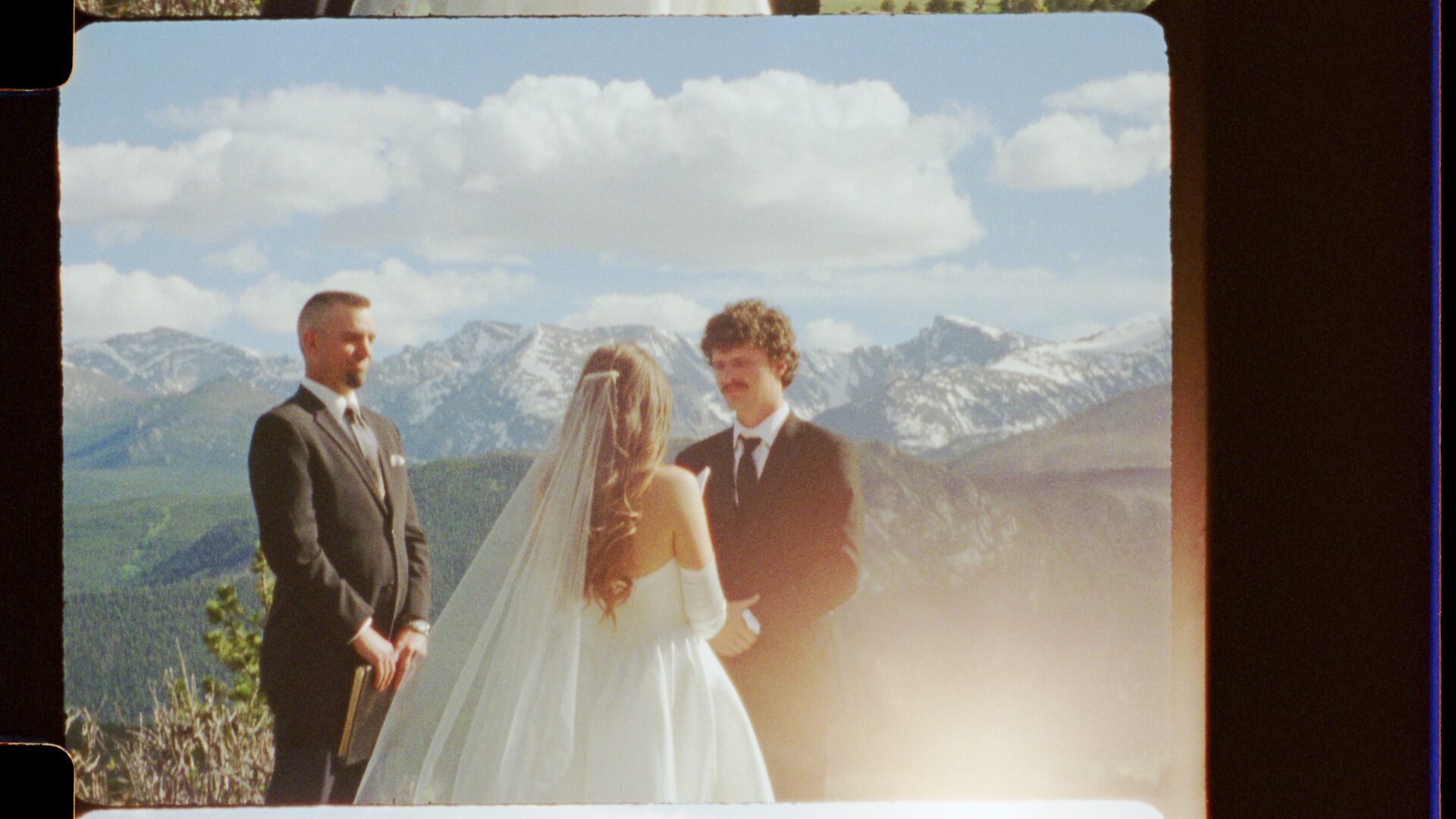
You could get married this afternoon in Colorado. Walk into any county clerk's office this morning, sign a piece of paper, drive into the mountains, and marry each other with nobody else present. No officiant. No witnesses. No waiting period. This Colorado elopement guide exists because that freedom is real, it is legal, and almost nobody explains how to actually use it well.
We are Brandon and Aby. We photograph and film elopements across Colorado for a living, on digital, 35mm, Super 8mm, and 16mm cinema film, and we have watched couples say vows on frozen lakes, in aspen groves, and above treeline at sunrise. This guide is everything we tell those couples, in one place: the self-solemnization law that makes Colorado unlike anywhere else, the marriage license walkthrough, where to go, what permits actually cost, what the whole thing realistically adds up to, and how to build a day that feels like yours instead of a performance.
It is long on purpose. Bookmark it, send it to your person, and when you are ready to talk about documenting the day, you know where to find us.
Why Colorado Is the Easiest Place in America to Elope
Every state lets you get married. Colorado is one of the only states that gets out of your way while you do it. Three legal facts stack together here in a way that exists almost nowhere else. There is no waiting period, so the license works the moment it is issued. There is no residency requirement, so couples from Texas, New York, or New Zealand are treated exactly like locals. And there is no officiant or witness requirement, because Colorado law lets the two of you solemnize your own marriage.
Put plainly: you can fly in on a Thursday, pick up a license Friday morning, and marry each other on a ridgeline Friday night with no one else within miles. The paperwork that proves it fits in a daypack.
Then there is the state itself. Fifty-eight peaks above 14,000 feet. Golden aspen in late September. Alpine lakes that hold ice into July, red rock canyons in the west, and high plains sunrises in the east. Couples plan destination weddings around scenery like this, and Colorado hands it to you for the cost of a trailhead parking spot. It is why we believe eloping here is not a smaller version of a wedding. It is a different thing entirely, and for a lot of couples it is the better thing.
One honest caveat before you fall in love with a photo of a mountain: the land itself has rules. Most of the places you have seen on Instagram are national park, national forest, or state park land, and each has its own permit system. None of it is hard, but it rewards couples who plan a few months out. We cover all of it below.
The Short Version
License from any Colorado county clerk, about $30, both of you in person, no waiting period, valid 35 days. Marry yourselves anywhere you are legally allowed to stand. Return the signed license within 63 days. That is the entire legal machine, and the rest of this guide is about doing it beautifully.
Self-Solemnization, Actually Explained
Self-solemnization is the heart of the Colorado elopement, and it is the part couples find hardest to believe. Under Colorado law (C.R.S. 14-2-109), a marriage may be solemnized by a judge, a retired judge, a court magistrate, recognized clergy, or by the parties to the marriage themselves. That last clause is the whole superpower. You two are legally allowed to marry yourselves.
What that means in practice
There is no script you are required to read, no phrase you legally have to say, and no one who needs to stand in front of you. The legal act is simple: after your ceremony, whatever shape it takes, you both sign the marriage license as the parties, and you check the box indicating the marriage was solemnized by the parties. Your ceremony can be an hour of handwritten vows at an alpine lake or thirty silent seconds holding hands at sunrise. Colorado does not grade it. It only records it.
Witnesses are not required either. The license has optional witness lines, which is why you will see Colorado couples having their dog leave an inked paw print there. It is decoration, not a legal requirement, and clerks have seen it a thousand times.
Non-residents, same rules
None of this is reserved for locals. There is no residency requirement anywhere in the process, which is exactly why Colorado has become the destination for couples across the country who want a legal marriage without a courthouse calendar or a stranger running their ceremony. You use the same form, the same fee, and the same freedom as someone born in Denver.
If you still want someone to lead it
Self-solemnization does not mean you have to be alone. Plenty of our couples bring a parent or best friend to read something, hold the rings, or lead the vows informally while the paperwork stays self-solemnized. You get the warmth of a human voice without the legal dependency on one. For the deeper legal walkthrough, including edge cases, our Colorado marriage license and self-solemnization guide goes further than any page on the internet we have found.
Your Marriage License, Step by Step
The license is the only mandatory piece of the entire elopement, so here is the full walkthrough, exactly as it works in 2026.
Step 1: Pick any county, not necessarily where you marry
A Colorado marriage license is valid statewide. You can pick it up from the Denver clerk the morning you land and use it three counties away in the San Juans two days later. Choose whichever clerk's office fits your travel route. Mountain county offices like Summit or San Miguel are used to elopement couples; Front Range offices like Denver and Boulder have the most appointment availability. Check the county clerk's page for hours, because mountain offices can keep short schedules.
Step 2: Both of you appear, together, in person
Both partners must appear together at the clerk and recorder's office. There is no mail-in or remote option, and one of you cannot send the other as a proxy. Bring valid government photo ID. You will fill out the application, confirm your details, and pay the fee, which is $30 in most counties. Some counties take walk-ins, others prefer appointments, so look before you go.
Step 3: Walk out with a license that already works
There is no waiting period. The license is valid the moment it is issued and stays valid for 35 days. That window is the quiet gift of the Colorado system: it means your ceremony does not have to happen the day you get the paperwork. Most of our couples grab the license a day or two before the ceremony, then stop thinking about logistics entirely.
Step 4: Sign it, then return it within 63 days
After the ceremony, you both sign, plus any optional witnesses, human or otherwise. The signed license must be returned to the same county that issued it within 63 days for recording. You can hand it back in person or mail it. Once recorded, you can order certified copies for name changes, insurance, and every institution that wants proof. Full details, county quirks, and what to do if plans change are in the license deep dive.
If you are weighing an elopement against a full wedding, our post on elopements versus weddings breaks down the honest differences, and our step-by-step Colorado elopement post is the quicker companion to this guide.
Where to Elope in Colorado
The honest answer is that Colorado has more worthy ceremony spots than any guide can hold, so instead of a listicle, here is how the regions actually differ, because choosing a region first makes every other decision easier.
The San Juans: Telluride, Ouray, and the wildest skyline
The southwest corner is the most dramatic mountain scenery in the state, jagged in a way the central Rockies are not, and it stays quieter because it is a six-hour drive from Denver. Waterfalls, high passes, and box canyons. If you want the feeling of being genuinely far away, this is it. Our Telluride elopement guide covers the area in depth, including the spots that do not show up on Instagram.
Aspen and the Elk Mountains: Maroon Bells and golden light
The most photographed mountains in North America earn it. Maroon Bells ceremonies are managed through a reservation and permit system that fills early, especially for fall color, so this is a region where planning ahead matters most. The reward is scenery that does not need a single decoration. Start with our Maroon Bells elopement guide for the current permit reality and quieter alternatives nearby.
Summit County and the I-70 corridor: access without compromise
Breckenridge, Dillon, Loveland Pass, and a dozen trailheads within two hours of Denver International. This is the region we recommend for couples flying in with a tight window, or bringing grandparents who cannot hike. Some of the best ceremony spots in Summit County are a five-minute walk from a parked car, and the altitude does the decorating.
The Front Range: Boulder, Golden, and sunrise over the plains
Closest to the airport, easiest logistics, and badly underrated. Lost Gulch Overlook, the flatirons at first light, Golden Gate Canyon in aspen season. If your elopement is a weekday sunrise before family brunch, the Front Range makes the whole thing simple.
Estes Park and Rocky Mountain National Park: the classic, with paperwork
RMNP is our home turf and still the most requested elopement location in Colorado. It is also a national park with a formal special use permit, designated ceremony sites, and timed entry in peak season, so it deserves its own homework. We wrote a full Rocky Mountain National Park elopement guide covering sites, seasons, and the permit process.
The quiet picks: Buena Vista, Crested Butte, and the passes
Cottonwood Pass above Buena Vista, the wildflower basins outside Crested Butte in July, Ouray's high roads in September. These are the places we send couples who tell us the most important guest at their ceremony is silence. Many involve no permit at all for a two-person ceremony with no setup, though you should always verify with the local ranger district first.
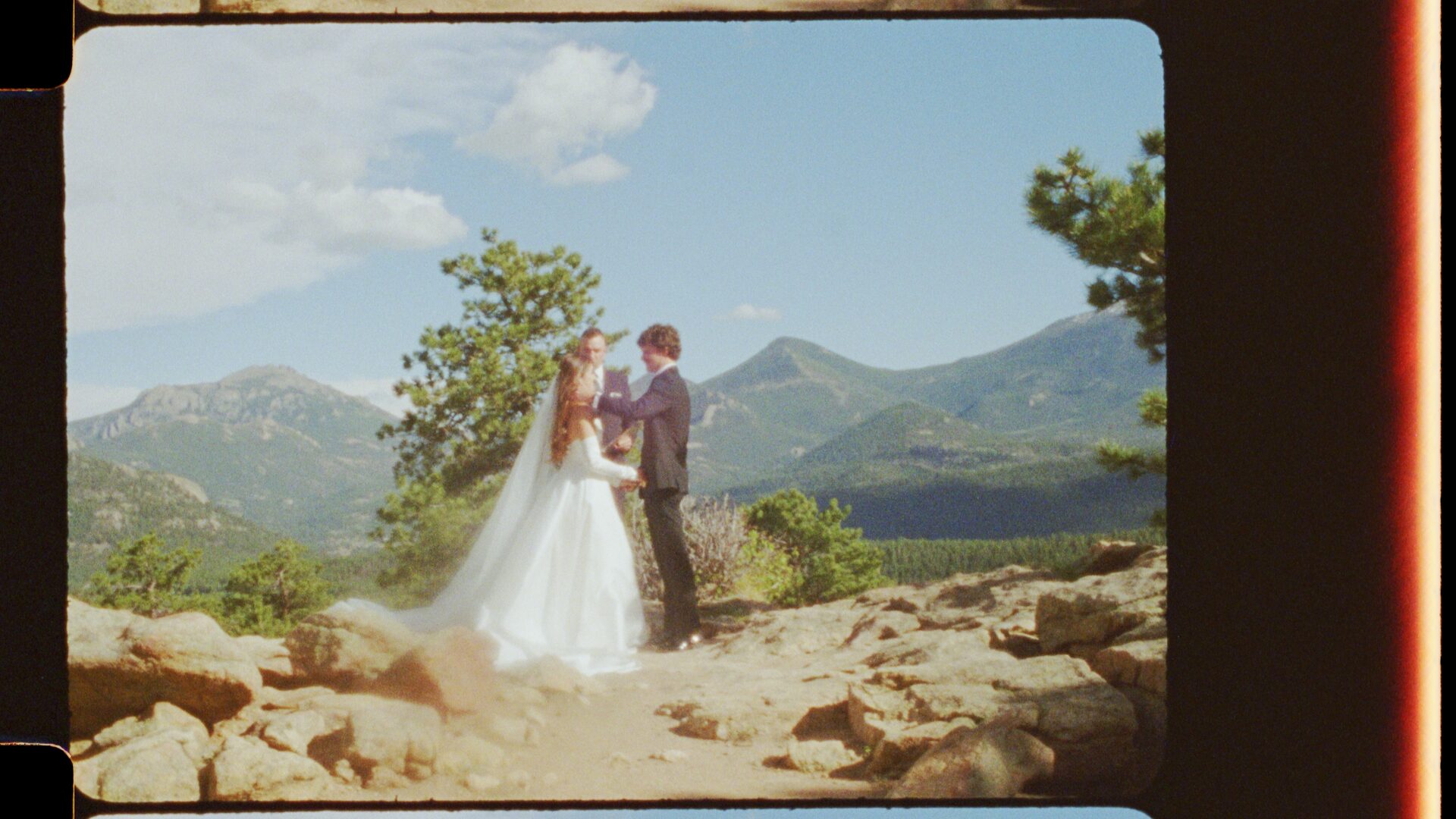
Permits, Demystified
Permits are the least romantic part of this guide and the most common place couples get surprised, so here is the honest map of who manages what in Colorado and what each one generally asks of you.
National parks: formal, structured, worth it
Rocky Mountain National Park and the state's other NPS units require a special use permit for a wedding ceremony, even for two people. Expect an application fee in the low hundreds, designated ceremony locations, and group size limits. Popular parks open applications up to a year out and summer dates go quickly. Our national park elopement guide covers the permit system for every park in the country, including the Colorado ones, with fees and lead times verified against NPS pages.
National forests: the gray area that rewards a phone call
A huge share of Colorado's most beloved elopement spots sit on national forest land. Rules vary by ranger district. A two-person ceremony with no chairs, no arch, and no crowd often requires nothing at all, while anything with setup or a group may need a special use permit, and some high-traffic sites like Maroon Bells have their own dedicated systems. The reliable move: call the ranger district for your specific spot and describe exactly what you are planning. Rangers deal with this weekly and will tell you plainly.
State parks and county open space: small fees, simple forms
Colorado state parks generally ask for a special activity permit plus the normal entrance fee, and county open spaces along the Front Range each have their own short application. These are usually the cheapest and fastest permits in the state, and they unlock some genuinely beautiful, uncrowded locations.
The photographer permit question
Some land managers separately require a commercial use authorization for the photographer or filmmaker working your ceremony. That paperwork is our job, not yours, and any professional working in these landscapes regularly should handle it without being asked. It is a fair question to put to anyone you are considering hiring.
Rule of Thumb
Two people, no setup, off-peak location: often no permit, but verify. National park: always a permit. Anything with chairs, an arch, or more than a handful of guests: assume a permit until a ranger tells you otherwise. Application fees across Colorado typically run from free to about $400.
What a Colorado Elopement Actually Costs
Competitor guides love to answer this with a shrug and a range from $30 to infinity. Here is the itemized version instead, with the reasoning attached, so you can build your own number honestly.
The legal floor: about $30. The license fee. If you two hike to a free trailhead and marry yourselves at sunrise, this is genuinely the entire mandatory cost of getting married in Colorado. Everything else on this list is a choice.
Location permit: $0 to about $400. Free at many forest and trailhead locations, small fees at state parks and open spaces, low hundreds for national park special use permits at parks like RMNP.
Travel and lodging: the honest wild card. Mountain town lodging swings hard by season, from modest off-peak rates to summer and holiday peaks. Couples flying in should budget flights, a rental car that can handle mountain roads, and two to four nights. Staying midweek and off-peak routinely cuts this line in half.
Attire, rings, florals, hair and makeup. Wear hiking boots under the dress or a full tux at 12,000 feet, both are correct. A single mountain-worthy bouquet from a Colorado florist, and hair and makeup that can meet you at a trailhead cabin, are the usual line items here. Spend where it matters to you and skip what does not.
Photo and video: the part that outlasts the day. We will not quote package numbers in a guide, partly because they change and partly because this decision deserves a real conversation. What we will say: coverage is the only line item you keep forever, and the way you document an elopement, including on analog film, changes what the day feels like while it is happening. Current details live on our investment page.
What couples actually spend. Across Colorado vendors and published guides, realistic all-in elopement budgets in 2026 commonly land anywhere from the low four figures to the low five figures, with travel distance and documentation choices as the two biggest levers. An elopement is not automatically cheap. It is automatically intentional, and that is the better goal.
When to Elope: Colorado by Season
Colorado does not have one elopement season. It has four different states of matter, and your date decides which one you get. The complete month-by-month breakdown lives in our when to elope in Colorado guide. Here is the honest summary.
June through September is the reliable high-country window. Passes open, trails clear, wildflowers peak in July, and afternoon thunderstorms arrive on schedule in July and August, which is why we plan mountain ceremonies for sunrise or early morning in monsoon season. September is the crown jewel: stable weather, golden aspen in the last two weeks, and cooler light all day.
October is a gamble that pays beautifully or snows on you, sometimes both in one afternoon. November through April is winter, which deserves its own section below, because we think it is the most underrated decision in this entire guide. Late April through May is mud season: low-elevation ceremonies work wonderfully, but high passes stay closed and trail conditions are honest chaos.
One planning note couples miss: altitude changes seasons. A date that is spring in Denver is still deep winter at 11,000 feet. When you pick a location from this guide, check its elevation before you fall in love with a month.
The Case for a Winter Elopement
Nobody writes seriously about winter elopements in Colorado, which is strange, because winter solves the two problems couples care most about: crowds and cost. The trailhead that holds forty cars in July holds four in January. Lodging drops to off-peak rates outside the ski resorts. And the light is different in a way film loves: low sun angles all day, alpenglow that lasts, and falling snow that reads like grain in every frame.
We photographed a winter elopement at Garden of the Gods where the couple had formations to themselves that summer visitors line up for. That is a normal winter experience here, not a lucky one.
The practical rules: choose locations with plowed access rather than gambling on closed passes, build one weather-flex day into your travel, dress in real layers because summit wind in January is not a metaphor, and plan your ceremony for midday warmth rather than a frozen sunrise. Snow squalls move through fast, and some of the best frames we have ever made happened five minutes after a whiteout cleared. Winter does not need to be survived. It just needs to be planned.
Building Your Elopement Day
An elopement day has no template, which is the point, but after years of these days we can tell you what the strong ones share: they are built around light and pace instead of a schedule, and they include margin. Here are three shapes that work, meant to be stolen and bent.
The sunrise ceremony
Up at 4:30, trailhead in the dark, first light hitting the peaks as you read vows, breakfast in town by 9 while day hikers are just arriving. Sunrise means solitude, still air, and calm winds before the afternoon weather builds. It is the introvert's elopement and the photographer's favorite light of the day. The cost is the alarm clock, and every couple who has done it with us says the same thing afterward: worth it.
The full-day wander
License signing over morning coffee, a drive over a high pass, vows at an alpine lake in the afternoon, dinner reservations in town, and a last frame under the stars. This shape treats the whole day as the ceremony. It suits couples who want their elopement to feel like the best day of a trip rather than a single scheduled moment, and it is where documentary coverage earns its keep, because the in-between moments become the story.
Elope now, celebrate later
Marry each other privately in the mountains this year, then throw the party on your first anniversary. Couples keep discovering this structure and wondering why anyone told them it was either-or. You get the ceremony you actually want and the dance floor too, and nobody has to choose between grandma and a summit.
Whatever shape you pick, add margin. One extra hour in the timeline and one flex day in the trip absorb the mountain weather that will, at some point, ignore your plan. If guests are coming, keep the group small enough to move: everything in this guide gets harder past about ten people, and our what to wear guide covers the practical side of dressing for altitude.
Bringing Guests Without Losing the Point
"Elopement" stopped meaning "secret" years ago. About half the couples we work with bring people: parents, siblings, the two friends who introduced them. The question is not whether guests are allowed. It is how many the mountains can hold before your elopement quietly turns back into a wedding.
Our honest threshold is about ten. Under ten people, the group moves like a hiking party: one trailhead, flexible timing, no seating, no sound system, and usually a simpler permit situation. Past ten, land managers start caring more, timing hardens, and someone inevitably needs a chair. None of that is wrong. It is just a different day than the one this guide is about.
If you do bring people, three rules make it work. First, altitude is a guest problem before it is a couple problem: parents flying in from sea level need a full day in Denver or a mountain town before they stand at 10,000 feet, and it is worth saying that plainly when you invite them. Second, brief them honestly on terrain and weather, down to footwear, because the aunt in flats at a talus field is a story every Colorado photographer can tell. Third, give them a role. A reading, the rings, a toast from a thermos. Guests who traveled this far to watch you marry each other do not need production. They need a reason they were there.
And if the guest math gets heavier than that, the elope now, celebrate later structure above exists precisely so nobody has to choose between the summit and the dance floor.
Vows You Can Actually Say Out Loud
Self-solemnization has one consequence nobody warns couples about: with no officiant, your vows carry the entire ceremony. There is no one to fill silence, set the rhythm, or hand you a script. Two people, wind, and whatever you wrote. Done well, this is the best part of the whole day. Here is what we have learned from standing thirty feet away from hundreds of these moments.
Write them down and read them. Memorizing sounds romantic until you are at altitude, emotional, and staring at the person you are marrying. Every couple we have documented who planned to improvise ended up holding hands in silence, which is beautiful for thirty seconds and panic after ninety. A small vow book photographs honestly and takes the pressure off the moment.
Aim for two to four minutes each. Long enough to say something true, short enough that the wind and the cold and the light stay on your side. Specifics beat poetry: the night you decided, the thing they do every morning, the promise you actually intend to keep. Skip what you think vows are supposed to sound like. The truthful version reads better in every frame and every memory.
Practical notes from the field: speak up, because open ridgelines eat quiet voices and your partner is the one person who should hear every word. If you want your vows recorded, tell your film team beforehand so audio is planned rather than rescued. And bring a copy of the vows in a zip bag. Mountain weather has opinions about paper.
Leave No Trace: Elope Like You Love the Place
The landscapes in this guide stay elopement-worthy only if the couples who use them leave nothing behind. We take this seriously enough to plan around it, and the couples we attract tend to feel the same way, so here is what Leave No Trace actually means on a wedding day, beyond the bumper sticker.
Stay on durable surfaces: rock, snow, established trail. Alpine tundra looks indestructible and is the opposite, and a single ceremony's trampling above treeline can take years to recover. Confetti, flower petals, and anything thrown or released are out, including the biodegradable kind, which does not biodegrade at 11,000 feet in a place with an eight-week growing season. Champagne is welcome. The cork and the bottle leave with you.
Keep setups minimal, which conveniently is also what keeps permits simple: no arches hauled up a trail, no speaker echoing across a basin someone else is also getting married in. Respect wildlife by keeping distance and food sealed. And in winter, remember that snow melts: everything dropped in January is trash on the tundra in June.
None of this restricts the day. In practice it is the opposite: couples who plan light move freely, permit easily, and stand in places the heavily-produced version of the day could never reach. The mountains do the decorating here. The only thing they ask is that you let them keep doing it for the next couple.
Documenting It: Why Film Fits an Elopement
We are a photo and video studio, so read this section knowing who wrote it. But there is a reason we keep making the case for analog film at elopements specifically, and it is not nostalgia.
An elopement is unscripted by nature. There is no shot list, no staged exits, no timeline manager. What actually happens is two people moving through enormous landscapes while something irreversible happens between them. That is precisely what cinema verité was invented for: handheld, present, truthful coverage that participates in the day instead of directing it. It is how we work on every elopement, digital and film alike.
Film pushes it further. Super 8 renders a mountain morning the way memory does, warm and grained and slightly imperfect. 16mm is the format half the films you love were made on, and it turns ten guests in a snowstorm into something that looks like it was always going to be a movie. We wrote about what Super 8 does on a wedding day and why 16mm changes the frame entirely if you want the deep dives, and the difference is easier to watch than to read:
However you choose to document your day, choose deliberately. The mountains will hold the ceremony either way, but the coverage is the only part of an elopement that is still in your hands twenty years later. If you want to see how we approach it, our work speaks plainly.
Our Honest Take After Years in the Mountains
A few things we believe after years of photographing and filming elopements across this state, offered without varnish.
Couples consistently underestimate two things: how much the altitude affects guests arriving from sea level, and how fast mountain weather turns. Both are solved by margin, which costs nothing at planning time and everything when you skip it. Give lowland guests a full acclimatization day. Give the timeline an extra hour. You will use both.
Couples consistently overestimate one thing: how much stuff the day needs. The strongest elopements we have documented carried almost nothing. Vow books, rings, decent boots, layers, and food. The landscape does the production design here, and every object you add is something you carry at altitude.
"The best elopements we film do not feel smaller than weddings. They feel more concentrated. Same vows, same weight, nothing diluting it."
And one thing we tell every couple in the discovery call: do not build the day for the frames. Build the day you want, and hire people whose job is to be present inside it. The truthful version of your elopement will always outperform the staged one, on film and in memory. That conviction is the entire reason Motus exists.
Your Questions, Answered
Can I get married the same day in Colorado?
Yes. Colorado has no waiting period. Both of you appear at any county clerk and recorder's office, show ID, pay the fee of about $30, and the license is valid the moment it is issued. Couples regularly pick up their license in the morning and marry at sunset the same day. The license stays valid for 35 days.
Do you need a witness to get eloped in Colorado?
No. Colorado requires no witnesses and no officiant. Under the state's self-solemnization law, the two of you can sign the license yourselves and the marriage is fully legal. The witness lines on the license are optional, which is why some couples have their dog leave a paw print there. It is decoration, not a requirement.
How much does elopement cost in Colorado?
The legal minimum is about $30 for the marriage license. A realistic full elopement budget usually lands between a few thousand dollars and the low five figures once you add a location permit, travel, lodging, attire, florals, and photo and video coverage. The biggest variables are how far you travel and how you choose to document the day.
Is eloping cheaper than having a wedding?
Almost always, and usually by a wide margin. There is no venue rental, no catering for a hundred guests, and no rented decor. Couples typically redirect part of that difference into what matters most to them: a location worth traveling for, a longer honeymoon, or documentation they will keep forever. An elopement is a reallocation more than a discount.
Who can solemnize a marriage in Colorado?
Colorado law allows judges, retired judges, court magistrates, recognized clergy, and, uniquely, the couple themselves to solemnize a marriage. That last option is self-solemnization: you two sign the license and no one else needs to be involved. A friend or family member can also lead the ceremony informally while you self-solemnize the paperwork.
What states allow self-solemnization?
Only a handful of states allow couples to marry without an officiant in some form, including Pennsylvania and the District of Columbia with their own restrictions. Colorado's version is the most straightforward: no officiant, no witnesses, no waiting period, and no residency requirement, which is why couples travel here from all over the country to elope.
Is Colorado elopement 420 friendly?
Cannabis is legal in Colorado for adults 21 and over, but the places couples actually elope are mostly federal or public land. National parks and national forests follow federal law, where possession remains illegal, and public consumption is prohibited statewide. If it is part of your celebration, keep it to private property such as your lodging, and never on trail.
About the Author
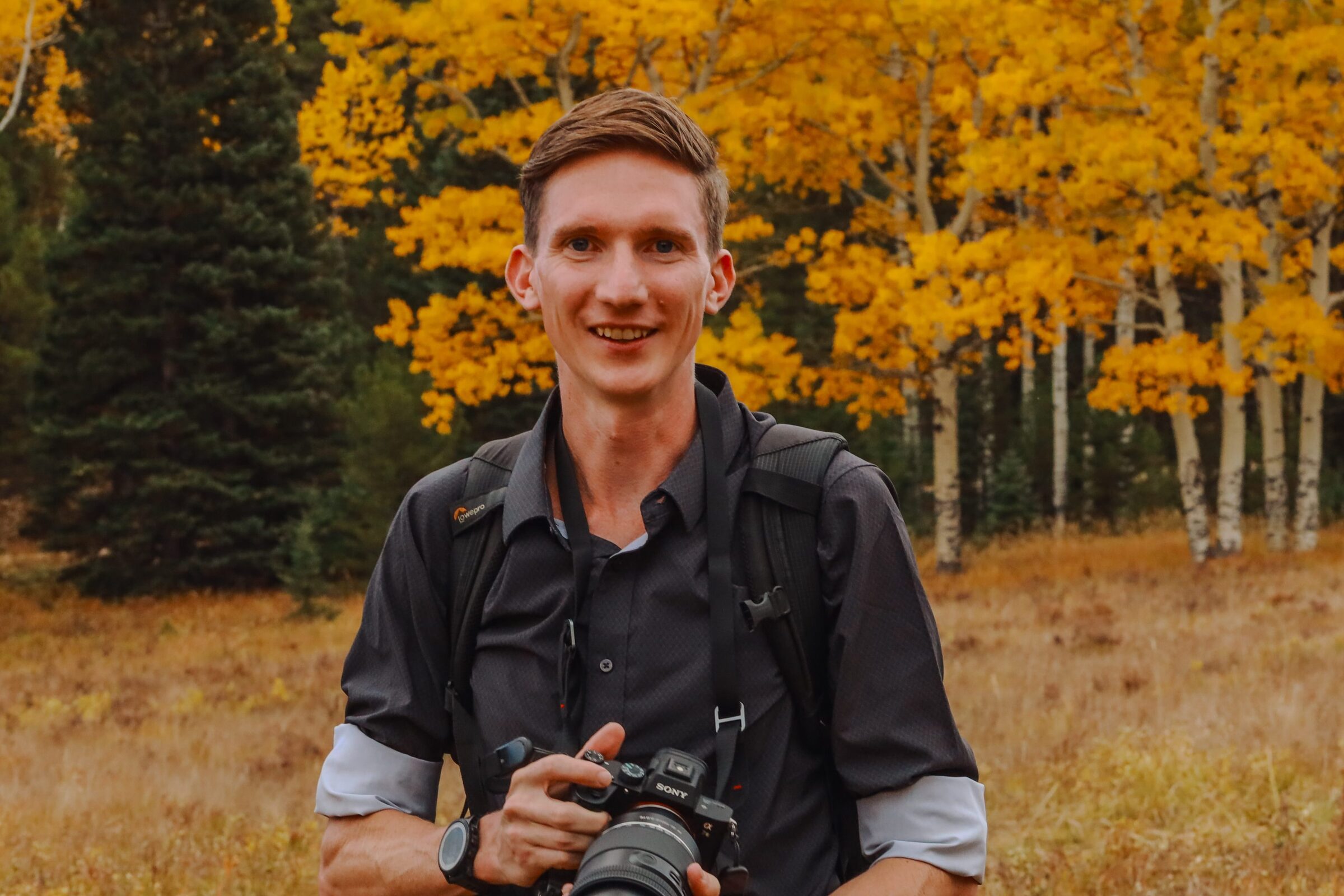 Brandon Krage is the filmmaker and owner of Motus Weddings, a husband-and-wife adventure wedding studio he runs with Aby from Colorado. He photographs and films weddings and elopements on digital, 35mm, Super 8mm, and 16mm cinema film, with Rocky Mountain National Park as home turf. More about Brandon and Aby.