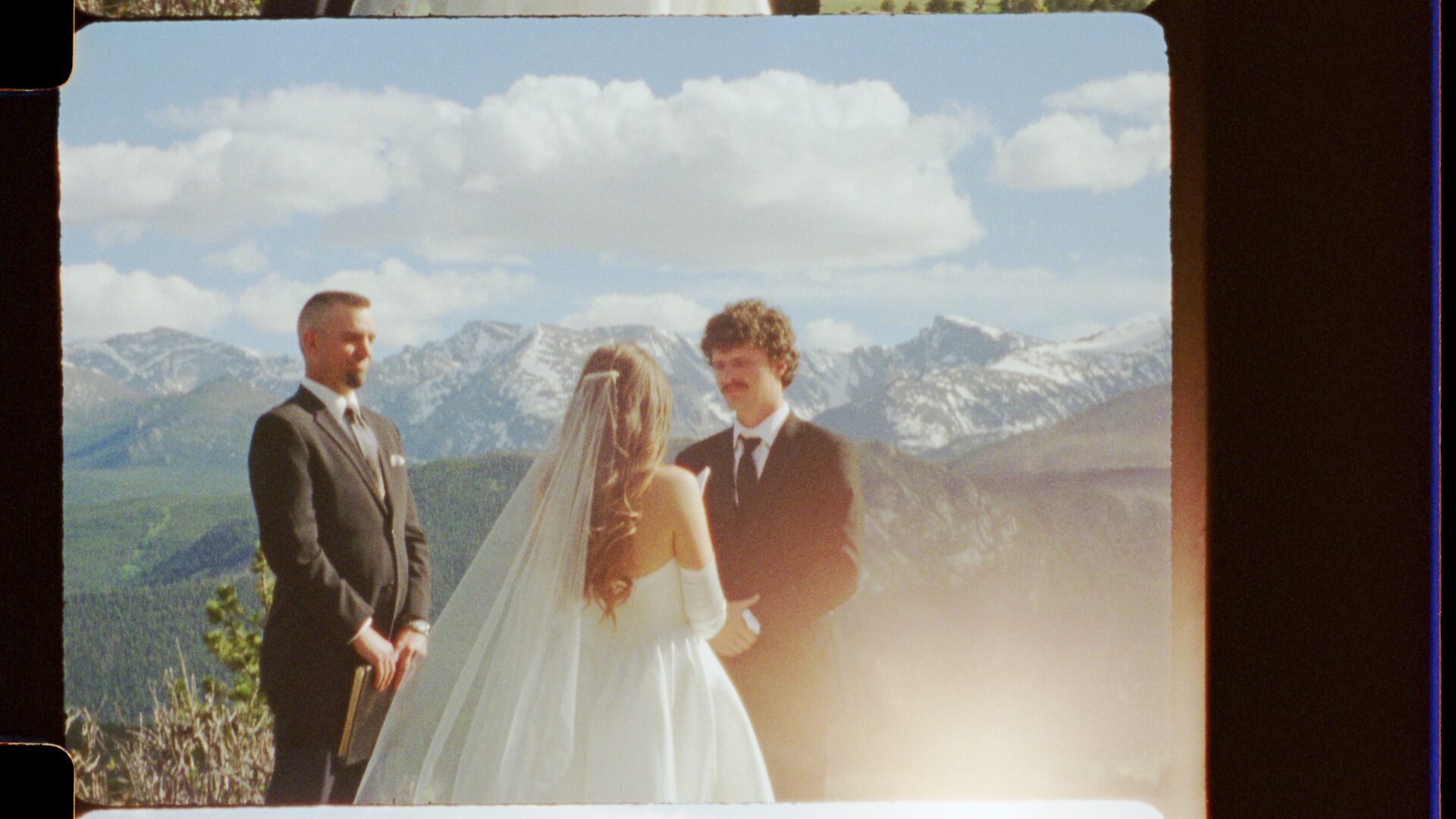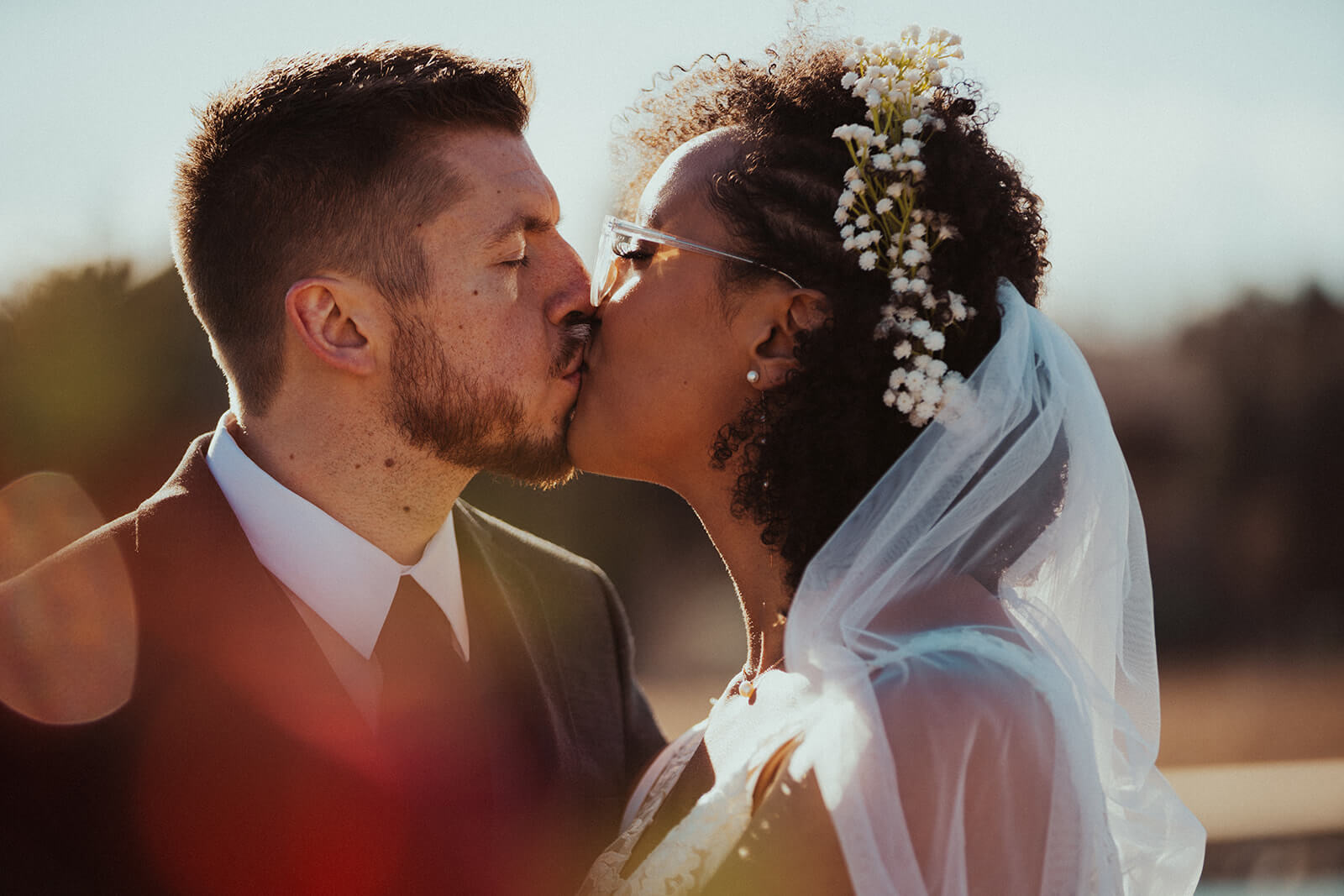
A Colorado wedding is a destination wedding that skips the passport. Your guests fly in, the mountains do the decorating, and the backdrop is one people cross oceans for. This Colorado wedding planning guide is everything we tell the couples we work with, in one place: the calendar, the regions, the license law that surprises everyone, the timelines built around mountain light, and the guest logistics no venue tour mentions.
We are Brandon and Aby, and we photograph and film weddings across Colorado for a living, on digital, 35mm, Super 8mm, and 16mm cinema film. Everything here is the help we would give a friend: verified, honest about the trade-offs, and complete enough that you should not need a search engine between here and your vows.
It is long on purpose, and it is yours whether or not we ever meet. Bookmark it, send it to your person, skip what you already know. And if you eventually want the people who wrote it standing beside you on the day, you know where to find us.
Why Colorado Is a Destination Wedding That Doesn't Act Like One
You do not need a passport for one of the most photographed wedding backdrops in the country. Colorado behaves like a destination wedding in every way that matters: guests fly in, the trip feels like a small vacation, and the scenery is the reason people say yes to the invitation. But there are no customs forms and no currency exchange. Your grandmother can get here.
When you marry in your hometown, people come because they love you. When you marry in Colorado, they come because they love you and they have always wanted to see the Rockies, and that second reason quietly raises your attendance.
About those 300 days of sunshine
You will read everywhere that Colorado gets 300 days of sunshine a year. The claim traces back to an 1870s railroad slogan, and it only holds up if any day with roughly an hour of sun counts as sunny. By the National Weather Service's tally, Denver averages roughly 245 days with real sun, as reported by The Colorado Sun. Genuinely excellent, with one asterisk: high-country summer afternoons build thunderstorms on a near-daily schedule.
The caveats worth naming out loud
Altitude is the first. Most mountain venues sit between 7,000 and 10,000 feet, and guests arriving from sea level will feel it; the guest chapter covers the full protocol. Weather is the second: you want a ceremony backup you would actually be happy in. Seasonal pricing is the third: peak runs roughly May through October, and a Friday or a winter date changes the math. Colorado in winter is not a consolation prize. Snow on the peaks behind you is one of the most striking backdrops the state offers.
First, Pick the Shape of the Day
Before you tour a single venue, answer one question together: what kind of Colorado wedding is this? Not the colors. The shape of the day. A mountaintop ceremony with a valley reception and an intimate lodge weekend are different weddings, with different budgets and different demands. Get the shape right and every later decision gets easier. Five shapes cover most Colorado weddings.
The mountaintop ceremony with a valley reception
You marry somewhere dramatic, a summit deck, a ridgeline, a spot the gondola serves, then everyone comes down to a warmer space to eat and dance. The postcard wedding, and it earns the title. It demands real transportation logistics: a crowd moving between two elevations, on a schedule, in weather.
The ranch weekend
You take over a property for two or three days: welcome dinner Friday, wedding Saturday, farewell brunch Sunday. It suits couples whose favorite part of any wedding is time with people, and it demands the biggest lodging coordination of any option here.
The intimate lodge wedding
Twenty to fifty people in a mountain lodge, everyone under one roof or close to it. Less an event than the best dinner party of your life that happens to include vows. The only demand is the discipline to keep the list small.
The town wedding with mountain portraits
You hold the wedding in a walkable mountain town, Estes Park, Breckenridge, Telluride, then steal away for portraits with the peaks. It asks the least of your guests and the most of your photo and film team.
The hybrid: private vows, full reception
The fastest-growing shape. The two of you marry privately somewhere wild and quiet, then throw a full reception for everyone later that day or the next. The vows stay sacred and unhurried; the party stays big and joyful. It demands a clear story for guests, and a coverage plan that treats both halves as one day.
If that last shape is the whole point for you, our Colorado Elopement Guide is this guide's sister and covers that path completely, and our elopements page shows what those days look like on film.
Before you book anything, answer one question together: what do you want to be doing at 9 p.m. on your wedding night, dancing with a crowd or sitting somewhere quiet with a view? Picture it, and let the picture decide.
How Do You Plan a Colorado Mountain Wedding?
Plan a Colorado mountain wedding in this order: pick the shape of the day, choose your date and elevation together, lock the venue and walk its weather backup, book your planner and coverage team immediately after, start the permit and license clocks, then build the timeline around the light instead of the printed sunset.
One level deeper:
- Pick the shape of the day. Everything else hangs on it, and it costs nothing.
- Choose your date and elevation together. A June date at 7,000 feet and a June date at 10,000 feet are two different weddings.
- Lock the venue and walk its weather backup. Negotiate the Plan B before you sign.
- Book your planner and your coverage team next. They take one wedding per date and fill earliest.
- Start the permit and license clocks. Some public-land permits open a full year out.
- Build the timeline around the ridge shadow. The good light leaves 60 to 90 minutes before the printed sunset.
- Write the guest altitude page. Drive times, lodging tiers, hydration and footwear notes, the shuttle schedule.
The Colorado Wedding Calendar, Month by Month
The best months for a Colorado wedding are early June, September, and early October, with late September as the crown: stable air, mild days, and gold aspens in the last two weeks. July and August work beautifully when the ceremony lands before 2 p.m. or after 5 p.m., outside the storm window. Winter is the value season for couples who plan around it.
June is the quietly ideal month couples overlook: the high country greening up, wildflowers starting, storms not yet on schedule. Early June can still hold snow above 10,000 feet, so confirm road access. July and August are peak, and they are the monsoon months: most afternoons build a fast, hard storm, then clear by evening. Morning or after 5 p.m., not 2 p.m.
September is the month everyone wants: the monsoon broken, clear air, and gold aspens in the last two weeks, which is why the best venues, photographers, and planners book twelve to eighteen months out for late September. If your heart is set on the gold, decide early.
May is mud season in the high country, so keep spring dates low, where Front Range and Colorado Springs venues shine. October is the beautiful gamble: crisp days, thin crowds, soft pricing, and the honest risk of an early storm. November through April is the true off-season, and that is its appeal: passes close, but resort towns, lodges, and Front Range venues run year round, and a snow-covered mountain wedding is a genuinely different, beautiful thing. The month-by-month logic lives in our when to elope in Colorado guide, and it transfers.
| Month | The One Line |
|---|---|
| January | Deep winter; resort towns run, high sites sleep; lowest prices. |
| February | The most reliable snow; midday ceremonies; shuttles non-negotiable. |
| March | Snow up high, mud arriving low; keep venues indoor-strong. |
| April | Mud season in the high country; lower venues shine instead. |
| May | Green below 8,000 feet; high passes still closed. |
| June | The underrated win: passes opening, wildflowers, storms not yet on schedule. |
| July | Peak season on the monsoon clock: ceremonies before 2 or after 5. |
| August | July's twin, plus honest fire-season awareness. |
| September | The crown: gold aspens, stable air, the whole industry booked far out. |
| October | The beautiful gamble; low crowds, soft prices; Plan B required. |
| November | The quiet month; value everywhere, weather roulette up high. |
| December | Snow-globe weddings at resort venues; book the plow. |
One note runs underneath all of it: your date and your elevation are a single decision. A date that is spring in Denver is still deep winter at 11,000 feet.
Regions and Venues, Honestly Compared
Colorado wedding venues vary less by view than by how far your guests drive, how thin the air is, what the weather backup looks like, and how late the music can play. Choose the region first.
The regions, and who each one suits
Front Range, Denver and Boulder. The easy-access choice: one airport, drives of thirty to ninety minutes, gentle elevations around 5,300 to 5,700 feet, and the widest range of venues at the most competitive prices. Strong when your guest list is large or travel-weary.
Summit County and the I-70 corridor. Real mountains within reach of Denver, at elevations near 9,000 to 10,000 feet. The tradeoff is I-70 itself, which crawls on peak weekends and in winter, so build shuttle time and buffer into the timeline.
Vail Valley. Polished resort infrastructure around 8,120 feet. Everything runs smoothly and the setting is beautiful; the cost reflects it.
Aspen and the Roaring Fork Valley. Iconic Elk Mountains scenery and a town built for high-end events, the most remote of the resort options, which rewards a smaller, committed guest list.
Telluride and the San Juans. The most dramatic scenery in the state, around 8,750 feet in a box canyon reached by a longer drive or a small regional airport. Remoteness is the whole point and the whole challenge.
Estes Park. The gateway to Rocky Mountain National Park at about 7,522 feet, with lodges, open-air sites, and a manageable drive from Denver.
Colorado Springs. Red rock and Pikes Peak backdrops at a friendly 6,000-ish feet, its own airport, and generally softer pricing than the mountain resorts. Underrated.
The venue types, and their real tradeoffs
- Mountain lodges. Character, big views, and usually an indoor space that doubles as a genuine weather backup. Often remote, so ask about power and road access.
- Ranches. Space, flexibility, and a strong sense of place. Many are working properties, which can mean more setup on you.
- Resort hotels. The most turnkey option, at the highest price and with the least room to bring your own vendors.
- Public-land ceremony plus private reception. The hybrid many adventure couples want. It needs a permit and tight transport timing between the two.
- Private estates and large rentals. A blank canvas, but many mountain towns restrict events, guest counts, parking, and noise at short-term rentals, so verify local event regulations in writing.
What to ask on a Colorado venue tour
Beyond the generic questions: how high is the site, and where can grandparents rest and find shade and water? Ask to see the actual backup space and picture your whole group in it. What are the vendor curfews and noise limits? Where do guests park, and who runs the shuttle? For off-grid properties, what power exists for catering, sound, and lighting?
The Mountain Library: Public Ceremony Grounds
A Colorado mountain wedding is usually two decisions wearing one name: where the vows happen, and where the party happens. Some of the state's best ceremony grounds are public land, with honest paperwork and honest crowds. Venue businesses change owners too fast to name responsibly; these grounds are forever.
Sapphire Point
Lake Dillon · Summit County
The overlook that made ten thousand vows. Permits run through the local ranger district; book far out for summer Saturdays.
Maroon Bells Amphitheater
Aspen · Elk Mountains
The most photographed peaks in North America behind your aisle. Reservations carry decor limits and skip the marquee fall weekends. Our Maroon Bells guide covers the current system and quieter alternatives nearby.
Rocky Mountain National Park's Designated Sites
Estes Park · RMNP
Thirteen designated ceremony sites with group caps of 15 to 30. Applications open a year out, and this is our home turf; the full walkthrough lives in our Rocky Mountain National Park guide.
Garden of the Gods
Colorado Springs · City Park
Red rock cathedrals at city altitude, kind to every grandparent.
Loveland Pass and the High-Pass Pullouts
Loveland · Cottonwood · Independence · Kebler
Loveland Pass is the drive-up alpine ridge at 11,990 feet, where sunrise owns the place. The seasonal passes add aspen cathedrals and tundra views for tiny ceremonies, busy exactly when the leaves turn.
The pairing logic
The strongest mountain weddings pair a short, wild ceremony with a warm, close reception. Keep the transfer under forty-five minutes, because cocktail hour covers exactly that much grace. Pair up in elevation for the vows and down for the party, so grandma experiences the summit for one golden hour instead of six cold ones. Let the venue's Plan B serve the ceremony too: if the pass is storming, the vows move to the venue lawn. And start the ceremony permit and the venue in the same season of decisions; the one-year clocks are unforgiving.
The One-Sentence Tests
For the ceremony ground: "Who holds the permit, and what does it cap?" For the venue: "Walk me through your last bad-weather wedding." For the pairing: "Can our people get from vows to dinner in under forty-five minutes, in weather?" Three clean answers and you have a wedding.
The Legal Part: Your License and a Quiet Superpower
Getting legally married in Colorado is refreshingly light. Both of you appear together at any county clerk and recorder's office in the state with valid photo ID and a small fee, and you walk out with a license that works immediately, stays valid for 35 days, and goes back to the issuing county within 63 days for recording. There is no waiting period and no residency requirement.
Any county works, no matter where in Colorado you are marrying. Both partners must appear together to apply, which is the one piece worth putting on the calendar early. And because there is no waiting period, couples regularly pick the license up in the morning and marry the same day.
Who can legally solemnize your marriage
Colorado recognizes a specific list: judges, retired judges, court magistrates, recognized clergy, and, uniquely, the two of you. The catch that trips people up: a friend cannot solemnize your marriage just because you asked. They would need to be a judge, a magistrate, or ordained clergy, and the online-ordination route means signing as "Minister," not "Officiant," or the county may reject the license.
The quiet superpower, at full wedding scale
But there is a better path. Under C.R.S. 14-2-109, Colorado lets the two of you solemnize your own marriage, no officiant, no witnesses, with the same legal weight as a judge's signature. It works just as well at a 120-guest wedding: your friend or parent leads the entire ceremony while the legal act is your two signatures on the license. No ordination, no signature, no legal responsibility for them. Tell the clerk you plan to self-solemnize and they will walk you through it.
Who leads the ceremony: the four doors
Every Colorado couple walks through one of four doors: the two of you alone; a friend or parent leading while the paperwork stays self-solemnized; your pastor, since clergy solemnize legally here; or a professional officiant, worth it when nobody in your circle wants the job. If you cannot decide, the second door is the one couples thank us for later: the voice of someone who loves you, backed by a law that asks nothing of them.
Every county quirk and edge case lives in our Colorado marriage license and self-solemnization guide. It was written for eloping couples, and the law is identical at every guest count.
Building Your Vendor Team in the Mountains
Book your venue first, then your planner and your photo and video team within weeks of it, then everything else six to nine months out. In Colorado a wedding is a logistics problem wearing a beautiful dress; the vendors who fill earliest take one wedding per date.
Good mountain vendors book out further than you think, and worst for exactly the date you probably want. A September Saturday is the most requested slot in the state, and the best photographers, planners, and florists are often reserved twelve to eighteen months out for it. If your heart is set on peak color, treat that as a booking deadline, not a preference.
Why mountain experience beats style
You will be tempted to hire on portfolio alone. Style matters, but less than whether a vendor knows how to work in the mountains: that blooms wilt faster in thin dry air, that a bluebird morning can become a hailstorm by two, how remote-site logistics and land rules work. A gorgeous portfolio from someone who has only worked in ballrooms is a real risk. Ask directly how many Colorado mountain weddings they have done, and where.
What to ask every vendor
- What is your backup plan for weather? A seasoned mountain vendor answers instantly.
- What are your travel fees, and what counts as travel? Get it in writing, including lodging.
- Have you worked a venue with a curfew? An unmanaged hard end time can cost you your last hour.
- Can you provide a certificate of insurance? Nearly every real venue requires one.
Planners: what each one actually does
The word "planner" covers three different jobs. A full planner is with you from the beginning: venue, vendor team, budget, design, timeline. For a mountain wedding planned from out of state, often money extremely well spent. A month-of coordinator lets you plan the wedding yourself, then runs the final weeks and the day. And a venue coordinator is not your planner. They work for the venue: unlocked doors, set tables, house rules. They will not chase your florist. If a venue says a coordinator is included, ask precisely what that person does.
Your documentation team
Photo and video are the only part of the day you keep after it ends. Look for real Colorado weddings in the gallery, in real weather at real altitude, and ask to see a full wedding start to finish. Then notice how a team works: there is a real divide between shot-list factories and unscripted coverage that documents the day as it unfolds. For a mountain wedding, where so much of the beauty is unrepeatable, the unscripted approach almost always brings back something truer. Our work shows what that looks like in practice.
The Guest Experience: 80 People Up a Mountain, Happily
Getting guests up a mountain happily comes down to four systems: honest travel information, lodging at more than one price, a real altitude protocol, and shuttles. No venue tour mentions any of them.
The travel reality nobody prices in
Most traveling guests fly into Denver International, out on the eastern plains, a long way from the mountains. Be honest about the drive in a way the internet will not be: a venue "two hours from Denver" is two hours on a Tuesday at noon, I-70 backs up for miles on wedding-season Fridays, and winter passes can close outright. Tell your guests the honest drive time, and what the road does in your season.
Lodging in a small town
Mountain towns are small and their beds fill fast, so secure a lodging block the moment you have a date, and offer price tiers: a hotel block for simplicity, rentals for groups who would rather split a house. Expensive-only lodging quietly tells some of your people they cannot come.
Altitude: the full guest protocol
Altitude sickness does not care that it is your wedding day. Guests coming from sea level to a ceremony above nine or ten thousand feet can feel genuinely unwell. The protocol:
- Build in an acclimatization day. A day or two at a middle elevation first helps dramatically.
- Push hydration relentlessly. Water at the welcome event, in the hotel blocks, at the ceremony.
- Warn everyone that alcohol hits harder. One drink can feel like two or three.
- Tell at-risk guests to talk to a doctor first. Anyone pregnant, older, or managing a heart or lung condition.
- Consider canned oxygen as a favor. Small cans in the welcome bags genuinely help.
The weekend shape, and the shuttles
A Colorado wedding is rarely a single day, and that is a feature: a gentle welcome event the evening before lets guests acclimate, and a recovery brunch the morning after is a soft landing. For any remote venue, shuttles are not optional: mountain roads are dark, narrow, and often without cell service, and your guests will be drinking. Book professional transportation when you book the venue. Then put all of it, drive times, lodging tiers, the altitude protocol, the shuttle schedule, on one page of your wedding website and send guests to it more than once.
Dressing the day for altitude
Mountain weather does not ruin wedding clothes; unprepared wedding clothes ruin mountain weddings. For the two of you, think in layers: merino under, one warm layer over that looks intentional on film, boots for every approach with ceremony shoes carried. Crepe and heavier satins ride mountain wind beautifully; featherweight fabrics become sails. For the wedding party, decide for them: warm layers, terrain-rated footwear, hand warmers in the shoulder seasons. The full craft is in our what to wear at altitude guide.
Say It Twice
Tell your guests about the footing, clearly and more than once. A ceremony meadow is a dirt path, not a ballroom floor, and every year someone shows up in brand-new heels. Tell them to bring shoes they can walk in, then tell them again in the week-of email.
A Timeline Built Around Colorado Light
At most Colorado mountain venues, the usable golden light disappears 60 to 90 minutes before the sunset time printed on your weather app, because the sun does not set into a flat horizon here. It sets behind a ridge. Build the entire timeline backward from that moment and the rest of the day falls into place.
The fix is free: stand at your ceremony spot at roughly the same time of day, a season out if you can, and watch where the sun disappears behind the ridge. That moment, not the printed sunset, is your real deadline for the best portraits of the day.
Ceremony start time, worked backward
Couples usually pick a ceremony time and hope the light cooperates. Do it the other way. Portraits take 30 to 45 minutes; family photos, another 20 to 30; the ceremony itself, 20 to 30 with guests. Add it up and your ceremony should start roughly 90 minutes to two hours before the ridge swallows the sun. In July, with a printed sunset near 8:15 and a ridge shadow around 7:00, that means a 5:00 ceremony, portraits from 6:20 to 6:55, dinner in the afterglow. In late September everything pulls earlier: ceremony at 3:30 and a long portrait walk through the gold. In winter, with sunset at 4:45, the day compresses toward midday: ceremony at 2:30, a short sunset portrait as the light goes pink on the snow.
The first look, honestly
What a first look buys you at altitude is light and freedom: most portraits happen before the ceremony, while the sun is still generous, and you get to stay at your own reception instead of leaving guests to chase the light. Neither choice is wrong, but in the mountains a first look solves a real problem, and in winter it is close to essential.
The sunset portrait escape
Whichever you choose, protect one small window: ten minutes, just the two of you, slipped out of the reception while guests are happily at the bar. Your photographer and filmmaker watch the light all day and will grab you at exactly the right moment. These ten minutes routinely produce the best frames of the entire day.
Buffer Rules
Everything at altitude takes longer. Hair and makeup always runs over, so build the schedule assuming it will. Add 30 to 60 minutes of margin, spread through the transitions. The couples whose days feel calm are not luckier. They just left room.
One more morning note: many of the best venues sit 30 to 60 minutes up a canyon from town. Artists driving up charge for travel time; getting ready in town means budgeting the drive. The cleaner solution is often lodging on or near the property, which removes the most fragile link in the timeline: the transfer.
Altitude, Weather, and the Plan B That Isn't Sad
From early July through August, Colorado afternoons run on a monsoon schedule, with lightning most active between about 1:00 and 6:00 p.m. Schedule exposed ceremonies before 2:00 or after 5:00, negotiate a weather backup you would genuinely be happy with before you book, and decide in advance who makes the call.
Lightning on an open ridge is the real danger, not the discomfort of getting wet. If you can hear thunder, you are close enough to be struck, and no photograph is worth the risk. At the first thunder, everyone moves to hard shelter, a building or a vehicle, not under a lone tree. A good photographer and a good venue will make that call without hesitation. Let them.
Wind, cold, and the 30-degree swing
Wind is the quiet troublemaker. Veils turn into sails, unsecured decor ends up in the next drainage, and wind ruins ceremony audio, so if your vows are being filmed, plan for lapel microphones and a windscreen. Weight anything that can lift, and put a slope or trees at your back if the site allows. Then plan for the evening you will actually have: the mountains routinely swing 30 degrees between afternoon and evening, even in July. Heaters, a basket of blankets, a warm indoor retreat, and a told-in-advance layer for every guest.
The Plan B doctrine
A real Plan B is a backup you would genuinely be happy with, not a windowless room you are dreading, and the time to negotiate it is before you book. Walk the backup space and ask: if it rains, would we actually be glad to be here? A room with big windows facing the same view beats a sealed ballroom every time; a proper sidewalled tent with heat is a real celebration, and a flimsy pop-up is not. Then make the decision explicit in writing: who makes the weather call, by what hour, on what trigger. The worst part of a weather day is not the weather. It is standing around at noon arguing while the clock runs.
Winter, and fire season, honestly
A winter mountain wedding is one of the most beautiful decisions you can make: plowed access confirmed to the last mile, shuttles instead of rental cars on icy roads, midday ceremonies while the light and warmth are at their brief best. And one thing no guide wants to print: some Augusts, smoke happens, hazing a bluebird day from a fire hundreds of miles away. Ask your venue about smoke, closure, and date-change policies while you are booking, not after.
Why This Matters
The couples who embrace the weather get the best films: storm light, snow squalls, a sky breaking open right after a downpour. Those are the frames everyone else missed while hiding from the exact conditions that make a mountain wedding look like one. A backup you love means you can say yes to the weather.
A Christian Wedding in Wild Places
A wedding is not made Christian by a building but by who stands at the center of it. Scripture's weddings happened in gardens, in tents, and at a small-town feast in Cana; a ceremony where two people covenant themselves to each other before God, with the Rockies standing in for stained glass, is not a lesser version of anything. We can say this personally: our own studio is built with Jesus at the center.
The elements that carry the weight travel light, and every one works at altitude: an opening prayer, scripture readings by people you love, covenant vows written as promises before God, communion, worship that fits the place, and a blessing to end under. A congregation of eighty singing a hymn into open air carries further than any speaker.
Your pastor has three ways to be part of it. Recognized clergy can legally solemnize in Colorado, so the simplest path is bringing your pastor with you. If they cannot travel, they can lead the entire ceremony while the two of you sign the license yourselves under self-solemnization: legally you self-solemnized, spiritually your pastor married you, and both are fully true. Or the marriage can be blessed at home, before or after. The covenant is not diminished by being celebrated twice, and framing it that way usually dissolves whatever tension the mountain plan created.
Documenting It: What You Keep When the Day Ends
We are a photo and video studio, so read this section knowing who wrote it. But it sits at the end of this guide for a reason. Every other chapter is about a day that ends. This one is about the only part of the wedding that does not.
A wedding day with guests is a hundred unscripted moments happening at once: your father's face during the first look he was not supposed to see, the grandmothers dancing, the two of you slipping out at sunset while the party carries on. None of it happens twice. That is precisely what cinema verité was invented for: handheld, present, truthful coverage that participates in the day instead of directing it. It is how we work on every wedding, digital and film alike.
Film pushes truth further. Super 8 renders a mountain reception the way memory does, warm and grained and slightly imperfect. 16mm is the format half the films you love were made on, and it turns a hundred guests under string lights into something that looks like it was always going to be a movie. We wrote full explainers on what Super 8 does on a wedding day and why 16mm changes the frame, and the 16mm versus Super 8 comparison shows the difference frame by frame. Digital captures everything; film remembers it.
One honest observation: couples consistently underestimate how much of their own wedding they personally miss. Whole hours will blur. The coverage is how you get the day back afterward, including the parts you never saw happen.
"Do not build the day for the frames. Build the day you want, and hire people whose job is to be present inside it. The truthful version will always outperform the staged one, on film and in memory."
However you choose to document your day, choose deliberately, and if film moves you, say so in the first message. Our work speaks plainly, current coverage details live on our investment page, and that conviction is the entire reason Motus exists.
Your Questions, Answered
What is the best month for a Colorado wedding?
Late September is the most popular: stable air, mild temperatures, and gold aspens in the last two weeks. It is also the most competitive, with the best venues and vendors booked twelve to eighteen months out. Early June and early October are the underrated wins, and July and August need a morning or after-5 p.m. ceremony to dodge monsoon storms.
How do I get a marriage license in Colorado?
Both partners appear together, in person, at any Colorado county clerk and recorder's office with valid photo ID and a small fee. There is no waiting period and no residency requirement, so you can marry the same day. The license is valid for 35 days, and the signed license goes back to the issuing county within 63 days.
Can a friend officiate our wedding in Colorado?
Not on their own. To legally solemnize your marriage, a friend would need to be a judge, a magistrate, or ordained clergy. The better path is self-solemnization: your friend leads the entire ceremony while the two of you make it legal by signing the license yourselves. No ordination, no legal role.
How do I help wedding guests with altitude in Colorado?
Ask guests to arrive a day or two early at a middle elevation, push hydration constantly, and warn everyone that alcohol hits harder up high. Older guests and anyone with a heart or lung condition should check with a doctor first. Canned oxygen in the welcome bags genuinely helps, and all of it belongs on your wedding website.
What time should a Colorado mountain wedding ceremony start?
Work backward from the light, not the printed sunset. At most mountain venues the sun drops behind a ridgeline 60 to 90 minutes before the listed sunset time. Start the ceremony roughly 90 minutes to two hours before that ridge shadow arrives so portraits finish in the last golden light. In summer that often means 5 p.m.
What happens if it rains at a mountain wedding?
Usually very little, if you planned for it. Light rain is manageable and often makes for dramatic photographs. The key is a Plan B you negotiated before booking: an indoor space with windows toward the view, or a quality sidewalled tent with heat. Decide in advance who makes the weather call and by what hour.
About the Author
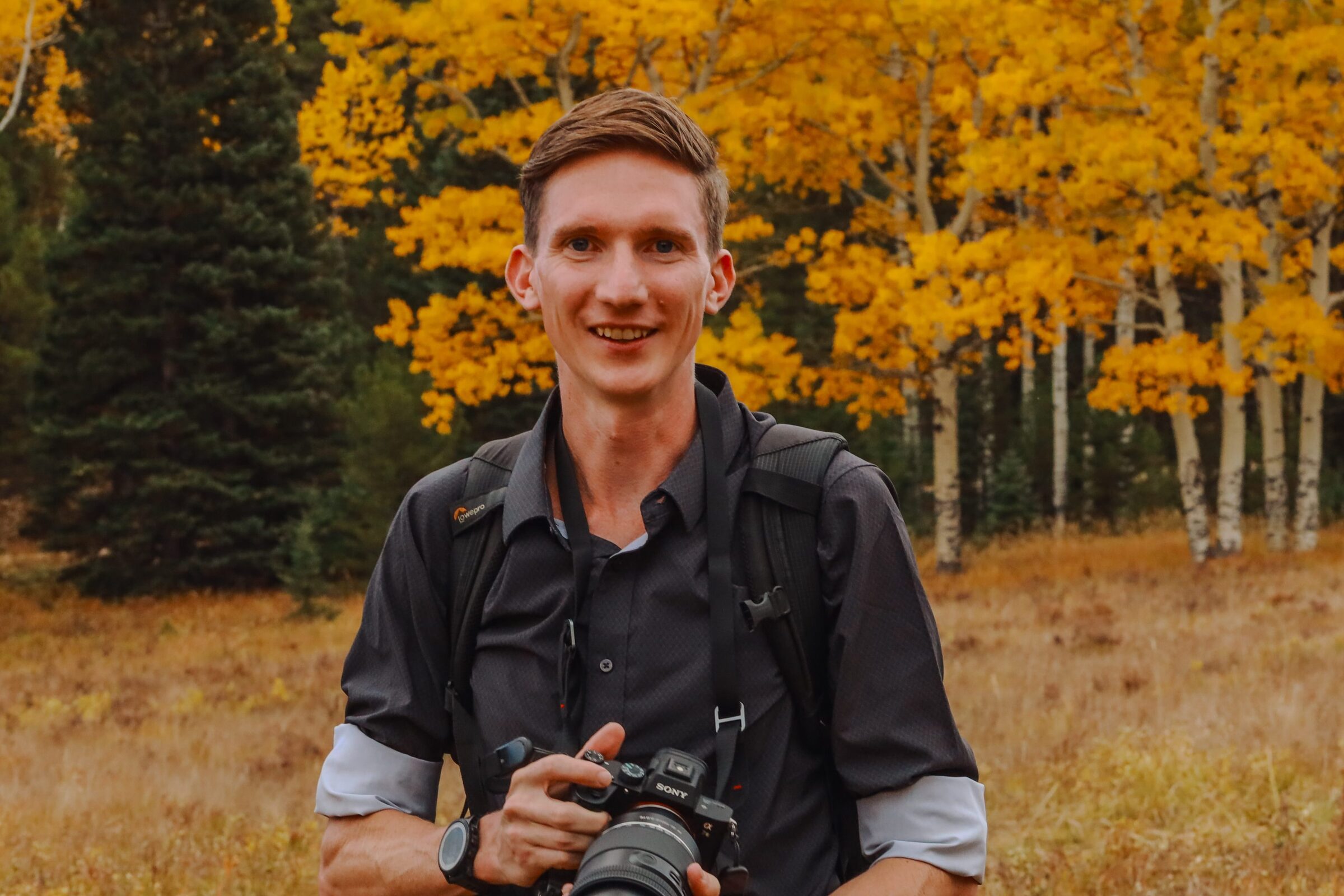 Brandon Krage is the filmmaker and owner of Motus Weddings, a husband-and-wife adventure wedding studio he runs with Aby from Colorado. He photographs and films weddings and elopements on digital, 35mm, Super 8mm, and 16mm cinema film, with Rocky Mountain National Park as home turf. More about Brandon and Aby.