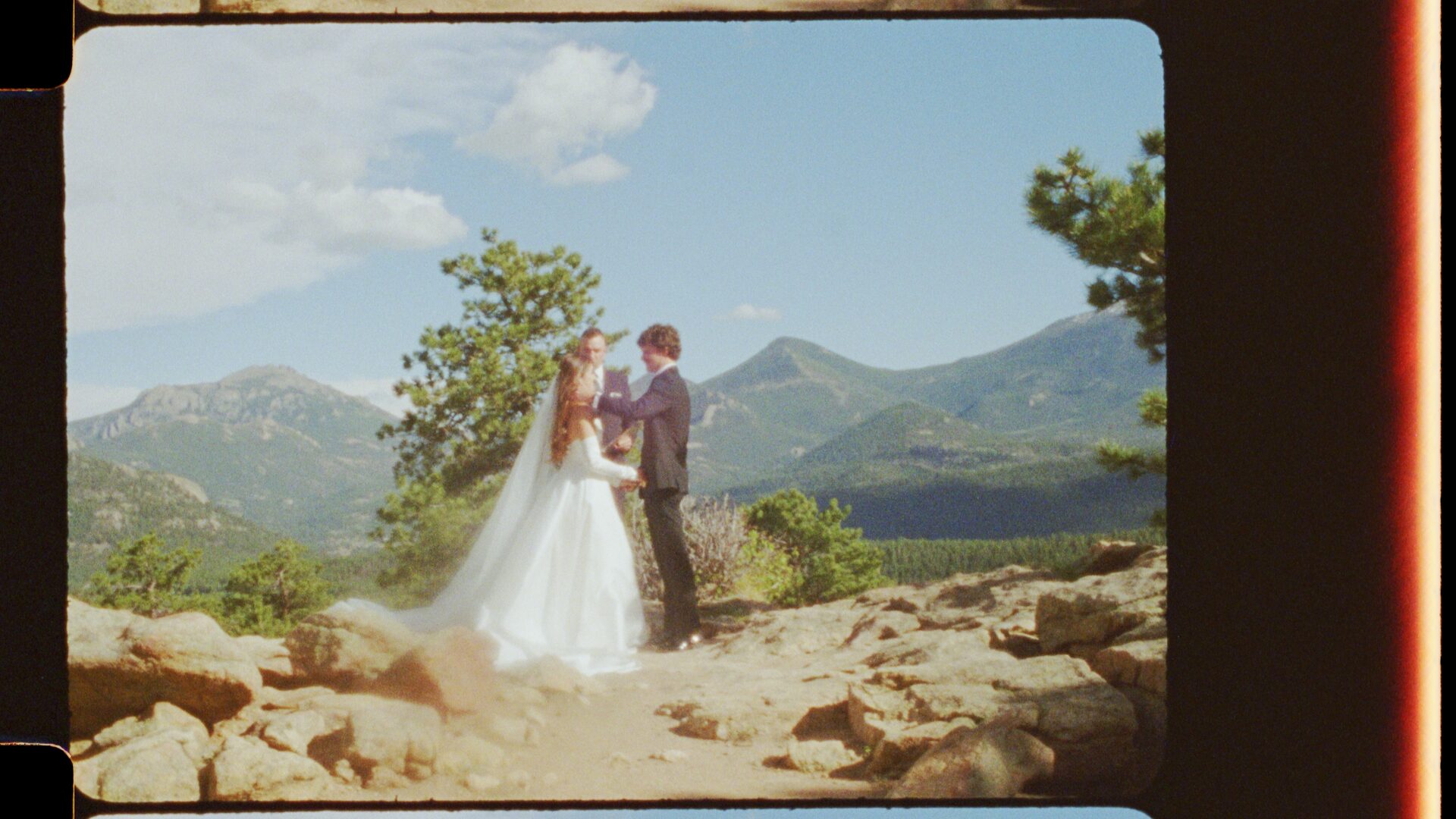
You do not need a ballroom, a guest list of two hundred, or a year of seating charts to get married well. If you are figuring out how to elope in Colorado, you have already understood the part most couples take far too long to learn: the day is about the two of you, the place, and the people who actually matter, and almost everything else is optional. Colorado happens to be the single best state in the country to act on that. The law is on your side, the landscape does the decorating, and the rules are simpler than you think.
This is the master guide. It walks you through every decision in order, from the kind of day you want, to the marriage license, to self-solemnizing your own vows, to permits, locations, timing, and what it honestly costs. You will not have to stitch the answers together from a dozen county websites and forum threads. It is all here, in the order you will actually need it.
We photograph and film adventure elopements across Colorado for a living, from Rocky Mountain National Park to the San Juans, so this is written from days on the ground, not a template. When you are ready to talk about documenting yours, you know where to find us.
This post walks the steps in order. Our complete Colorado elopement guide goes further: permits by land type, honest costs, guest strategy, vows, winter, and Leave No Trace, all in one page.
What an Elopement Actually Is in 2026 (and Isn't)
The word still carries an old reputation. People picture a courthouse, a secret, two people sneaking off without telling their families. That version exists, and it is lovely, but it is no longer what most couples mean. Today an elopement is simply an intentional, guest-light wedding day built around the experience instead of the production. It can be the two of you alone at sunrise on a mountain lake. It can be ten people gathered in a meadow. It can be a three-day trip with a hike, a ceremony, a dinner, and a slow morning after. What makes it an elopement is not the size, it is the priorities.
Here is the distinction that matters for planning. A traditional wedding is built around hosting. The venue, the catering, the seating, the timeline all exist to move a crowd through an evening. An elopement removes the crowd, which removes most of the cost and almost all of the logistics, and gives that time back to you. You are not trading down. You are reallocating. Couples who elope in Colorado routinely spend less total money than a single line item on a 150-person wedding and walk away with a day that felt entirely theirs.
What an elopement is not: it is not a lesser version of getting married, and it is not a loophole. You still get a real marriage license, you still legally marry, and in Colorado you can do it in a way that is arguably more meaningful than a standard ceremony, because you marry each other directly. More on that shortly.
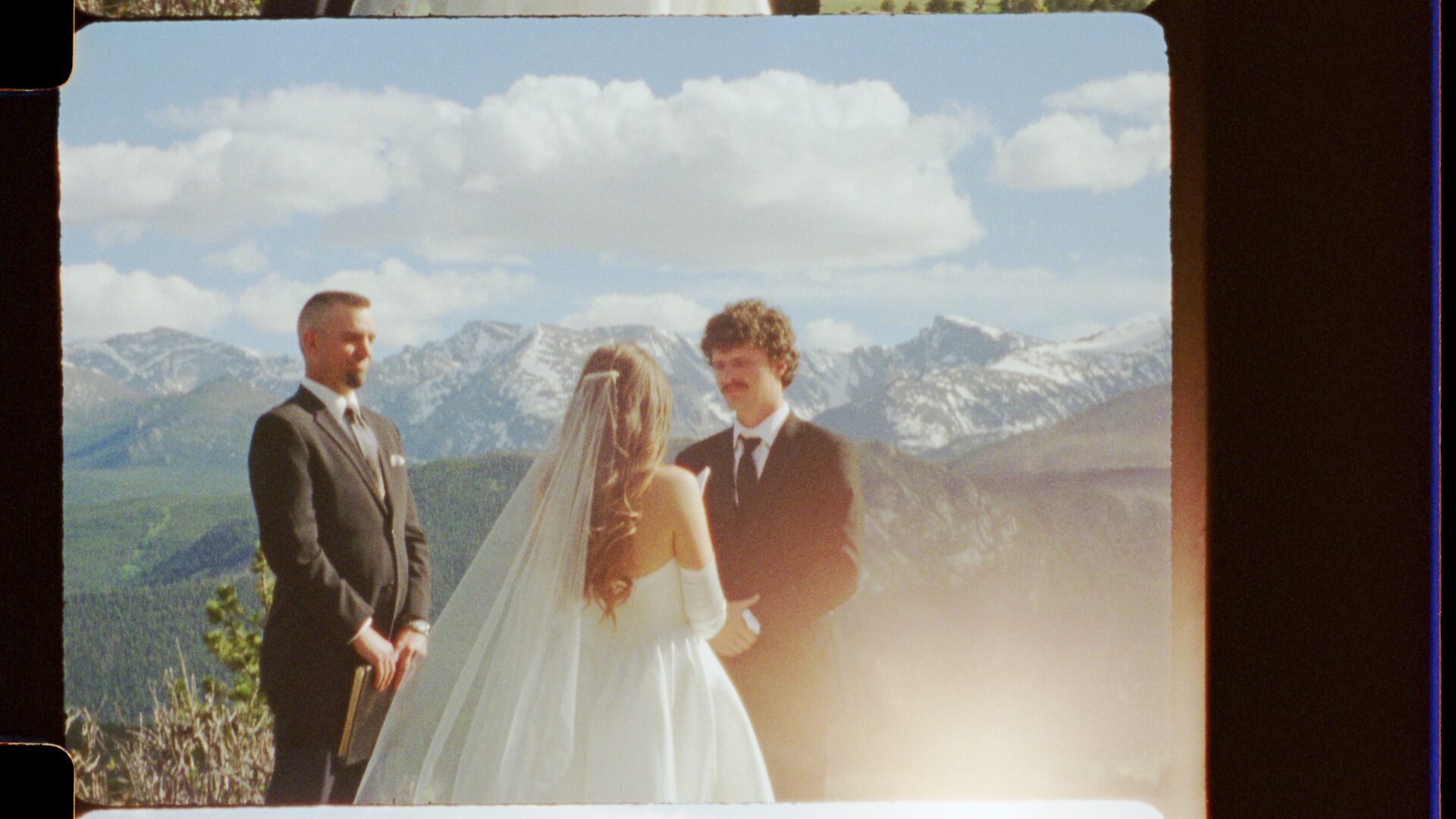
Why Colorado Is the #1 State for Elopements
Plenty of states are beautiful. Few make eloping this easy, and that combination is why Colorado has quietly become the elopement capital of the country. Three things set it apart.
First, the law. Colorado is one of only a handful of states that allow self-solemnization, which means you can legally marry each other with nothing more than your two signatures on the license. No officiant. No witness. We will cover this in full below, but understand that it removes the single most logistically annoying requirement of getting married almost everywhere else. You do not have to find, vet, schedule, and pay a stranger to legally pronounce you. You do it yourselves.
Second, the marriage license itself is genuinely painless. There is no waiting period, so you can apply and marry the same day. The license is valid for 35 days, so you have a comfortable window. It costs a flat $30 statewide. And it works statewide, so you can apply in a convenient front-range office and marry on a peak three hours away.
Third, the geography. Within a few hours of Denver you can choose alpine lakes, 14,000-foot peaks, golden aspen groves, red sand dunes against a snow-capped range, deep canyons, and old mining towns. The season runs long, from summer wildflowers through one of the most famous fall color displays on earth. You are not picking between scenery and convenience. Colorado gives you both, and the planning bends around you instead of the reverse.
Curious what these days actually look like? Browse recent Colorado couples in our portfolio to get a feel for locations, light, and pacing before you plan your own.
Step One
Step 1: Decide What Kind of Elopement You Want
Before locations, before dates, before anything, decide the shape of the day. This one choice drives every other decision, from which permit you need to how long you should book coverage. There are three common shapes, and most couples land cleanly in one of them.
Just the two of you
The purest version. No guests, no audience, no managing anyone else's expectations. You hike or drive to a place that means something, you read your vows to each other, you sign your license, and the only other person present is the photographer or videographer documenting it. This is the easiest to permit, the easiest to schedule around perfect light, and the most flexible if weather forces a change. It is also, for many couples, the most emotional, precisely because nobody is watching. If you have ever felt your throat tighten reading vows to your person, imagine that with no crowd and a mountain behind you.
Small group (10 or fewer)
You want your parents, a sibling, a best friend, the handful of people whose absence you would actually feel. Keeping the count at ten or fewer is not arbitrary. It is the threshold where most public locations stay simple, where everyone can fit in a single trailhead photo, and where the day still moves at your pace instead of a crowd's. Past ten, you start adding the logistics of a small wedding without the infrastructure of a venue, and the day gets harder, not better. Ten is the sweet spot, and the couples who hold that line are consistently the happiest.
Multi-day adventure elopement
This is the version we love most. You spread the celebration across two or three days. Maybe an engagement-style session and a quiet dinner the first evening, the ceremony at sunrise the next morning, then a long lazy day exploring with no schedule at all. It suits Colorado perfectly, because the best locations reward people who are not rushing back to a reception. It also gives your photographer the room to catch genuinely different light and landscapes, so your gallery does not look like one hour in one spot.
Step Two
Step 2: Pick Your Region of Colorado
Colorado is big, and the regions feel like different states. Choosing yours early narrows everything: drive times, permits, lodging, even the season you should target. Here is the honest lay of the land, grouped by where couples actually go.
Colorado · Front Range & Northern Rockies
Rocky Mountain National Park & Estes Park
The most accessible serious mountains in the state, roughly 90 minutes from Denver. Sprague Lake and Bear Lake are the two locations we return to again and again: still water, clean reflections, and reachable for couples who do not want a hard hike. RMNP requires a National Park Service permit and, in peak summer, a separate timed entry reservation. Plan both well ahead.
Colorado · Elk Mountains
Maroon Bells & Aspen
The most photographed mountains in North America for good reason. The twin peaks above Maroon Lake are unreal in person, and in late September the aspens turn the whole valley gold. The Bells sit on Forest Service land, so the permit comes from the USFS, not the Park Service. We wrote a full Maroon Bells elopement guide if this is your spot.
Colorado · San Juan Mountains
Telluride, Ouray & Crested Butte
If you want jaw-on-the-floor mountains and fewer crowds than Aspen, the San Juans are the move. Telluride and Ouray sit in deep glacial valleys ringed by jagged peaks, and Crested Butte is wildflower country in July and a fall color magnet in late September. These are further from Denver, a six to seven hour drive or a regional flight, but the payoff is the most dramatic backdrop Colorado offers.
Colorado · San Luis Valley & Western Slope
Great Sand Dunes, Black Canyon & Dunton
For couples who want to break the alpine-lake mold. Great Sand Dunes National Park sets North America's tallest dunes against the snow-streaked Sangre de Cristo range, surreal at sunrise. Black Canyon of the Gunnison is a sheer, dizzying gorge most people have never heard of. And Dunton Hot Springs is a restored ghost town turned private resort, perfect for a fully self-contained multi-day elopement.
If your region centers on RMNP, Great Sand Dunes, Mesa Verde, or Black Canyon, read our national park elopement permit guide for the exact application process, fees, and lead times.
Step Three
Step 3: Get Your Colorado Marriage License
This is the legal heart of the whole thing, and Colorado makes it remarkably simple. The marriage license is the one document that actually marries you. The permit, the photographer, the venue, none of those are legally required. The license is. Here is exactly how to get it.
Where to apply
You apply in person at any Colorado county clerk and recorder office. It does not have to be the county where you will hold the ceremony, and it does not matter whether you live in Colorado or are flying in from another state. A license issued in Denver County is valid for a ceremony in Pitkin County or anywhere else in Colorado. Many couples apply at whichever office is most convenient on arrival, then drive to their location. Some clerk offices take walk-ins; others prefer an appointment, so call ahead the week before.
Cost and ID requirements
Both parties must apply together, in person, at the same time. There is no way around the in-person requirement; you cannot apply by mail or send one partner alone. Bring valid government-issued photo identification for each of you, such as a driver's license or passport. The fee is a flat $30 statewide, and most offices want it paid that day, sometimes cash only, so check the county's page before you go. If either of you was previously married, bring the date your prior marriage ended.
No witness, no waiting period (the Colorado advantage)
Two details make Colorado a standout. First, there is no waiting period. In many states you apply, then wait days before the license is valid. In Colorado you can apply in the morning and legally marry that afternoon. Second, the license is valid for 35 days from the date of issuance, which gives you a generous window and removes the pressure of timing your application to the day. After the ceremony, you record the completed license with the county that issued it, and that is what makes the marriage official.
Step Four
Step 4: Self-Solemnize or Hire an Officiant
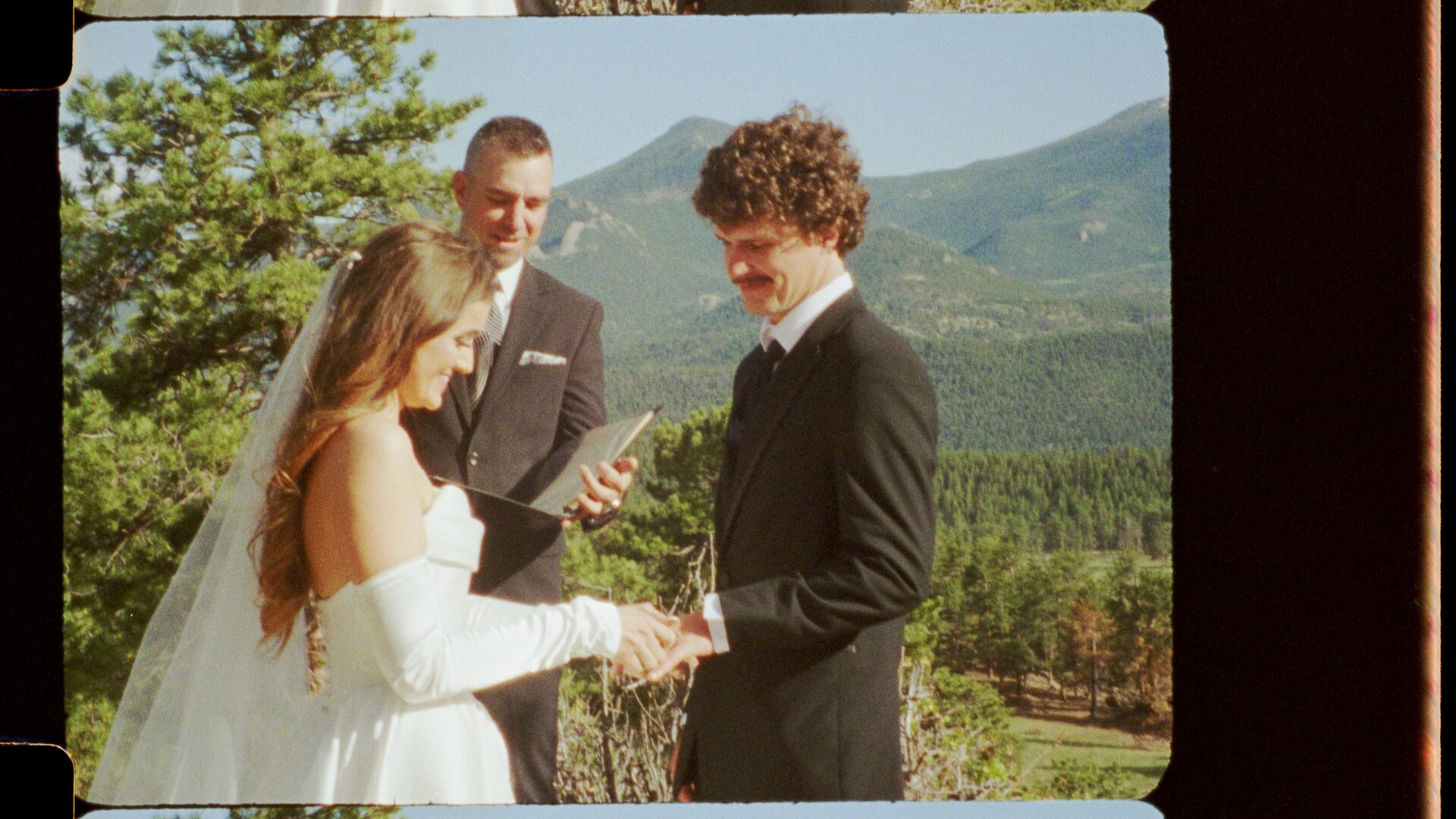
This is the part that surprises out-of-state couples, and it is the reason so many people choose Colorado. You do not need an officiant. You do not need a witness. Colorado law allows self-solemnization, which means the two of you can solemnize your own marriage. You sign the license yourselves, and you are legally married. It is one of only a few states in the country that permit this.
Practically, this changes the entire feel of the ceremony. Instead of standing in front of a third party who pronounces you married, you marry each other. You read your vows, you exchange whatever words and rings matter to you, and the two signatures on the line are what seal it. There is no script you are required to follow and no officiant whose schedule you have to work around. For couples who have always felt that the legal pronouncement by a stranger was the least meaningful part of a wedding, self-solemnization is a quiet revelation.
You can still have an officiant if you want one. Some couples ask a parent or close friend to lead a few words, or hire a celebrant whose presence they love. That is a choice, not a requirement. And if you want a guest to sign as a witness for the keepsake of it, you can, even though the law does not ask for one. The point is that the decision is entirely yours, with no legal box forcing your hand.
"Self-solemnization is the thing I tell every out-of-state couple about first. You marry each other. No officiant, no witness, just the two of you and your two signatures. It changes how the whole ceremony feels."
Step Five
Step 5: Choose Your Ceremony Location (and Permit If Needed)
Now you pick the exact spot, and here is where the one piece of genuine red tape lives. Whether you need a permit depends entirely on who manages the land you stand on. Get this right and the rest of the day is easy. Get it wrong and you risk a citation on what should be the best day of your life.
On private property, such as a ranch, a resort like Dunton Hot Springs, or a friend's land, you generally need no public permit at all, only the owner's permission. On many open public spaces and some town parks, a small ceremony often needs nothing or just a low-cost local reservation. The complexity lives on federal land, and Colorado has a lot of it. The key thing to understand is that different agencies manage different places, and they issue different permits.
Who issues which permit
The National Park Service issues a Special Use Permit for ceremonies inside national parks. In Colorado that means Rocky Mountain National Park and Mesa Verde, among others. The US Forest Service issues its own permit for National Forest land, which is where Maroon Bells, much of the San Juans, and most of the high-country aspen groves actually sit. People assume Maroon Bells is a national park because it looks like one; it is Forest Service land, and the permit comes from the USFS. When in doubt, find out who manages the exact spot before you assume.
Timed entry is separate from your permit
Here is the detail couples consistently miss. At the busiest parks, the reservation system that controls when vehicles can enter is completely separate from your ceremony permit. Rocky Mountain National Park runs a timed entry system in summer. Hanging Lake and a handful of other spots have their own reservation systems. Having a ceremony permit does not get you through the entry gate. You need both, booked separately, often opening on different schedules. Map this out early, because the entry reservations for a popular summer weekend can vanish in minutes.
Step Six
Step 6: Hire Your Photographer (and Why You Should Do This Early)
If you take one piece of vendor advice from this entire guide, take this one. The single vendor you genuinely need for a Colorado elopement is a photographer or videographer you trust. Everything else is a choice. Flowers, a caterer, a coordinator, an officiant, all of those are options you can take or leave. Documentation is the part you keep forever, and it is the part that cannot be redone if the day passes undocumented.
"The only vendor you need is a photographer or videographer you trust. An officiant is optional in Colorado. Flowers, caterer, coordinator, all of those are choices, not requirements."
Book early, and book an elopement specialist rather than a traditional wedding photographer who occasionally does them. The reason is practical. An elopement photographer knows the trailheads, the light, the timed entry systems, and the permit quirks, and good ones double as informal guides on the day, steering you to the right rock at the right minute. They also hold a limited number of dates. The best fall weekends in aspen season book a year out, and summer Saturdays go fast. Once you know your region and rough date, lock in coverage before you finalize anything else.
It is also worth deciding early between photography, video, or both. Film and digital each capture something the other cannot, and on a wedding day there is no second take. If a moving image of your vows in the wind matters to you, say so up front so it can be planned for. You can see how each level is built on our investment page.
Step Seven
Step 7: Pick Your Date and Time of Day
Two timing decisions shape your day more than any other: the season, and the hour. Get both right and everything else has room to go well.
The season
Late June through September is the most reliable window for the high alpine. Snow has cleared from the passes, the trails are open, and in July the wildflowers peak. Late September into early October is aspen season, the famous Colorado gold that pulls couples from around the world to Aspen, Crested Butte, and Telluride, and it is worth planning a year ahead because everyone wants it. Winter elopements are quiet, stunning, and genuinely special, but they demand flexibility and backcountry awareness, since access can change overnight.
The hour
This is the lever most couples underuse. The smoothest elopement days, by a wide margin, are the ones planned around the light, either sunrise or golden hour before sunset. Sunrise buys you empty trails, soft color, and the place largely to yourselves, which matters enormously at a spot like Maroon Bells or Sprague Lake. Golden hour gives you warmth and glow but shares the trail with the day's crowds. Midday, when most people instinctively schedule, gives you harsh overhead light and the busiest conditions. Plan the ceremony around one of the two good windows and let everything else flow from it.
"The couples who have the smoothest days are the ones who planned around the light, either sunrise or golden hour, and kept their guest list under ten. Those two choices solve more problems than anything else."
Step Eight
Step 8: Logistics, From Travel to Lodging, Food, and Attire
With the big decisions made, the remaining logistics are simple, but a few Colorado-specific details trip people up. Handle these and the day runs clean.
Travel and elevation. If you are flying in from sea level, build in a day or two to acclimate before a high-altitude ceremony. Elevation is real, and standing at 9,000 or 10,000 feet on no sleep after a red-eye is a recipe for feeling awful on your wedding morning. Arrive early, hydrate hard, go easy on alcohol the night before, and treat the altitude with respect.
Lodging. Book gateway-town lodging as early as you book your photographer, especially for fall. Estes Park, Aspen, Telluride, and Crested Butte fill a year out in peak season. For a multi-day adventure elopement, a single basecamp like a cabin or a place like Dunton lets you settle in instead of changing hotels.
Food. You do not need a caterer. Many couples do a celebratory dinner reservation in town, a picnic at the location, or a private chef for the basecamp. Keep it as simple or as special as you like; with no crowd to feed, the food becomes a treat rather than a production.
Attire. Dress for the mountain you are standing on, not the photo you imagined at sea level. Mornings are cold even in July, afternoon storms roll in fast above treeline, and trails are dusty or muddy. Bring layers, pack real shoes for the hike and change near the spot, and if your dress has a long train, plan for wind and dirt. The best elopement outfits look effortless precisely because the couple planned for the conditions.
Step Nine
Step 9: Build Your Day Timeline
A good elopement timeline does one thing above all: it protects your light window and leaves margin for the mountain. You are not running a reception clock, so resist the urge to overschedule. Here is a clean sunrise-ceremony shape that works again and again.
- Pre-dawn departure. Leave lodging in the dark so you reach the trailhead with time to spare. Mountain mornings do not wait, and rushing the access is the fastest way to start the day stressed.
- Hike or drive in at first light. Arrive at the spot as the sky begins to color. Empty trails, soft light, and room to breathe before anything begins.
- Ceremony at sunrise. Read your vows, exchange rings, sign your license. With self-solemnization, this is entirely yours, no officiant timing to manage.
- Portraits in the golden window. The half hour after the ceremony is your best light. Let your photographer move you through it without a rigid shot list.
- Explore with no schedule. Wander, sit, take it in. The unscripted hour after the formal part is where the best frames and the best memories usually happen.
- Celebrate in town. Breakfast, a long lazy morning, a dinner reservation that night. The celebration spreads out instead of compressing into a reception block.
If you are doing golden-hour instead of sunrise, flip the shape: explore in the late afternoon, ceremony as the sun drops, portraits in the last light, dinner after. Either way, the principle holds. Build the day around one good light window, keep the guest list under ten, and leave slack for weather. A timeline with breathing room is the difference between a day you endure and a day you savor.
What a Colorado Elopement Costs (Honestly)
Here is the straight answer, with no vague ranges hiding the real numbers. The total cost of eloping in Colorado depends almost entirely on how much you choose to add, because the legal floor is genuinely low. The license is a flat $30. A permit, if you need one, is typically modest. After that, every line is a choice.
| Line item | Typical range | Notes |
|---|---|---|
| Marriage license | $30 flat | Required. Paid at the county clerk. |
| Ceremony permit | $0 – $300 | Only on certain federal or town land. |
| Photography or video | From $2,900 | The one vendor you actually need. |
| Lodging (2 to 3 nights) | $400 – $2,500 | Varies wildly by town and season. |
| Food & dinner | $100 – $800 | Reservation, picnic, or private chef. |
| Attire, rings, flowers | Your call | All optional beyond what you already want. |
Add it up and the picture is clear. A truly stripped-down elopement, just the license, a permit, and coverage, can come in around a few thousand dollars. Most couples who want full documentation, a few nights of lodging, and a memorable meal land somewhere between $5,000 and $12,000 all in. The single largest line is almost always the photography or video, and that is the right place for the money to go, because it is the only part of the day you take home and keep. Everything else is a moment. Coverage is the record of it.
Common Mistakes to Avoid
After enough days on the ground, the same avoidable problems show up again and again. None of them are hard to dodge once you know to look.
Inviting too many people. The day gets exponentially harder past ten guests, and couples almost never regret keeping it small. They do regret the opposite. Hold the line.
Scheduling for midday. The instinct to marry at noon produces harsh light and the worst crowds. Plan around sunrise or golden hour instead, every time.
Confusing the permit with the entry reservation. At a park like RMNP, your ceremony permit does not get your car through the gate. Book timed entry separately and early.
Assuming the land manager. Maroon Bells is Forest Service, not Park Service. Confirm who manages your exact spot before you apply for the wrong permit.
Underestimating elevation and weather. Flying in the night before a 10,000-foot ceremony, packing no layers, ignoring the afternoon storm pattern. Respect the mountain and it rewards you.
Booking the photographer last. The best dates go first. Lock coverage early, then build the rest of the day around it. For a deeper Colorado-specific walkthrough, our original Colorado elopement guide covers more real-couple examples.
Your Next Steps
You now have the whole process, in order. Here is how to turn it into motion. Decide the shape of your day and your region. Pencil in a season and commit to a sunrise or golden-hour ceremony. Confirm whether your spot needs a permit and from which agency, and check for a separate timed entry system. Then secure the one vendor you cannot redo: a photographer or videographer you trust. The marriage license is a same-week errand once you arrive, with no waiting period to plan around.
Do those things and the rest falls into place. Colorado is built for this. The law clears your path, the landscape carries the day, and a small, intentional gathering, or just the two of you, is all it takes. When you are ready to talk through your specific spot, date, and vision, we would love to help you build it and document it properly.
Your Questions, Answered
Do you need a witness to get married in Colorado?
No. Colorado does not require a witness, and it does not require an officiant either. Colorado allows self-solemnization, which means a couple can legally marry each other with only their own two signatures on the marriage license. It is one of just a handful of states that permit this, which is a big reason couples elope here.
How do you get a marriage license in Colorado?
Both parties apply together, in person, at any Colorado county clerk and recorder office, regardless of where you live. Bring valid government photo ID. The license costs a flat $30 statewide, there is no waiting period, and it is valid for 35 days from issuance. You can use it anywhere in the state, not only in the county that issued it.
What is self-solemnization in Colorado?
Self-solemnization means the couple solemnizes their own marriage. In Colorado, you and your partner sign the marriage license yourselves and no officiant is needed for the marriage to be legal. You can still hold a ceremony, read vows, and involve a guest, but legally the two signatures are what marries you. Colorado is one of the few states that allow this.
Do you need a permit to elope in Colorado?
It depends on the land. A ceremony on private property or many open public spaces needs no permit. Federal land usually does. Rocky Mountain National Park and Mesa Verde require a National Park Service Special Use Permit, while Maroon Bells and most National Forest areas require a Forest Service permit. Timed entry reservations at busy parks are a separate system on top of the permit.
How much does it cost to elope in Colorado?
A genuinely simple Colorado elopement can run a few thousand dollars: the marriage license, a permit if you need one, and a photographer or videographer. Most couples who want full documentation, a few nights of lodging, and a nice meal land somewhere between $5,000 and $12,000. The single largest line is almost always coverage, because that is the part you keep.
What is the best time of year to elope in Colorado?
Late June through September is the most reliable window for high alpine locations, with wildflowers peaking in July. Late September into early October brings the aspen gold that draws couples from around the world, especially around Aspen, Crested Butte, and Telluride. Winter elopements are stunning and quiet but require backcountry awareness and flexible access plans.
About the Author
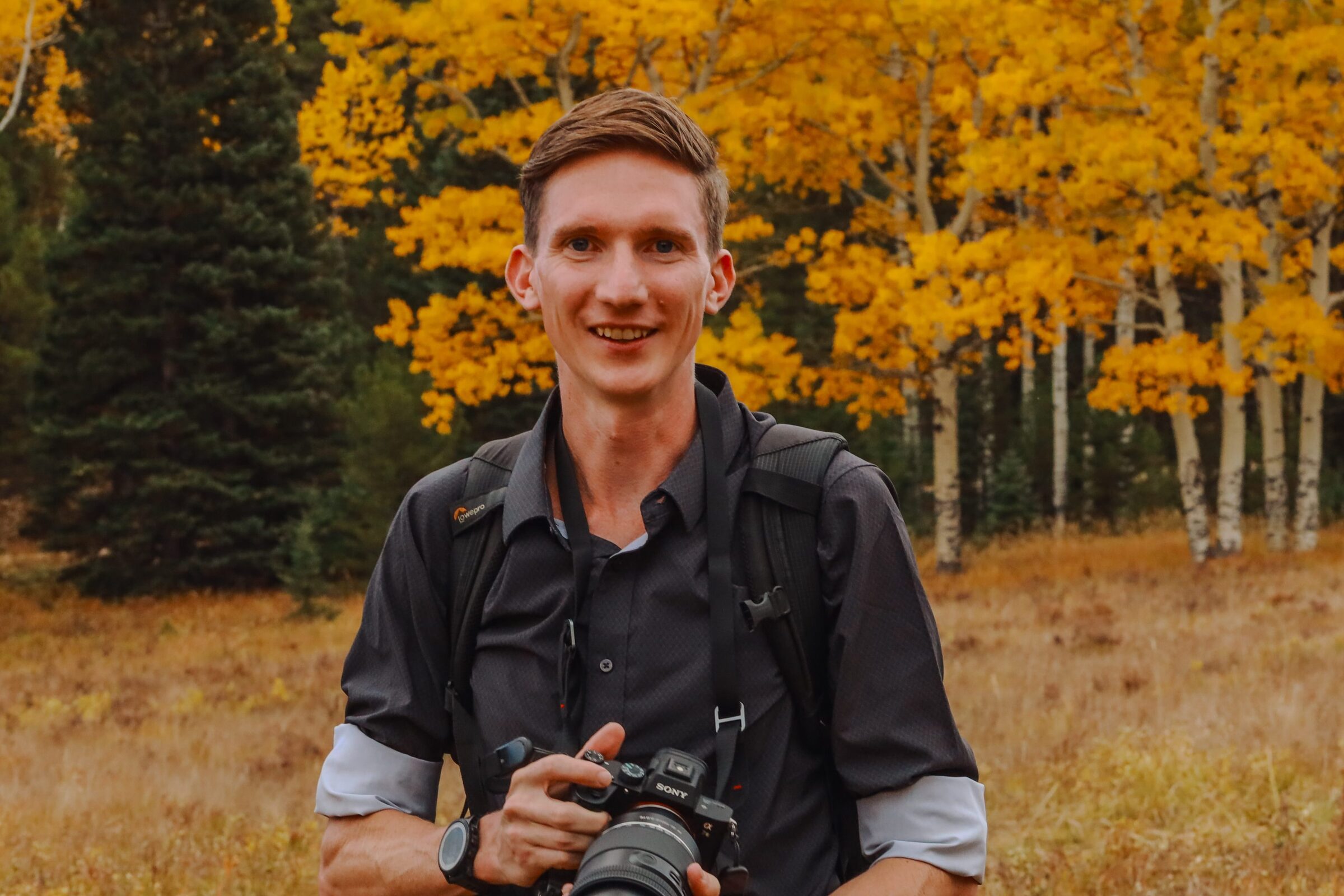 Brandon Krage is the owner and filmmaker behind
Motus Weddings, an adventure wedding photography and
videography studio based in Colorado. Together with his wife and co-owner Aby, he documents
couples eloping across the state, from Rocky Mountain National Park and Maroon Bells to the
San Juans and the Great Sand Dunes, on digital, 35mm film, Super 8mm, and 16mm cinema film.
More about Brandon and Aby.
Brandon Krage is the owner and filmmaker behind
Motus Weddings, an adventure wedding photography and
videography studio based in Colorado. Together with his wife and co-owner Aby, he documents
couples eloping across the state, from Rocky Mountain National Park and Maroon Bells to the
San Juans and the Great Sand Dunes, on digital, 35mm film, Super 8mm, and 16mm cinema film.
More about Brandon and Aby.