
When you are figuring out what to wear for a mountain elopement, the short answer is this: wear something that lets you move, holds up to wind and cold, and photographs warmly against the landscape. That usually means a dress with some flow or a textured suit, real footwear for the hike, a warm tone over a stark one, and a layer you can throw on for the walk in. Get those four things right and almost everything else is personal preference.
We film and photograph adventure elopements across Colorado and the Rockies, so we have stood on a lot of trailheads watching couples figure this out in real time. Some of it goes beautifully. Some of it we could have warned them about. This guide is the warning and the wish list in one place: what works, what photographs well, what the wind will do to it, and the small decisions that make the difference between fighting your outfit all day and forgetting you are wearing it.
If you are still choosing a date or a location, start with how to plan a mountain elopement and come back here for the outfit. If you already know your where and when, read on.
Dressing for Your Day Is Different From Dressing for a Venue
A ballroom is climate controlled and flat. A mountain is neither. The dress that looks perfect under chandeliers may be the wrong tool for a mile of trail, a thousand feet of elevation, and a breeze that did not exist in the parking lot. None of that means you scale back the beauty. It means you choose for the conditions you will actually be in.
The good news is that the mountain does a tremendous amount of the work for you. You do not need a dress to compete with granite and golden light. You need a dress that belongs there. The couples who look the most like themselves in their photos are almost always the ones who picked something they would feel comfortable wearing on a really good day, then trusted the place to be the spectacle. Aby, my wife and co-owner, says it best when couples ask her: "Wear something that feels like you on your best day, not your wedding day idea of you. The mountain is already doing the heavy lifting on beautiful."
Practically, that shift changes a few choices. You will lean toward fabrics that move, colors that sit inside the landscape rather than shout over it, and footwear you can actually walk in. Everything in this guide flows from that one idea: dress for the day you are having, in the place you are having it.
The Three Things to Solve For
Every mountain elopement outfit decision comes down to three variables. When couples get stuck, it is almost always because they are optimizing one and forgetting the other two. Solve all three and you are done.
Movement
You will walk, kneel in grass, scramble onto a rock for a better view, and possibly cross a creek. Anything so tight that hiking feels restricted will work against you all day, and it shows in the photos as stiffness. You want range of motion in the hips, knees, and shoulders. A fitted gown can absolutely work if it has a slit, stretch, or a manageable train, but test it before the day by squatting and taking a big step. If you cannot do both comfortably, the mountain will remind you.
Temperature
Elevation is colder than the town you drove up from, often by ten or fifteen degrees, and the wind makes it feel colder still. Early light and late light, the two times we most want to be photographing, are the coldest parts of the day. Plan to be warm enough to relax. A couple who is shivering reads as a couple who is shivering, no matter how good the outfit is. This is what layers are for, and we will get to them.
How It Photographs
This is the variable couples think about least and we think about most. Color, fabric texture, and movement all change how an outfit reads on camera, and they change even more on film. Warm tones glow. Texture holds detail. Flowing fabric gives us motion to work with. We will break each of these down in the sections that follow, because this is where a photographer's perspective earns its keep.
"Wear something that feels like you on your best day, not your wedding day idea of you. The mountain is already doing the heavy lifting on beautiful." Aby Krage, Motus Weddings
Dresses for Mountain Elopements
A flowing dress is the classic mountain elopement look for a reason. In motion, with wind and light behind it, a flowy dress photographs beautifully, and it gives a film camera something alive to follow. If you have been pinning images of a dress catching the breeze on a ridgeline, that instinct is correct.
Here is the reality nobody pins, though: wind at elevation is real, and a long, light dress in a sustained breeze is a handful. A flowy dress at Maroon Bells in September with a steady wind off the lake is something you will manage all afternoon, not something that simply floats on its own. The fix is simple. Wear a slip underneath so a gust never becomes a wardrobe issue, and go in knowing you may need to hold the fabric during the windiest stretches. If your location is famous for wind, consider a slightly heavier fabric, or a fitted bodice with a flowing skirt, so you get the movement without the constant management.
On color, warm and earthy wins, especially on film. Ivory, cream, champagne, dusty rose, sage, rust, and terracotta all glow against rock, evergreen, and alpine light. Stark white is the one to think twice about: in bright mountain sun it can blow out and lose detail, where a soft ivory keeps its texture and shape. Electric blue and hot pink, beautiful as they are elsewhere, tend to fight a mountain background instead of living inside it. A good test is to ask whether your color appears somewhere in the landscape itself. If it does, it will sit naturally in the frame.
Want to see how warm tones and movement read on real couples? Browse our recent films and galleries for mountain elopements across Colorado.
Suits and Alternatives
For grooms and anyone wearing a suit, the single most useful rule is texture over flat fabric. Tweed, linen, and textured wool all photograph beautifully and hold their detail in a way a flat, smooth suit does not. On film especially, texture is what keeps a jacket from reading as a dark blob. A flat black suit is the common miss here: in bright daylight it can go dull and lose all its shape, where a textured wool in a similar tone stays rich.
If you want a safe classic that never misses, a navy suit in a green meadow is exactly that. Navy reads warm in mountain light, pairs with almost any dress color, and photographs cleanly in both sun and shade. Earth tones like olive, tan, brown, and warm grey all work for the same reasons the dress palette does: they belong in the landscape.
You also do not need a full suit to look intentional. A vest over a rolled-sleeve shirt, an overshirt or chore jacket in a textured fabric, or trousers with a fine knit can all read as considered and photograph wonderfully on a mountain. Adventure elopements give you permission to dress for the place. The point is to look like the most put-together version of yourself in that setting, not to recreate a hotel ballroom on a ridgeline.
THE MOST-UNDERESTIMATED DECISION
Footwear: The Big One
If you read one section, read this one. The single most photographed mistake at a mountain elopement is heels on a trail. We have seen it dozens of times: stilettos that sink into soft ground, slide on gravel, and turn what should be a relaxed walk into a careful, tense one. It is uncomfortable, it can be genuinely unsafe on uneven terrain, and it shows up in the photos as someone who would rather be sitting down.
The solution is a two-shoe system, and it is easy. Wear hiking boots or clean trail runners for the approach, the part nobody photographs anyway, then switch into your dressier shoe at the ceremony spot once you are standing still. If you want a heel for that moment, choose a block heel or a wedge rather than a stiletto. Both give you height and a polished look while staying stable on dirt and rock. Plenty of couples skip the swap entirely and stay in clean boots or even bare feet on soft grass, and it looks completely right.
SHOE RULE · NON-NEGOTIABLE
For Anyone Else on the Trail
- Bridesmaids, groomsmen, family, and guests: hiking boots or trail runners. Period. No exceptions.
- The couple: boots or trail runners for the approach, block heels or wedges for the ceremony if you want them.
- On soft grass or a lakeshore: bare feet photograph beautifully and keep you steady.
A guest in the wrong shoes slows the whole group and ends up sitting out the parts they came for. Tell everyone in advance. They will thank you on the way down.
Whatever you choose, break it in before the day. New boots on a wedding morning is its own kind of mistake. A few short walks beforehand is all it takes.
Layering for Mountain Weather
Layering is the rare choice that is both practical and genuinely photogenic, which is why we love it. A cape, a shearling jacket, or a denim jacket thrown over a dress for the approach creates beautiful transitional moments and keeps you warm until the ceremony itself. Some of our favorite frames happen in exactly that in-between: the walk in, the layer on, the light low. It does not read as a compromise on the camera. It reads as part of the story.
Think in three stages. For the hike in, wear or carry a warm outer layer you do not mind getting a little trail dust on. For the ceremony, you can shed it for the vows and the portraits if the weather allows, then put it right back on. For the walk out and any golden-hour wandering, it goes back on for good. A wrap, a long coat, a chunky knit, or a tailored jacket all work, and they give us a whole second look without a full outfit change.
Match the layer to the season and the season to the place. A linen overshirt is plenty for a July morning in the high country. A wool coat or a shearling is what you want for a fall ceremony when the wind turns. The goal is simple: be warm enough that you can stand still, hold hands, and actually be present, because that is what the camera is really there to catch.
Outfits by Season
The same principles flex with the calendar. Here is how to think about each season in the mountains, and what tends to photograph best in each. If you are still picking a month, our guide on when to elope in Colorado pairs well with this.
Summer
High summer is the most forgiving for fabric. Lightweight dresses, linen suits, and breathable layers all shine, and you can lean into flow because the temperature lets you. Still pack a light jacket or wrap for early starts and high elevations, where dawn can be cold even in July. Afternoon thunderstorms are common in the Rockies, so a structured ceremony window in the morning often beats midday.
Fall
Fall is our favorite for outfits because the palette of the season does so much for you. Rust, terracotta, cream, and deep greens sit perfectly among golden aspens, and the cooler air gives every reason to add a gorgeous coat, shearling, or knit. Wind picks up this time of year, so the dress notes above matter most in fall.
Winter
Winter elopements are stunning and demanding in equal measure. Ivory and cream glow against snow, and a long wool coat, a faux-fur wrap, or a cape becomes a real part of the look rather than an afterthought. Warm, waterproof footwear is essential, and hand warmers tucked into pockets keep you relaxed. See our notes on planning a winter elopement for the rest of the picture.
Spring
Spring is the trickiest to dress for because the weather has not decided what it is yet. Mud, lingering snow, and sudden warmth can all happen in one afternoon. Dress for layers you can add and remove, favor sturdier footwear, and choose softer warm tones that read well in flat, overcast light, which spring loves to deliver.
Bringing a Second Outfit (Why It's Worth It)
For many couples, a second outfit is the quiet upgrade that makes the whole day easier. The idea is simple: keep your main ceremony look protected for the moments that matter, then change into something rugged for the parts that ask more of you. A simpler second look, a slip dress, a knit, or hiking-friendly layers, lets you cover serious ground, scramble to a higher viewpoint, or warm up without a single worry about your good outfit.
There is a creative payoff too. A second look gives your gallery and film real variety: the elevated ceremony look in soft light, then a relaxed, adventurous look as you explore. We have shot some of our best, most candid frames after couples changed into something they could truly move in, because they finally stopped thinking about their clothes and started just being together.
You do not have to spend much for this to work. A favorite outfit you already own, chosen in a warm tone and easy to hike in, is plenty. The win is functional first and beautiful second.
Accessories That Photograph Well
Small details add up on camera, and a few are worth a mention. A veil can be magic in mountain wind, trailing and catching light, but it is the same wind story as a flowy dress, so be ready to manage it or have someone help. Florals in warm, muted tones photograph far better than bright, saturated arrangements that compete with the landscape. Hats, wraps, and capes all read as intentional and double as warmth.
One genuinely fun, practical heads-up about rings, since couples are often surprised by it. If we are filming on Super 8mm, a reflective or mirror-finish band can throw small lens flares into the footage. It is not a problem at all, just a different look than you might expect, with little bursts of light dancing off the ring in the film. If you would rather avoid it, a matte or brushed finish stays clean. If you love the idea, lean in. Either way, it helps to know before you see it on screen. You can read more about the format in our piece on Super 8mm wedding film.
One last list, the short version of what not to wear: matching athleisure, anything with prominent logos, anything so tight that hiking feels restricted, and anything you would be devastated to get a little dirty. The mountain is going to leave a mark on your hem at some point. Wear something you can love anyway.
PACK THIS, NOT JUST WEAR THIS
What to Bring (Not Just Wear)
What you carry matters almost as much as what you wear. A small kit in a daypack keeps a great day from going sideways over something tiny. Here is the mountain elopement emergency kit we wish more couples packed, built from the things we have actually watched save an afternoon.
MOUNTAIN ELOPEMENT KIT
The Pack List
- Water and snacks: more than you think, for elevation and energy.
- Warm layers: an extra jacket or two beyond what you plan to wear.
- Hand warmers: small, inexpensive, and quietly heroic in cold light.
- A small repair kit: safety pins, a needle and thread, fashion tape, and a stain pen.
- Blister care: moleskin or bandages, even with broken-in shoes.
- Sunscreen and lip balm: sun at elevation is stronger than it feels.
- A trash bag or towel: to sit on, kneel on, or protect a hem.
- Your dressier shoes: the swap pair, if you are doing the two-shoe system.
- Marriage license and vows: the two things you truly cannot replace on the trail.
Hand the pack to whoever is hiking with you, or build it light enough that you can carry it yourselves. The point is not to weigh you down. It is to make sure a cold gust, a scuffed hem, or a hungry afternoon never becomes the thing you remember about the day.
Pull it all together and the formula is calm and simple. Choose a warm tone over a stark one, fabric you can move in, real footwear for the trail, and a layer for the walk in. Pack a small kit, bring a second look if you want to roam, and let the place be the spectacle. Do that, and you will spend your day looking at each other and the view, not adjusting your clothes.
When you are ready to have the day filmed and photographed by people who think about wind, light, and trailheads as part of the job, that is exactly the work we love most. We are based in Colorado, we travel for adventure elopements across the mountain west, and we are happy to weigh in on outfit and location together, since the two decisions really do shape each other.
Map out the rest of the day with our mountain elopement planning guide, see real couples in their elements on our work page, or read what film adds on a wedding day in our Super 8mm overview. Questions about a specific location or season? Ask us directly.
Your Questions, Answered
What should I wear for a mountain elopement?
Wear something that lets you move, holds up to wind and cold, and photographs warmly against the landscape. For most couples that means a dress with some flow, a textured suit, real footwear for the hike, and a layer like a cape or denim jacket for the approach. Warm tones such as ivory, champagne, sage, and rust glow on film, while stark white can blow out in bright mountain light.
What shoes should I wear for a mountain elopement?
Wear hiking boots or clean trail runners for the approach, then switch to block heels or wedges at the ceremony spot if you want a dressier look. The single most photographed mistake we see is stiletto heels on a trail. They sink, slide, and turn a beautiful walk into a tense one. Bridesmaids and family attending should plan on hiking boots or trail runners, no exceptions.
What colors photograph best for a mountain elopement?
Warm, earthy tones photograph best, especially on film. Ivory, cream, champagne, dusty rose, sage, rust, and terracotta all glow against rock, evergreen, and alpine light. Stark white can blow out in bright sun, and electric blue or hot pink tend to fight with mountain backgrounds rather than sit inside them. When in doubt, choose a tone you would find in the landscape itself.
Can you wear a flowy dress for a mountain elopement?
Yes, and a flowy dress photographs beautifully in motion. Just respect the wind at elevation. A long, light dress in a sustained mountain breeze is a handful, so wear a slip underneath and be ready to hold it during the windiest moments. If your location is known for gusts, a slightly heavier fabric or a fitted bodice with a flowing skirt gives you the movement without the constant management.
What should the groom wear for a mountain elopement?
Choose texture over flat fabric. Tweed, linen, and textured wool hold detail and look stunning on film, while a flat black suit can go dull in bright light. A navy suit in a green meadow is a classic that never misses. You do not need a full suit either. A vest, an overshirt, or trousers with a knit layer can read just as intentional on a mountain as a jacket and tie.
Should I bring a second outfit for my elopement?
It is worth it for many couples. A simpler second look, like a slip dress, a knit, or hiking-friendly layers, lets you cover serious ground, scramble to a viewpoint, or warm up without worrying about your main outfit. Keep the ceremony look protected for the moments that matter, then change into something rugged for the long walk to the next spot.
About the Author
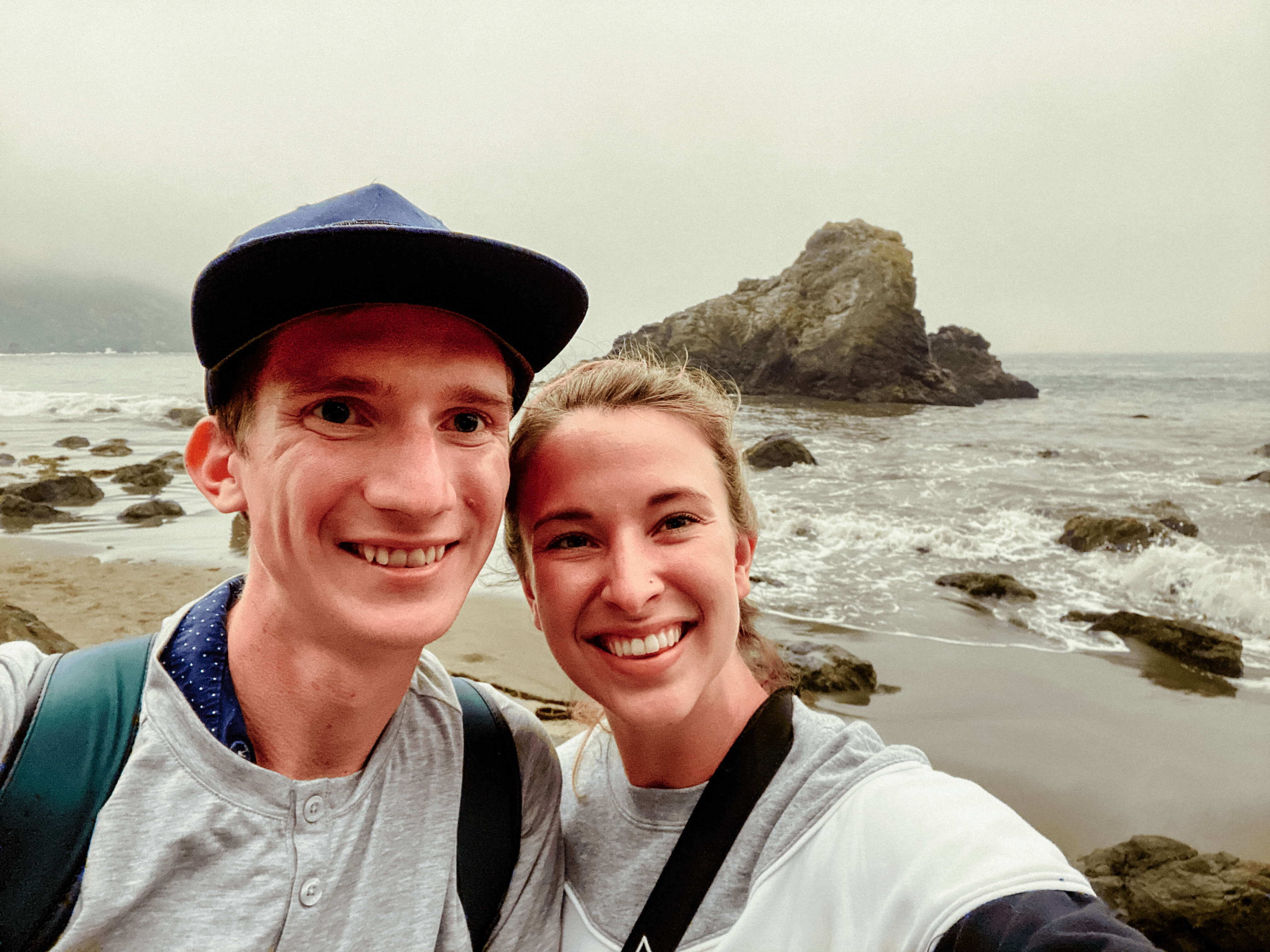 Brandon Krage is the owner and filmmaker behind Motus Weddings, an adventure wedding photography and videography studio based in Colorado. Together with his wife and co-owner Aby, who photographs and seconds on video, he has spent more than six years and 150+ weddings and elopements documenting couples on digital, 35mm film, Super 8mm, and 16mm cinema film. They have photographed mountain elopements from Maroon Bells to Rocky Mountain National Park, in every season, which means they have watched a lot of outfit decisions play out on real trails in real weather. More about Brandon and Aby.