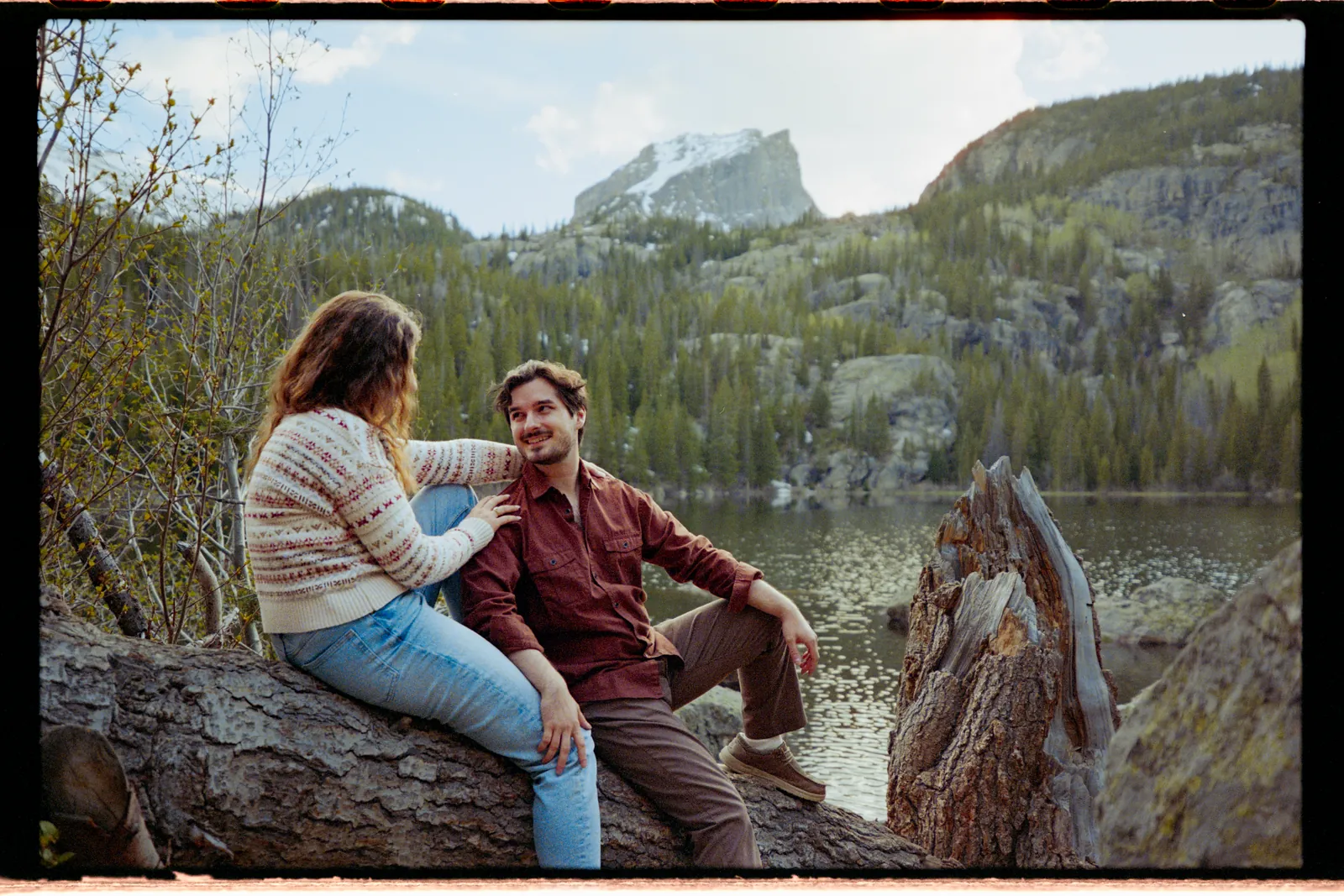
You have seen the photos. The light hitting Longs Peak at golden hour, two people in the middle of an alpine meadow with nothing around them but wind and granite, a glassy lake throwing the whole Continental Divide back at the sky. That is the picture in your head when you imagine a Rocky Mountain National Park elopement, and it is absolutely real. We have stood in that exact light more times than we can count.
What that photo does not show you is the paperwork. RMNP is the most popular place to elope in Colorado, and that popularity comes with a permit system, a separate timed entry system, group limits that catch couples off guard, and an application window so competitive that the best summer dates are gone the same morning they open. This is the part nobody puts in the dreamy reel, and it is exactly where most planning goes sideways.
This guide fixes that. Rocky Mountain is our home park, and we have filmed and photographed elopements here across every season, at nearly every ceremony site the park allows. Below you will find the full permit process broken down further than anyone else has bothered to, every approved ceremony location with its real group limit, how timed entry actually interacts with your wedding, the season-by-season truth about Trail Ridge Road and the alpine tundra, and the honest take on which sites deliver the experience you are picturing and which ones quietly do not.
The Draw
Why RMNP Is the Most Popular Elopement Destination in Colorado
Rocky Mountain National Park sits a little over an hour and a half from Denver, which makes it the rare alpine park you can reach without a full travel day. That access is the first reason it wins. You and your guests can fly into a major airport, sleep in a real bed in Estes Park, and stand under 14,000-foot peaks the next morning. Most national parks ask far more of the people you love before they ever see you say your vows.
The second reason is range. Inside a single park you can choose a flat, mirror-still lake, a wide-open meadow with elk grazing at the tree line, a granite overlook above the valley, or, in the short alpine season, tundra above the clouds. Few places give you that many distinct backdrops within a thirty-minute drive of one another. When couples ask us where to elope in Colorado, RMNP is almost always the first park we walk through with them, and the national park elopement mindset carries over cleanly here.
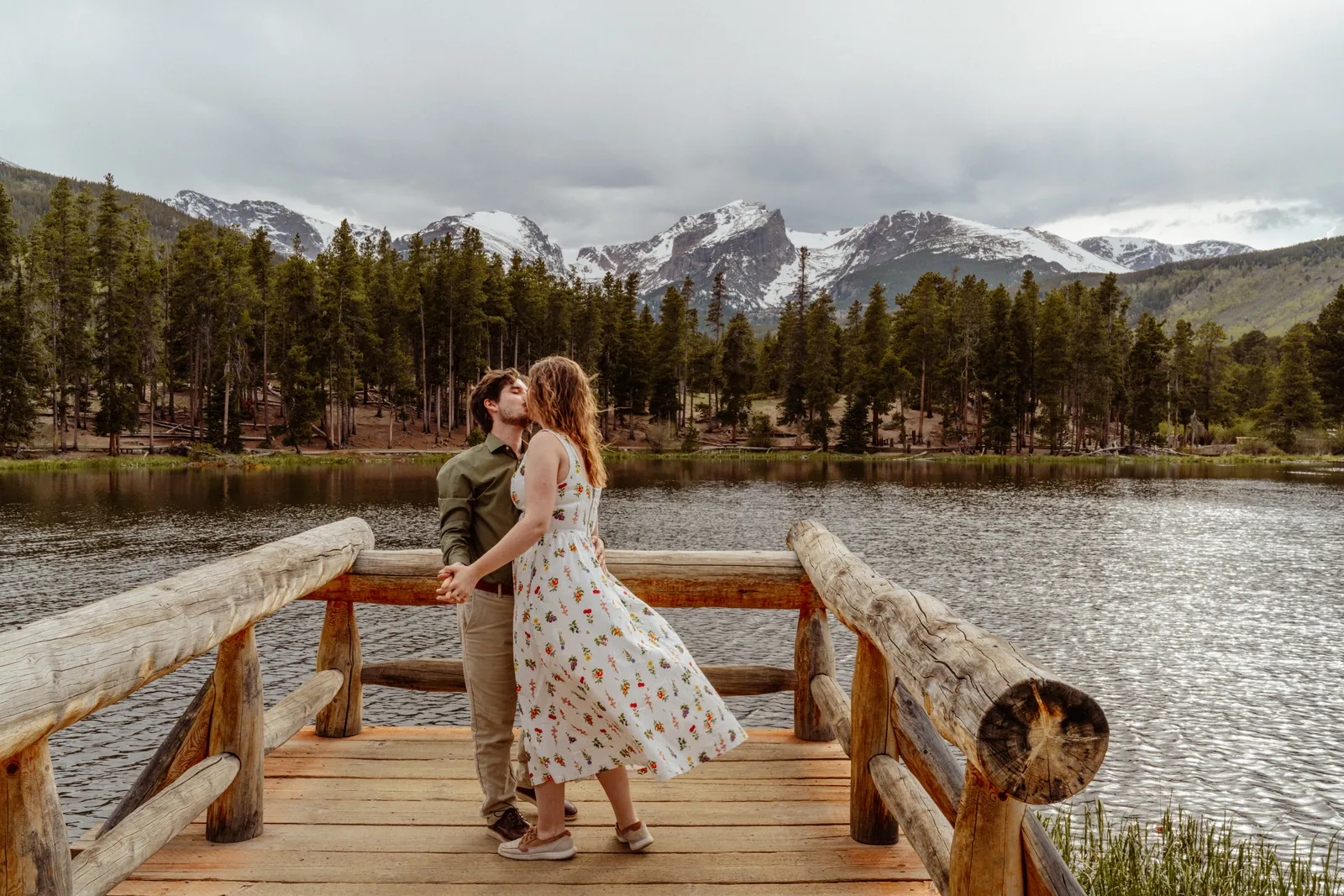
The third reason is the light. The east side of the park faces a wall of peaks that catches first light in a way that makes a sunrise ceremony genuinely worth the early alarm. We have photographed couples at Sprague Lake at 6 a.m. with the water dead calm and the whole range turning gold, and there is simply no filter for that. The catch is that everything desirable about RMNP, the access, the range, the light, is desirable to a lot of people. That is what the permit system exists to manage, and it is where your planning really begins.
The Permit
The RMNP Special Use Permit: Step by Step
Here is the single most important thing to understand before anything else: a ceremony in Rocky Mountain National Park requires a Special Use Permit any time two or more people are involved, which means even a just-the-two-of-you elopement needs one. The permit is what makes your ceremony legal inside the park, and it ties you to a specific designated site, a specific date, and a two-hour window. This is the section where most guides go thin and where we are going to go deep, because outranking the competition for the permit question means actually answering it.
Cost, Timeline, and the Submission Window
The permit carries a flat, non-refundable administrative fee of $300. That number does not change based on your site, your group size, or your season. A two-person ceremony at the smallest lake costs the same $300 as a thirty-person ceremony at Upper Beaver Meadows. Important detail that trips people up: you do not send payment with your application. The park reviews your request first, then emails you a draft permit with instructions on how to pay. If you mail a check up front, you have jumped a step.
The timing is where RMNP separates the prepared from the disappointed. Applications are accepted one year in advance of your ceremony month, and review begins on the first day of that month on a strict first-come basis. If you want a July date, your application gets reviewed starting July 1 of the previous year. The park caps the calendar hard: no more than 60 ceremonies per month from May through October, no more than 40 per month from November through April, no more than two weddings per day at any single site, and no more than six total ceremonies in the park on any given day. Summer Saturdays do not last. As of this writing, the park's own page lists all of June 2026 as fully booked. The lesson is simple and unforgiving: a desirable summer date can fill within hours of its window opening, so you apply the morning it opens, not the week after.
One rule that surprises couples every time: at RMNP the permit must be applied for by the couple personally. A primary ceremony participant, the person getting married, is listed as the applicant. Your photographer cannot submit the application on your behalf here the way vendors handle paperwork at some venues. We will guide you through every field, but your name goes on it, and you sign it.
How to Actually Apply
The mechanics are more straightforward than the timing. The process runs in four steps:
- Complete the application. Download the wedding Special Use Permit form from the park's weddings page. You must include applicant information, a description of your proposed activity and any equipment, a specific date, a specific designated site, a two-hour time window, and your best estimate of total people and vehicles. Missing any of these and the application cannot be processed.
- Email it in. Send the completed form to romo_fees_permits@nps.gov. Mailed, faxed, and phoned-in requests are not accepted, and applications are not processed on weekends. Allow 7 to 10 days for a response.
- Sign the draft and pay. Once the park reviews and approves, you receive a draft permit to review and sign, along with instructions for the non-refundable $300 fee. By signing, you certify your information is correct and that you have read and will follow every permit condition.
- Carry the final permit. You get a fully executed permit by email. Bring a printed or digital copy on the day and be ready to show it at the entrance station and the Bear Lake checkpoint. Share it with your whole party, because you are responsible for the entire group following the conditions.
Group Size, Vendor Count, and the Trap Nobody Mentions
This is the detail that quietly ruins more RMNP plans than any other, so read it twice. The group size limit at every site includes everyone present: the couple, every guest, children and infants, the officiant, and every photographer and videographer. The park does not give your vendors a separate pass. They count.
Run the math on a real example. Sprague Lake in summer is capped at 15 people. Picture a couple who wants their parents, a few close friends, an officiant, a photographer, and a videographer. That is two of them, plus an officiant, plus a two-person photo and video team, which is five spots gone before a single guest is counted. Suddenly your 15-person site only holds 10 guests, not 15. We have watched couples build a guest list against the wrong number and have to make hard cuts a month out. Build your list against the real limit from day one, with your full vendor team subtracted first.
A few more conditions worth knowing before you fall in love with a vision the park will not allow. Ceremonies are capped at two hours total at the site, and that window includes setup, the ceremony, and any photos at that location. Decorations, altars, tables, tents, floral displays, and generators are prohibited or heavily restricted; a few chairs are allowed for anyone who cannot stand. Real flower petals, rice, and birdseed cannot be thrown or scattered, though bouquets and boutonnieres are fine. Amplified music is not allowed, and sound must stay at conversation level. Arches are permitted at only one site, Moraine Park Discovery Center Amphitheater. And drones are flatly prohibited everywhere in the park, for everyone, with no exceptions, even for a licensed operator. If a sweeping aerial is core to your vision, RMNP is not the park for it.
"The vendor count is the thing I wish every couple knew on day one. Your photographer and videographer are not extras standing off to the side in the park's eyes. They are two of your fifteen. Plan the guest list around that and nobody gets cut later."
RMNP Elopement Cost & Timeline
- Special Use Permit (flat, non-refundable) $300
- Park entrance, per vehicle (day pass, approx.) ~$30
- Larimer County marriage license varies
- Timed entry processing fee (if needed, recreation.gov) $2
- Apply ahead of ceremony month 1 year
- Park response time after applying 7 to 10 days
- Max ceremony length at the site 2 hours
- Largest group size allowed (any site) 30 people
Note what is not on that list. The permit fee covers your right to hold the ceremony; it does not cover entrance fees, which every vehicle still pays at the gate, and it does not cover your marriage license, which is a separate errand entirely. The license comes from Larimer County, and Colorado is unusually friendly here: the state allows couples to self-solemnize, meaning you can legally sign your own license without an officiant if you want the most stripped-down version of the day. Confirm current fees and the process before your date.
RMNP is one chapter of a bigger story. For statewide permits, seasons, and locations beyond this park, start with our complete Colorado elopement guide.
The Sites
Every Approved Ceremony Site in RMNP
Ceremonies can only happen at one of the park's designated wedding locations, no matter how small your group. Holding a ceremony anywhere else, a roadside pullout, an overlook, a trail you found on Instagram, is a violation that can result in a citation for the couple, the photographer, and the officiant. There is real teeth behind this, so the site list is not a suggestion. Here is the full roster, with the maximum group size at each. Note that several limits change between summer and winter, and that summer runs from the Friday of Memorial Day weekend through the second Monday in October.
| Ceremony Site | Max Group | Vehicles | Notes |
|---|---|---|---|
| Sprague Lake | 15 summer / 30 winter | 3 / 10 | Flat, accessible, easy parking |
| Bear Lake | 20 | 5 | Winter only, no weekends |
| 3M Curve | 15 | 3 | Overlook, big mountain views |
| Upper Beaver Meadows | 30 | 10 | Open meadow, private feel |
| Moraine Park Amphitheater | 30 | 10 | Only site allowing an arch and dogs |
| Hidden Valley | 30 | 10 | Strong winter and snow option |
| Alluvial Fan | 20 | 5 | Rock and water, dramatic |
| Copeland Lake | 30 | 10 | Wild Basin, quiet south end |
| Harbison Meadows | 30 | 10 | West side, dogs allowed |
| Lily Lake Trail | 20 | 5 | Lakeside, near Estes Park |
| Lily Lake Dock | 10 | 3 | Smallest, very intimate |
| Lily Lake Southside Picnic | 30 | 10 | Only site allowing a simple reception |
| Timber Creek Amphitheater | 20 | 5 | West side, closed in winter |
A couple of strategic reads on that table. If you want a dog in your ceremony, your only options are Moraine Park, Harbison Meadows, and Timber Creek. If you want an arch, Moraine Park is the only site that allows one. And if you are quietly hoping for any kind of food gathering afterward, Lily Lake Southside Picnic Area is the single location that permits a simple reception, and it requires its own additional permit. Everywhere else, the rule is the same: keep it simple, and let the park do the decorating.
Our Picks
The Best Ceremony Locations in Rocky Mountain National Park
We have stood at most of these sites in most conditions, so here is the working knowledge behind the table. These are the places we send couples to first, and the honest notes on what each one is really like at the hour you would actually be there.
EAST SIDE · BEAR LAKE ROAD
Sprague Lake (the easiest)
If we could only recommend one site to a couple who wants the iconic RMNP look without the stress, it would be Sprague Lake. The loop trail around the water is flat and wheelchair accessible, the parking is the most forgiving on the Bear Lake corridor, and the lake throws back a clean reflection of the Continental Divide when the morning is calm. We have shot more sunrise ceremonies here than anywhere else in the park, and it consistently delivers the photo people have in their heads. Go at first light and you may have it nearly to yourselves.
EAST SIDE · BEAR LAKE
Bear Lake (iconic but crowded)
Bear Lake is the postcard, and it is the most-visited single spot in RMNP, which is exactly the tension. The park only permits ceremonies here in winter and never on weekends, precisely to keep it out of peak crowds. A snowy weekday morning at Bear Lake is genuinely magic and quiet. A summer afternoon is not even an option for your ceremony, and for good reason. If Bear Lake is your dream, plan a winter date and a weekday, and lean into the snow rather than fighting it.
EAST SIDE · OVERLOOK
3M Curve and Many Parks Curve (the overlooks)
For couples who want elevation and a sense of standing above the valley, the curve overlooks deliver. 3M Curve is a designated ceremony site with a wide view across the park, and the nearby Many Parks Curve is one of our favorite spots to keep photographing after the ceremony, since your permit gives you access to the rest of the park for portraits that day. These sites feel grand and expansive, the opposite of an enclosed lakeside, and they photograph beautifully in the long light of early morning or late afternoon.
EAST SIDE · MEADOW
Upper Beaver Meadows (the private feel)
Upper Beaver Meadows is where we send couples who want space. It is an open, rolling meadow ringed by peaks, with the highest group allowance in the park at 30 people, and it tends to feel far more private than the lake sites simply because there is more room to spread out. Elk move through here at dawn and dusk in the shoulder seasons. If you are bringing a larger group of guests or you just want the wide-open Colorado feeling rather than a tight lakeshore, this is the one.
EAST SIDE · MEADOW
Moraine Park (open mountain views, and the one with an arch)
The Moraine Park Discovery Center Amphitheater is the practical choice for couples who want a little more structure. It holds up to 30, it is the only ceremony site where the park allows an arch, and it is one of only three where a leashed dog can be part of the ceremony. The broad Moraine Park valley behind it gives you classic open mountain views without a long walk. If your vision includes a four-legged member of the wedding party or a simple arch to stand under, this is effectively your only option in the park.
To see how these sites sit relative to one another and to Estes Park, here is a map of the park. Most of the marquee east-side sites cluster along Bear Lake Road, within a short drive of one another, which makes a multi-location day genuinely doable.
Timing
Best Time of Year to Elope in RMNP
There is no single best season, only the right season for the picture you want, and each one is a real trade between scenery and friction. Here is how the year actually plays in the park.
Summer, mid-June through September, is peak everything. Wildflowers, full access to Trail Ridge Road and the alpine tundra, warm mornings, and elk in the meadows. It is also peak crowds, peak permit competition, and the season where timed entry is in full force. If you want the high country, this is your window, but you are competing hardest for dates and you are sharing the park with its biggest crowds. Apply the morning your window opens and aim for a weekday or a sunrise slot.
Fall, mid-September through mid-October, is our quiet favorite. The aspens turn gold, the elk rut fills the meadows with bugling, the air goes crisp, and the summer crush thins out noticeably after the second Monday in October when summer site limits end. Trail Ridge Road is still usually open early in this window. It is the sweet spot for couples who want drama without the full summer circus.
Winter, November through April, unlocks sites that are off-limits the rest of the year, including Bear Lake and Hidden Valley, and gives you a snowy, hushed park with almost no competition for dates. The trade is cold, real cold, and closed high-country roads. But a clear winter morning at a snow-covered lake is one of the most striking elopement settings in Colorado, and you will likely have it to yourselves.
Spring, May into early June, is the awkward shoulder. Lower trails are melting out and greening up, but the high country is still locked under snow and Trail Ridge Road has not opened. It can be muddy and unpredictable. It is the season we steer couples away from unless they have a specific lower-elevation vision and flexibility on conditions.
The Alpine Window
Trail Ridge Road and the Alpine Tundra Window
If the image in your head is the two of you above the tree line, with tundra rolling out toward the horizon and the world dropping away below, you are picturing the area along Trail Ridge Road, the highest continuous paved road in the country. It is breathtaking, and it is only reliably accessible for a sliver of the year. Trail Ridge Road typically closes from roughly October through late May, buried under snow that crews do not finish clearing until spring. That means the alpine tundra experience is realistically a July through September proposition, full stop.
This matters for two reasons. First, it narrows your date options hard if the high country is non-negotiable for you, which collides directly with the most competitive permit months. Second, the designated ceremony sites themselves sit lower than the alpine zone, so the tundra is usually a portrait destination after your ceremony rather than the ceremony site itself. Your finalized permit gives you access to the rest of the park that day, so the plan we love is a sunrise ceremony at a lower lake or meadow, then driving up Trail Ridge for portraits in the tundra once the morning light has climbed. Check the recorded road status line at 970-586-1222 the morning of, because early-season and late-season snow can close that road with no notice.
Reservations
Timed Entry: how to plan Around the Reservation System
This is the system that confuses almost everyone, because RMNP runs two separate gates and they are easy to conflate. Your wedding permit is one thing. The park's timed entry reservation system is a completely different thing, run through recreation.gov on its own calendar, and you need to understand how they interact.
Here is the good news, and it is genuinely good. On your ceremony day, your finalized wedding permit acts as your timed entry reservation. The wedding party does not need to also book a separate timed entry slot for that day; the permit is your ticket in. You still pay normal entrance fees at the gate, and you still show your permit at the entrance station and the Bear Lake checkpoint, but you are not fighting the recreation.gov lottery for your own wedding.
Here is the catch, and it is where Brandon's hard-won advice lives. Every other trip into the park needs its own timed entry reservation. Your scouting visit a few days before, your rehearsal run, any guests who want to explore the park on a different day, all of that runs on the recreation.gov system, which operates on a separate release calendar from your wedding permit. For 2026, the Bear Lake Road corridor requires a Timed Entry plus Bear Lake Road reservation from May 22 through October 18, roughly 5 a.m. to 6 p.m., and the rest of the park requires a standard timed entry reservation during midday hours across the same stretch of summer. Reservations release in batches months ahead, with additional slots dropping at 7 p.m. the night before each date. The processing fee is just $2. The point is this: the permit calendar and the timed entry calendar are not the same calendar, and a couple who books one and forgets the other ends up stuck at a gate the day they meant to scout their own ceremony site.
Confirm both the official RMNP timed entry details and your wedding permit dates before booking any travel. They run independently and change yearly.
Real Talk
Brandon's Honest Take
We have filmed and photographed enough elopements in this park to see a clear pattern, and it is worth saying plainly even though it is not the most romantic note in this guide. The couples who come to RMNP and actually get the experience they imagined are almost always the ones who made a single smart scheduling choice early.
"The couples who come to RMNP and actually get the experience they imagined are the ones who booked a weekday or a sunrise slot. Saturday afternoon at Bear Lake is a parking lot with wildflowers."
That is not cynicism, it is the truth about a wildly popular park. A weekday sunrise at Sprague Lake and a Saturday midday at the same lake are two completely different days. One is still water, gold light, and a handful of other early risers. The other is full lots, a line of cars on Bear Lake Road, and dozens of day hikers walking through your vows. The park is the same. The experience is not. If you take one thing from this whole guide, let it be this: choose your hour before you choose your hashtag. A sunrise on a Tuesday will out-romance a Saturday afternoon every single time, and it is the simplest upgrade you can possibly make to your day.
The second piece of honest advice: have a backup. Application fees are non-refundable, weather in the mountains is its own personality, and your first-choice date or site can fill before your window even opens in a busy month. List a backup site and a backup date when you apply where the form allows it, and build a little flexibility into your travel. The couples who roll with a snow squall or a swapped site are the ones who walk away glad they came.
On the Day
What to Wear for an RMNP Elopement
Mountain weather does not care about your color palette, so dress for the elevation first and the photos second, then let us make both look intentional. At 8,000 to 12,000 feet, a calm 60-degree valley can become a windy 40 degrees in twenty minutes, and a clear morning can turn to graupel by noon. The couples who stay comfortable are the ones who treated layers as part of the outfit, not an afterthought.
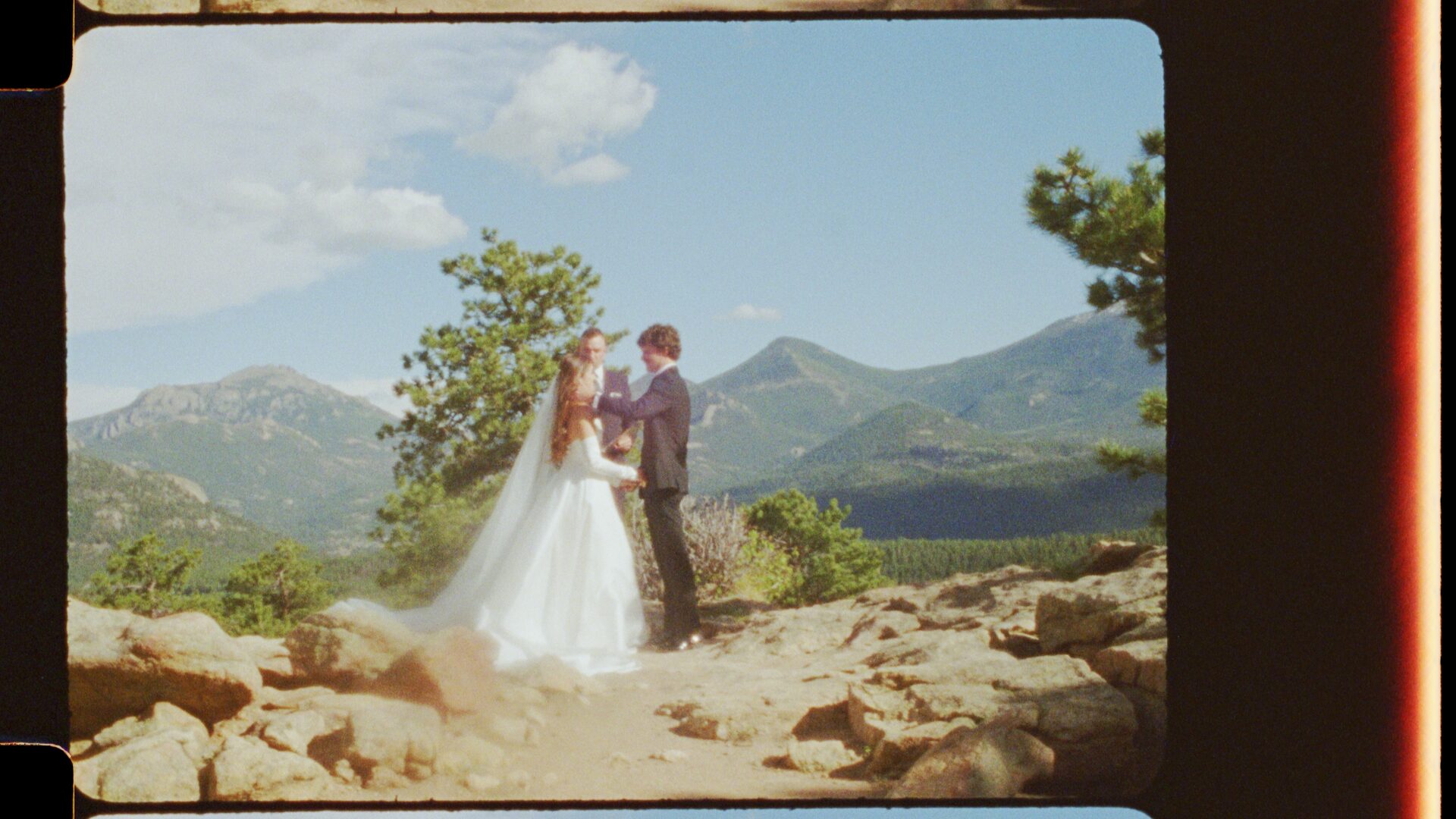
Flowing fabrics are your friend here. Wind that would frustrate a stiff garment turns a long dress or a loose veil into movement, and movement is exactly what film loves. Bring a wrap, a structured coat, or a chunky knit you actually like the look of, because it will end up in your favorite frames rather than getting hidden in a backpack. On the feet, real shoes for the walk to and from the site, then swap into the pretty ones for the ceremony itself. Many of these locations involve a short trail or uneven ground, and nobody photographs well while wincing. Finally, account for sun and altitude on bare skin, and bring water. You will feel the elevation more than you expect.
The Flow
A Sample RMNP Elopement Day Timeline
Every day is different, but this is the shape of a sunrise-anchored RMNP elopement that consistently works, built around the two-hour ceremony window the permit allows and the light we actually want.
- 4:45 a.m. Wake, dress, coffee in Estes Park. Yes, it is early. It is worth it.
- 5:30 a.m. Enter the park (permit in hand, shown at the gate). Drive up the quiet Bear Lake corridor before the crowds.
- 6:00 a.m. Arrive at the ceremony site with first light. We grab a few quiet frames as the range turns gold.
- 6:20 a.m. Ceremony. Vows, rings, the kiss, all inside your two-hour permitted window.
- 6:50 a.m. Portraits at the site while the light is still soft and the lake is still calm.
- 7:30 a.m. Move to a second location for portraits. Your permit gives you the rest of the park that day.
- 8:30 a.m. Drive Trail Ridge Road for alpine tundra portraits (summer only, road status permitting).
- 10:00 a.m. Back down for a celebratory breakfast in Estes Park, the whole day still ahead of you.
The Format
Capturing RMNP on Film: Why Analog Suits This Landscape
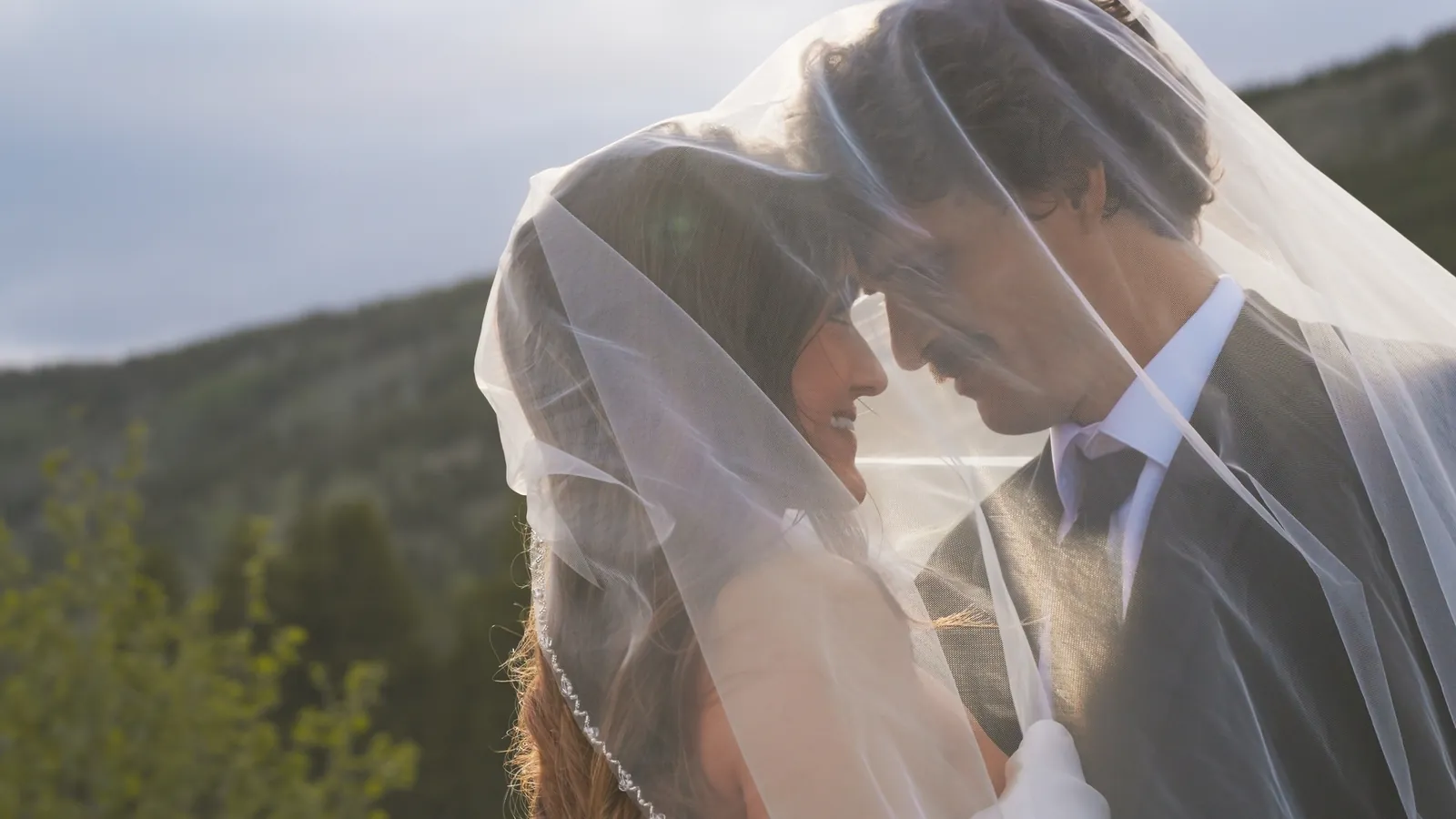
Almost everyone who photographs in this park shoots it the same way, on the same digital sensors, and the results blur together after a while. We approach RMNP differently, and the landscape is the reason. Granite, alpine light, and gold-hour reflections have a depth and a color that analog film renders in a way digital quietly flattens. The grain, the way film rolls off in the highlights, the slightly forgiving warmth of it, all of that suits a place this dramatic. It does not look like everyone else's gallery because it is not made the same way.
For motion, this is where formats matter. Super 8mm gives your wedding film a soft, nostalgic, dreamlike texture that makes a sunrise at Sprague Lake feel like a memory you are already looking back on. 16mm cinema film brings more resolution and a richer, more cinematic frame for the grand sweep of the high country. Both capture wind and movement, the veil, the long dress, the way light moves across the tundra, in a way still photos simply cannot. A snowy morning at Bear Lake or first light on the Continental Divide is exactly the kind of scene these formats were built for. If you want to see how this looks on real couples, our portfolio is the best place to start.
Logistics
Where to Stay in Estes Park
Estes Park is the eastern gateway town and the obvious home base for an east-side ceremony, which is where most of the marquee sites sit. It puts you minutes from the Beaver Meadows entrance, so a 5:30 a.m. gate time does not mean a brutal pre-dawn drive. The town runs the full range, from historic lodges and cabins with mountain views to vacation rentals that fit a small guest group under one roof, which is often the move for an elopement weekend.
Two planning notes from experience. First, Estes Park fills up a year out in peak summer, on the same competitive calendar as your permit, so book lodging the moment your date is confirmed rather than treating it as the last detail. Second, if your heart is set on a west-side ceremony at Harbison Meadows or Timber Creek, look at Grand Lake instead, the quieter western gateway, because driving across the park from Estes before sunrise is a long way to go. Match your town to your site, lock it in early, and the logistics of the day get a lot simpler.
FAQ
Your Questions, Answered
How much does it cost to elope in Rocky Mountain National Park?
The wedding permit is a flat, non-refundable administrative fee of $300, the same for every ceremony site and every group size. On top of that, every vehicle pays the standard park entrance fee, roughly $30 for a day pass, and you will need a Colorado marriage license from Larimer County. Photography and videography coverage is separate and booked directly with your team.
Do you need a permit to elope in Rocky Mountain National Park?
Yes. A Special Use Permit is required for any wedding, elopement, or vow renewal with two or more people, even just the couple. Ceremonies must happen at one of the park's designated wedding sites. Holding a ceremony off-site or without a permit can result in a citation for the couple, the photographer, and the officiant. When in doubt, apply.
When can I apply for an RMNP wedding permit?
Applications open one year in advance of your ceremony month, and review begins the first day of that month on a first-come basis. For example, applications for July dates start being reviewed July 1 of the previous year. Popular summer Saturdays can reach the monthly permit limit within hours, so apply the moment your window opens.
Does the photographer count toward the group size limit at RMNP?
Yes. The group size limit includes everyone present: the couple, all guests, children and infants, the officiant, and every photographer and videographer. At a 15-person site like Sprague Lake in summer, a two-person ceremony with an officiant, a photographer, and a videographer already accounts for five of those spots before any guests.
Do you need a timed entry reservation to elope in RMNP?
Your finalized wedding permit acts as the timed entry reservation for your ceremony, so the wedding party does not book a separate timed entry slot for permit day. You still pay normal entrance fees at the gate. Any scouting trips, rehearsal visits, or guests arriving on other days do need their own timed entry reservation through recreation.gov.
What is the best location to elope in Rocky Mountain National Park?
Sprague Lake is the most forgiving: flat, wheelchair accessible, easy parking, and a mirror-still lake under the Continental Divide. Bear Lake is the most iconic but is winter-only for ceremonies and the busiest spot in the park. For open mountain views and a private feel, Upper Beaver Meadows and the 3M Curve overlook are hard to beat at sunrise. Plan what to wear accordingly.
What happens if my RMNP date is already taken?
Because the park reviews applications first-come and caps ceremonies per day and per month, popular dates do fill. If your first choice is gone, the fastest fixes are shifting to a weekday, moving your time to a sunrise slot, or choosing a different but nearby designated site. A backup date and site on your application keeps you from starting over, and the shoulder seasons have far more open availability.
About the Author
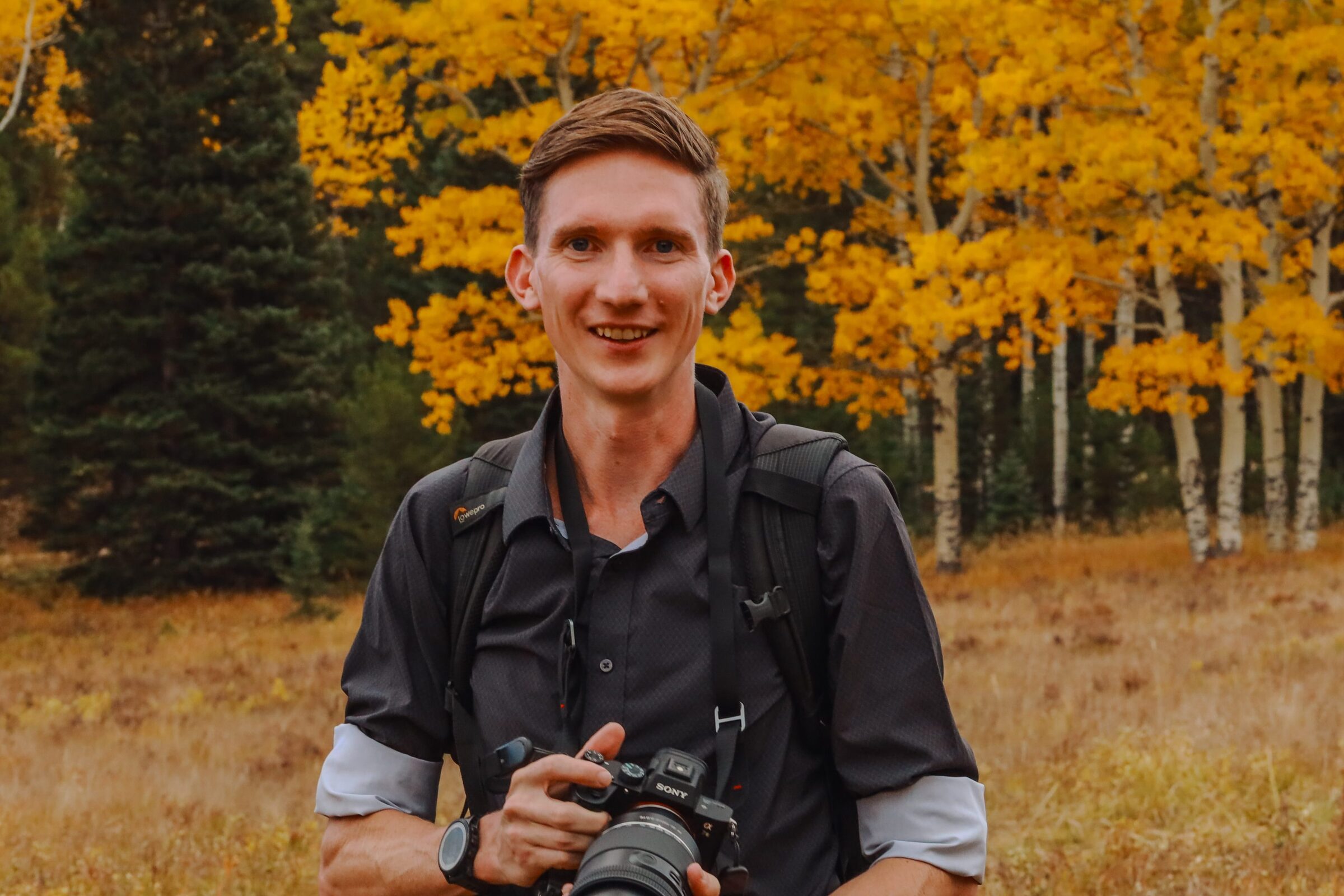 Brandon Krage is the owner and filmmaker behind
Motus Weddings, an adventure wedding photography and
videography studio based in Colorado. Rocky Mountain National Park is the studio's home park, and together with his wife and co-owner Aby he has photographed and filmed elopements there across every season, on digital, 35mm film, Super 8mm, and 16mm cinema film. More about Brandon and Aby.
Brandon Krage is the owner and filmmaker behind
Motus Weddings, an adventure wedding photography and
videography studio based in Colorado. Rocky Mountain National Park is the studio's home park, and together with his wife and co-owner Aby he has photographed and filmed elopements there across every season, on digital, 35mm film, Super 8mm, and 16mm cinema film. More about Brandon and Aby.