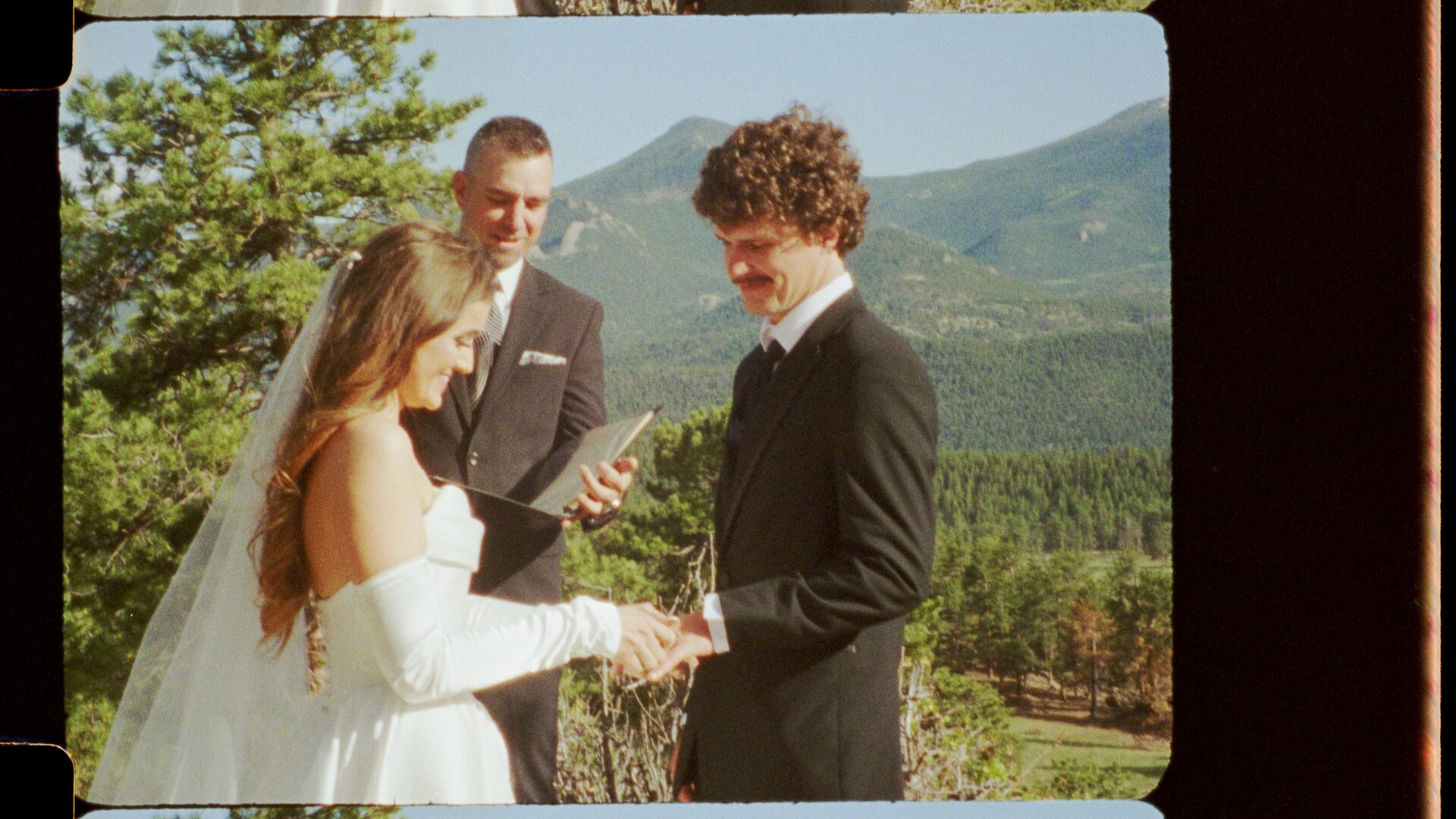
A self-solemnization ceremony in Colorado is the rare kind of wedding where the two of you are the only people who have to be there. No officiant announces you. No pastor asks the questions. No friend reads from a script they printed the night before. Colorado law lets you marry yourselves, which means the ceremony belongs entirely to you: the place, the words, the pace, and the moment you sign your own names. Almost every guide online will tell you this is legal and then stop. Very few tell you what to actually do when you are standing in a meadow at sunrise with a marriage license in a folder and no idea how to begin.
This is that guide. You already know it is allowed. What you need is the craft: how to structure a ceremony with no officiant, how to write vows that hold up when your voice shakes, how to make the signing feel like the sacred act it legally is, and how to make sure your film team captures the words instead of scrambling to save them. By the end, you will have real outlines you can steal, opening lines you can adapt, and a plan for the one paper that makes it official.
What the Law Actually Requires of the Ceremony
Here is the part that changes how you plan everything else. Under Colorado law, the ceremony has no required words. Nothing must be said out loud. There is no vow you are legally obligated to recite, no declaration a state official needs to hear, no question anyone has to answer. The legal act of your marriage is the signing of the license, not the speaking of any sentence. When the two of you sign, you are married. Everything before the signature is yours to design, or to skip entirely.
That is a gift and it can be paralyzing, because a blank page is harder than a form. Most couples spend their whole lives absorbing what a wedding ceremony sounds like from movies and from other people's weddings, and then they arrive at their own self-solemnized day and realize none of that structure is handed to them. So you build it. The freedom to say nothing is exactly what lets you say only what matters.
We cover the license itself in detail elsewhere, so we will not repeat the walkthrough here. In short: both of you appear in person at a Colorado county clerk with photo ID, pay the fee, and receive the license the same day with no waiting period. If you have not handled that yet, read our Colorado marriage license and self-solemnization guide first, then come back to build the ceremony.
This post is about the ceremony. For the license steps, the 35-day rule, county specifics, and out-of-state rules, our marriage license deep dive covers the legal side, and the complete Colorado elopement guide ties the whole day together.
Five Ways to Structure a Self-Solemnized Ceremony
You do not need a template, but you do need a shape. A ceremony without any structure tends to dissolve into an awkward pause where nobody knows whether it has started or ended. What follows are five real structures couples use, each with an outline you can lift directly. Pick the one that matches the day you want, then bend it until it sounds like you.
The silent sunrise exchange
This is the most stripped-down version, and often the most moving. You hike or drive to your spot before the light comes up, and the ceremony happens in near silence. There are no spoken vows, or only a single sentence each. The structure is almost entirely physical: arrive, stand together, breathe, sign.
- Arrive in the dark or the first grey light and let yourselves settle. No rush to begin.
- Face each other as the sun clears the ridge. Hold hands. Say nothing, or say one line you have memorized.
- Exchange rings in silence, or with a single phrase like "this is my promise."
- Sign the license together on a flat surface as the light lands. The signing is the ceremony.
- Stay a while afterward. The quiet is the point.
This works best for couples who feel more than they say, and for anyone who worries about crying too hard to speak. When words are optional, tears are not a problem.
Written vows at a lake
The most common structure, and for good reason. You choose a spot with meaning or beauty, an alpine lake being the classic Colorado version, and you read vows you wrote ahead of time. This is the version most people picture when they imagine marrying themselves.
- Open with a grounding line, spoken by one of you, that names why you are here. See the sample opening lines below.
- Partner one reads their vows. Two to four minutes.
- Partner two reads their vows.
- Exchange rings, each saying a short line as you slide the ring on.
- Declare yourselves married in your own words. "By the two of us, and the law of this state, we are married."
- Sign the license together, out loud if you want: "And now we make it official."
Friend-led ceremony with self-solemnized paperwork
A frequent source of confusion, so read this carefully. You can absolutely have a friend or family member lead your ceremony, guide the vows, and hold the whole thing together emotionally, while you still self-solemnize the legal paperwork. Your friend does not need to be ordained. They are not the officiant in any legal sense. They are the host of the moment, and you are the ones who marry yourselves.
- Your friend welcomes everyone and speaks briefly about the two of you.
- They guide you into your vows, prompting each of you in turn.
- They may read a passage, a poem, or something they wrote.
- They ask you to sign, and they narrate the moment so it lands.
- You sign the license. Under Colorado law the marriage is solemnized by you, the parties, not by your friend. Their name goes nowhere required on the form.
This gives you the warmth of a led ceremony without hiring anyone or asking a friend to get ordained for a role the law does not require.
The family circle
For couples who want a few people present without a full guest list. Everyone stands in a close ring, and the ceremony passes through the circle before returning to the two of you.
- Gather in a circle. One of you speaks a short welcome and thanks the people for coming.
- Invite one or two people to offer a word, a memory, or a blessing. Keep it brief and warm.
- Read your vows to each other inside the circle.
- Exchange rings.
- Sign the license with your circle around you. If anyone wants to sign the optional witness lines as a keepsake, this is the moment.
The ski-up winter version
A distinctly Colorado structure. You skin up, snowshoe, or ski to a spot, marry in the cold, and ski down married. Winter changes the logistics more than the words, so the structure stays simple and the timing stays tight, because you are managing frozen fingers and short light.
- Reach your spot and move fast while you have feeling in your hands.
- Read short vows, or say a single line each. Cold favors brevity.
- Exchange rings quickly, gloves off for one photo, back on right after.
- Sign the license immediately, using a hard flat surface and a pen you have kept warm in an inside pocket. Cold ink skips.
- Celebrate on the way down. The ceremony is done and you are married before you clip back in.
Whatever you wear for a winter ceremony matters more than in summer. Our guide on what to wear for a mountain elopement covers layering for cold ceremonies without losing the look you want in your film.
Sample Scripts and Opening Lines You Can Steal
The hardest moment in a self-solemnized ceremony is the very first one, because with no officiant, nobody tells you it has begun. You have to open it yourselves. Here are opening lines couples have used, written to be said out loud by one partner while you hold hands. Take one, change the details, make it yours.
- "There is no one here to marry us, because no one else can. We are going to do this ourselves, the way we have done everything else."
- "We drove past a hundred easier places to get here. That was the point. Let's begin."
- "Colorado says the two of us are enough to make this real. So it's just us, and I wouldn't want it any other way."
- "I have imagined this quiet a thousand times. Now we're standing in it. Let's start."
For the middle, after the vows, you need a way to mark that you are choosing each other before you sign. A simple call and response works even with two people. One of you can ask, and the other answers, then you switch.
- "Do you take me, exactly as I am, for the rest of our lives?" "I do." Then the other partner asks the same.
- Or a shared declaration you say together: "We take each other. We choose this. We are married."
And a closing, the line that carries you from words into the signing. This is where the ceremony turns legal, and naming that out loud makes the signature feel like an act rather than paperwork.
- "Everything we just said is true. Now we make it law." Then you sign.
- "By our own hands, under the law of Colorado, we marry ourselves." Then you sign.
"The freedom to say nothing is exactly what lets you say only what matters. A self-solemnized ceremony strips away every line you would have recited out of obligation, and leaves only the ones you mean."
Writing Vows You Can Actually Read Out Loud
Your vows are the heart of a self-solemnized ceremony, because in most versions they are the only substantial words spoken. That raises the stakes and it also frees you, since there is no officiant script for yours to compete with. Here is how to write vows that hold when the moment gets heavy.
Write them down and bring them
Do not plan to speak from memory. You will be more emotional than you expect, standing in a place that already has your heart racing, and the words you rehearsed in the car will scatter. Write your vows on paper or a small card, in handwriting large enough to read through tears. The printed vow card also becomes a keepsake and a beautiful detail in your film.
Aim for two to four minutes each
Long enough to say something real, short enough that neither of you loses the thread. Two to four minutes of spoken words is roughly 250 to 500 words on the page. If you write more than that, you are writing a letter, not a vow, and the moment sags in the middle. Read it aloud with a timer before the day.
Choose specifics over poetry
This is the single biggest difference between vows that land and vows that float past. "I will always love you" is true and forgettable. "I will keep making your coffee too strong because you are too kind to tell me to stop" is a vow only you two could say. Reach for the specific memory, the private joke, the exact thing you are promising. The details are what make people cry, and they are what make the vows unmistakably yours.
Practice out loud, more than once
Reading silently is not practice. Say your vows aloud, alone, several times before the day. You will find the lines that break you, the sentence that is too long to say in one breath, the joke that needs a pause. Practicing does not make the moment less emotional. It makes you able to get through the emotion without losing the words.
Protect the paper from the weather
Colorado does what it wants with weather above 9,000 feet. Bring your vows in a small zip bag or a sealed folder. A sudden squall, a dropped card in a creek, or wind that snatches a loose page can end a vow you spent a month writing. This is a thirty-second precaution that protects the most important words of your day.
The Signing: Making the Legal Act Part of the Ceremony
Because the signature is the moment you are legally married, it deserves to be treated as the climax of the ceremony rather than an afterthought you handle back at the car. Most couples rush it. The couples who get it right make the signing a deliberate, filmed, felt part of the day.
What to bring to the signing
- The license itself, kept flat and dry in a folder. A creased or damp license is harder for the clerk to record.
- A good pen. Black ink is the safest choice statewide, since some Colorado counties will only accept black and others allow blue, so black keeps you covered no matter where you apply. Bring a backup pen. Confirm your county's preference when you pick up the license.
- A flat, hard surface. There are no tables in the backcountry. Bring a hardcover book, a wooden board, a clipboard, or a flat rock you scout ahead of time. You cannot sign a legal document against your own thigh and expect it to look right.
Fold the signing into the ceremony, not after it
Instead of finishing your vows and then wandering off to sign somewhere, bring the license into the ceremony space. Say a line as you kneel or stand to sign. Sign one at a time so your film team can capture each of you. Let there be a pause after the second signature, because that is the exact instant you became married. That pause, held on film, is often the most powerful frame of the whole day.
The dog paw print, and other keepsakes on the witness lines
Colorado does not require witnesses, which means the witness lines on your license are optional space you can use however you like. A beloved Colorado tradition is to bring your dog along and press a paw print onto one of the witness lines, ink pad in your pack. Some couples have a parent sign the optional line as a memory, or leave the lines blank on purpose to keep the day fully between the two of you. None of it changes the legality. It is decoration on a document that is already complete with your two signatures.
If You Want to Bring Faith Into It
Self-solemnizing does not mean the ceremony has to be secular. Plenty of couples who marry themselves in Colorado still want God, or scripture, or the blessing of the people who raised them, woven into the moment. You can open with a prayer, read a passage that matters to you, ask a parent to speak a blessing over you, or sit in a moment of silent gratitude before you sign. The law simply steps back and lets your ceremony be whatever it needs to be. If your faith is central to your marriage, it belongs in the ceremony that begins it, and self-solemnization gives you full room to place it there in your own words rather than someone else's.
Tell Your Film Team, So Your Vows Are Recorded and Not Rescued
This is the practical detail that saves the words of your day, and almost nobody thinks of it until it is too late. If you want your vows in your film, tell your film team before the ceremony that you are self-solemnizing and that there is no officiant with a microphone. A traditional wedding has a clear focal point where audio gets captured. A self-solemnized ceremony can start whenever the two of you decide, which means your team needs to know the plan in order to have a recorder or a lav mic ready when you begin.
When we know a ceremony is self-solemnized, we can mic the moment properly and record your actual voices reading your actual vows. That is completely different from trying to rescue faint audio afterward from a camera twenty feet away in the wind. Vows recorded well become the backbone of a film you will replay for the rest of your lives. Vows lost to wind are simply gone. A single conversation beforehand is the difference. You can see how we treat these moments in our work and in how we approach elopement coverage.
THE SHORT VERSION
Colorado law requires no spoken words. The signing is the legal act of your marriage, so treat it as the ceremony's climax, not paperwork. Pick a structure, write vows you can read out loud with specifics over poetry, keep them in a zip bag, bring a flat surface and a black pen, and tell your film team beforehand so your voices are recorded, not rescued. Then return the signed license to the issuing county clerk within 63 days.
What Happens After You Sign
The ceremony is over and you are married, but the paper still has one job left. You return the completed, signed license to the county clerk that issued it, within 63 days of your ceremony. You can mail it or drop it off in person. The clerk records it, and your marriage becomes part of the public record. Only after recording can you request certified copies, which is the document you will need for a name change, a joint account, insurance, or taxes. Order a few certified copies at once, since you will reach for them more often in the first year of marriage than you expect. If you want the full step-by-step on returning the license and ordering copies, our how to elope in Colorado guide walks through the after part in order.
Your Questions, Answered
What do you say at a self-solemnized wedding?
Legally, nothing. Colorado requires no spoken words for a self-solemnization ceremony, since the signature is the legal act. Most couples choose to say vows anyway, open with a line naming why they are there, and close by declaring themselves married before they sign. You can say two minutes of vows or a single sentence each. The words are entirely yours to design or to skip.
Can someone else officiate if we self-solemnize in Colorado?
A friend or family member can lead your ceremony, guide the vows, and host the moment, and they do not need to be ordained to do it. Under C.R.S. 14-2-109 the marriage is still solemnized by you, the parties, when you sign. Your friend is not the legal officiant and their name is not required on the form. You get a led ceremony while still marrying yourselves.
Do we need witnesses for a self-solemnization ceremony in Colorado?
No. Colorado requires no witnesses. Your two signatures make the marriage complete and valid. The witness lines on the license are optional, which is why some couples use them for a keepsake, like a parent's signature or a dog's paw print pressed onto the line. You can also leave them blank on purpose to keep the ceremony entirely between the two of you.
What order should a self-solemnized ceremony go in?
A simple order works well: open with a grounding line, read your vows to each other, exchange rings, declare yourselves married in your own words, then sign the license as the final act. Fold the signing into the ceremony rather than saving it for later, because that signature is the legal moment you become married. Keep the whole thing as long or short as you want.
What pen should we use to sign a Colorado marriage license?
Use black ink to be safe. Some Colorado counties only accept black, and others allow blue, so black covers you no matter where you apply. Bring a reliable pen and a backup, and confirm your county's preference when you pick up the license. Sign on a flat, hard surface, since a marriage license signed against your leg in the backcountry can come out messy or unclear.
Will our vows be recorded if there is no officiant?
Only if you plan for it. Tell your film team beforehand that you are self-solemnizing and there is no officiant microphone, so they can mic the moment and record your actual voices. Without that heads-up, vows can be lost to wind and distance and only rescued as faint audio afterward. One conversation before the ceremony is the difference between keeping your words forever and losing them.
About the Author
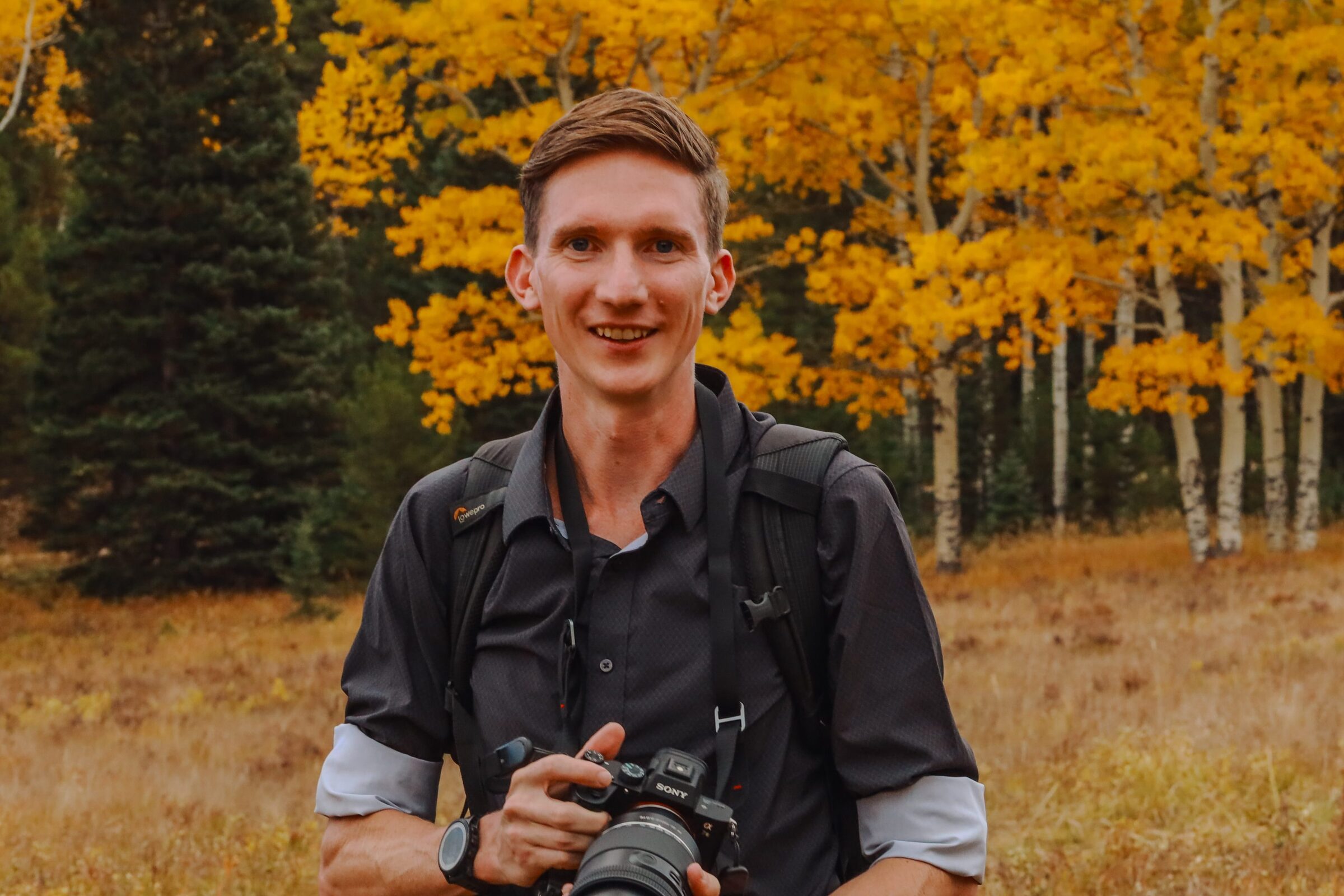 Brandon Krage is the filmmaker and owner of Motus Weddings, a husband-and-wife adventure wedding studio he runs with Aby from Colorado. He photographs and films weddings and elopements on digital, 35mm, Super 8mm, and 16mm cinema film, with Rocky Mountain National Park as home turf. More about Brandon and Aby.