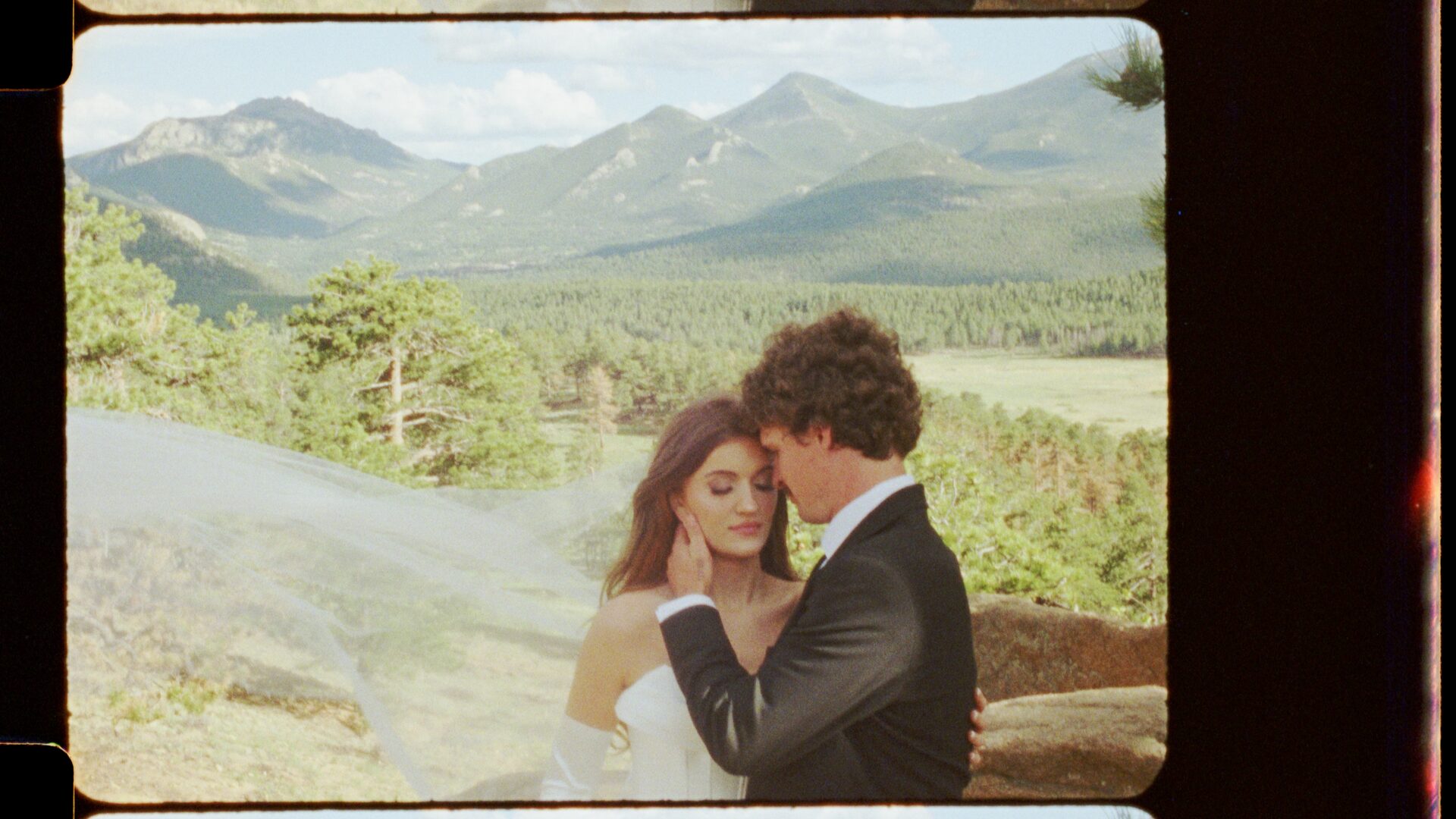
A winter elopement in Colorado is the most underrated decision you can make about your wedding day, and almost nobody tells you that. The trailhead that holds forty cars in July holds four in January. Lodging drops to off-peak rates the moment you step outside the ski resorts. And the light does something in winter it does no other time of year: low sun angles that last all day, alpenglow that lingers on the peaks, and falling snow that reads like grain in every frame we make. You get the mountains almost entirely to yourselves, and you get them at their quietest and most cinematic. This guide is the honest, ground-level version of how to do it right.
We photograph and film adventure elopements across Colorado in every season, and we have stood at altitude in deep January cold more times than we can count. Winter is not a season you survive. It is a season you plan, and the planning is genuinely simple once you understand the two rules that matter most: go where the plows go, and build the day around midday warmth instead of a frozen sunrise. Everything else follows from there.
If you are still deciding on timing more broadly, our month-by-month guide to when to elope in Colorado walks through all twelve months. This guide goes deep on the four that matter for snow: December through March.
Why Winter Is the Most Underrated Decision
Most planning advice treats winter as the season to work around. We think that is backward. Winter solves the two problems couples care most about, solitude and cost, and it hands you light that the warm months simply cannot produce. When you understand what you are actually getting, the trade stops looking like a compromise and starts looking like the whole point.
Solitude you cannot buy in July
The single biggest thing winter gives you is the mountains without the crowd. We once photographed a winter elopement at Garden of the Gods where you had the red rock formations to yourselves, the ones summer visitors line up and jockey for. That is not a lucky winter experience. That is a normal one. In summer you are planning around other people at every turn, negotiating for parking, waiting for a group to clear a frame. In winter that friction disappears. The quiet you want on the most private day of your life is just there, built into the season.
Costs run lower when the crowds go home
Winter is off-peak almost everywhere in Colorado that is not a ski town, and your budget feels it. Off-peak lodging rates, more mid-week availability, and far less competition for the permit dates and photographers that fill up months ahead in the warm season. The one honest exception is the resort towns around the holidays. Breckenridge, Aspen, Vail, and Telluride run at peak demand from roughly late December into early January, so if you want the savings, either aim outside the holiday weeks or point your day at a non-resort location. Everywhere else, winter is the quiet, lower-cost season, and you feel that the moment you start booking.
The light film was made for
Here is the part almost no one mentions. Winter light in Colorado is the best light we work in all year, and it is not close. The sun sits low in the sky from morning to afternoon, which means the soft, raking, golden-hour quality that lasts twenty minutes in summer stretches across most of a winter day. Alpenglow, that pink and amber wash on the high peaks, holds longer and shows up more reliably against snow. And when snow is actually falling, it reads on film as texture, as grain, as atmosphere you could never fake. There is a reason we love bringing analog film into winter days. The season gives the medium exactly what it wants.
THE WINTER CASE IN ONE BREATH
You trade a little access and a little warmth for solitude no summer date can offer, off-peak costs outside the resort towns, and the best light of the year. Go where the plows go, dress in real layers, aim your ceremony at midday, and build one weather-flex day into your travel. Do those four things and a Colorado winter elopement is not a gamble. It is the quiet, cinematic version of the day almost nobody else thinks to ask for.
December Through March: The Personality of Each Month
Deep winter is not one long undifferentiated stretch of cold. Each month has its own character, and knowing the differences helps you match your date to the day you are actually picturing.
December: the full winter wonderland
December delivers the white landscape without hesitation. Fresh snow, the high peaks fully dressed for the season, and that particular hush that only comes once the cold has settled in completely. It is the postcard version of a snowy day, and it carries a quiet romance all its own: the close of one year and the start of your life together, set against a landscape that looks made for the occasion. The trade-off is daylight. December holds the shortest days of the year, roughly nine and a half hours of usable light around the solstice, so your timeline runs tight and every hour counts. Watch the holiday weeks in the resort towns, where rates and crowds both spike.
January: the coldest, quietest, most cinematic
January is the deep end. The snow is real, the cold is real, and the solitude is profound. This is the month where you are most likely to have an entire location to yourselves and least likely to see another soul. It is also the most demanding on layers and timing, because January cold at altitude is not a metaphor and the wind on an exposed overlook will find you. For couples who want winter at its most complete and most private, nothing beats it. You just plan it with respect.
February: January's twin, with more daylight
February keeps everything that makes January magic, the deep snow and the empty landscape, and hands back a little of what January takes away: daylight. The days are noticeably longer, which gives your timeline more room to breathe without racing the dark. This is also the month where the hot-springs idea earns its keep. Pairing a snowy ceremony with a warm soak afterward turns the cold into part of the experience instead of the enemy of it. If you want winter scenes with slightly less pressure on the clock, February is the sweet spot.
March: one foot in winter, one in the thaw
March is where Colorado starts hedging. Up high it is still very much winter, and you can absolutely get a beautiful snow-covered day in the high country if that is what you want. Down lower, the thaw begins to whisper and conditions get harder to predict week to week. March rewards couples who can stay flexible. The move is to keep your sights on higher elevations for reliable snow rather than expecting the lower country to have greened up, because it has not, not yet. March is the calm before April, which is mud season and a different conversation entirely.
Winter Locations That Actually Work: Follow the Plows
The rule that decides everything in winter is plowed access. A location either has a road that gets cleared through the season or it does not, and no amount of wanting will change that. The good news is that Colorado has genuinely spectacular winter locations that stay reachable all season, because the roads to them are maintained. Here are the ones we return to, and why they work when the snow is deep.
Loveland Pass
Loveland Pass, on US 6 west of Denver, tops out above 11,000 feet and stays open and plowed through winter as a maintained state highway. That combination is rare and valuable: true high-alpine scenery, big views down both sides of the Continental Divide, and a parking area you can actually drive to in January. You step out of the car and you are already there. It is one of the most reliable ways to get a summit feeling in winter without gambling on a closed road, though the wind up top is serious, so this is a layers-and-quick-ceremony location.
Sapphire Point and the Summit County shore
Sapphire Point Overlook, between Breckenridge and Frisco, looks out over Dillon Reservoir to the Tenmile and Gore Ranges, and the access road and trailhead area are maintained through the season. The walk to the overlook is short, which matters enormously when it is cold. Summit County in general is our recommendation for couples flying in with a tight window: Breckenridge, Dillon, and a cluster of reachable overlooks all sit within a couple of hours of Denver International, and many of the best frames are a five-minute walk from a parked car. The altitude does the decorating.
Georgetown
Georgetown, a preserved silver-mining town just off Interstate 70, is the winter town-and-mountain combination that photographs beautifully. Historic streets under fresh snow, the surrounding peaks framing everything, and easy interstate access that stays open in nearly all conditions. It is a strong pick when you want the warmth and character of a town woven into the day, a place to get ready indoors and a plowed setting waiting outside. Georgetown also makes an excellent warm base for a day that ranges out to Guanella Pass-area scenery when the lower road is clear.
Garden of the Gods
Garden of the Gods in Colorado Springs is our favorite winter surprise. It sits at a lower elevation than the high country, the roads are maintained year-round, and it gets far less snow than the mountains while still catching enough to be magical when a storm passes through. That means dramatic red-rock formations, often with a dusting of white, and the solitude we mentioned at the top: formations to yourselves that summer visitors wait in line for. It is the most accessible genuinely stunning winter location in the state, and a smart choice if anyone in your party cannot handle deep cold or altitude.
The Bear Lake corridor in Rocky Mountain National Park
Rocky Mountain National Park stays open in winter, and this is where the details matter, so verify them yourself before you commit. Per the National Park Service, Bear Lake Road is open year-round, a paved road that climbs to about 9,475 feet where it ends at Bear Lake, though winter brings snow, ice, and traction-control requirements that can go into effect at any time. That gives you a genuine alpine-lake setting you can drive to in the snow. The critical winter advantages: the park's timed-entry reservation system runs only from late May into mid-October, so it does not apply in the deep winter months, and Trail Ridge Road, the high crossing, is closed to through-traffic for the season, which keeps the park quiet. You will still need a special use permit for a ceremony in the park, which our RMNP elopement guide and our Colorado elopement permits guide both cover in detail. Confirm current road status and permit rules at nps.gov/romo before you plan around any of this.
Every one of these spots appears in our flagship Colorado elopement guide, with the permit situation, elevation, and access notes laid out region by region. Start there to see how a winter location fits into the bigger picture of your day.
The Honest List: What Does Not Work in Winter
Just as important as the locations that work is the honest list of the ones that do not, because falling in love with a closed road is the fastest way to derail a winter plan. Colorado's most famous high passes shut down for the season, and the closures are real and long-standing. Verify every one of these against current official sources, because exact dates shift year to year, but the pattern is dependable.
- Trail Ridge Road in Rocky Mountain National Park, the highest continuous paved road in the country at 12,183 feet, closes to through-traffic for the winter season, typically from around mid-October until late May. In winter it is gated well below the alpine, so the tundra crossing is simply off the table.
- Independence Pass on Colorado 82, the high route between Aspen and Twin Lakes, closes seasonally, usually from early November until late May. If your vision involves that pass, it is a warm-season plan, not a winter one.
- Cottonwood Pass between Buena Vista and the Gunnison side closes for winter as well, generally from around November into late May. The high alpine at the top is unreachable by car once the snow arrives.
The through-line is simple. Any location that depends on a high, seasonally gated pass to reach it comes off your winter list, and you replace it with one of the plowed, maintained locations above. This is not a limitation so much as a filter, and it is the single most useful piece of planning you can do before you fall in love with a spot.
The Practical Craft: Staying Warm and Getting the Timing Right
A winter day lives or dies on preparation, and the preparation is not complicated. It is layers, traction, warmth, and a timeline built around the light. Get these right and the cold becomes a non-issue you barely think about while you are actually out there.
Real layers, under and over the attire
The mistake is treating winter attire like summer attire with a coat added at the end. Build it as a system instead. Under a dress or a suit, thermal base layers do the quiet work nobody sees: merino or synthetic long underwear, fleece-lined tights, hand and toe warmers tucked where they will not print through fabric. Over the top, a genuinely warm coat, wrap, or shawl that you can slip off for the ceremony frames and pull back on the instant they are done. The goal is to look exactly the way you want in the photographs and film for a few minutes at a time, while staying genuinely warm the other fifty-five minutes of every hour. Our full guide on what to wear for a mountain elopement goes deep on building that system.
Boots, traction, and the shoes that only come out for photos
You hike and walk in real winter boots with real tread, and the ceremony shoes come out of a bag only for the frames that need them. Add traction devices, microspikes or similar, over your boots for any packed snow or ice, because a plowed overlook can still have a slick approach. This one swap, boots for the walking and the pretty shoes only when the camera is up, is the difference between a comfortable day and a miserable one, and it never shows in the final images.
Hand warmers, warm drinks, and small comforts
Chemical hand and toe warmers cost almost nothing and they change everything, so bring more than you think you need. Warm drinks pull double duty: a thermos of coffee, cocoa, or hot toddy keeps you comfortable between setups and doubles as a natural, warming prop in the frames themselves. Steam rising off a mug against a snowy backdrop is one of the small details that makes a winter day feel like winter. Keep a warm vehicle or an indoor base nearby as your reset point, and cycle back to it between locations.
Short daylight, midday ceremonies, and the one-hour margin rule
Winter days are short. Around the December solstice you have roughly nine and a half hours of usable daylight, and it stretches a little longer as you move toward March. Because the sun sits low all day, you do not need to chase a frozen sunrise to get beautiful light, and you should not. Aim your ceremony for the middle of the day, when it is warmest and the light is still soft and golden thanks to that low winter sun angle. Then apply the one-hour margin rule: build at least an hour of slack into every part of the timeline. Snowy roads take longer to drive, cold hands slow everything down, and you never want to be racing the early dark. That margin is what keeps a winter day feeling calm instead of frantic.
The weather-flex day
Build one flexible day into your travel. Colorado winter storms move through fast, and if you are locked into a single date with no give, a squall on the wrong morning can force a compromise you did not want. With a spare day, you simply move to the better window. Some of the most striking frames we have ever made happened five minutes after a whiteout cleared, and having the flexibility to wait for that moment, rather than shooting through the worst of it, is what a flex day buys you. It is the best insurance winter planning can buy.
Safety, Honestly: Avalanche Awareness and Low-Angle Terrain
This is the part we will not soften, because it matters more in winter than in any other season. Colorado has serious avalanche terrain, and people die in it every year, including in places that look benign from a road. If your winter elopement takes you anywhere near steep, snow-loaded slopes, you need to treat avalanche risk as a real planning input, not an afterthought.
The practical rules are these. Check the current forecast at the Colorado Avalanche Information Center, avalanche.state.co.us, before you go anywhere near steep terrain in winter, every single time. Without formal avalanche training and rescue gear, stick to low-angle terrain and stay well clear of anything steep enough to slide or anything sitting beneath a steep slope. Most of the plowed, roadside locations in this guide are chosen precisely because they let you have a stunning winter day on safe, gentle ground. If a location tempts you into steeper country, that is exactly the moment to slow down, check the forecast, and either bring the right training and gear or choose somewhere safer. Winter cold also asks for basic preparation: know the forecast, tell someone your plan, and carry more warmth than you expect to need.
Vendors in Winter: What Changes and What Does Not
Winter asks a few specific things of the people who help bring your day together. None of it is a barrier, but planning for it is the difference between smooth and scrambling.
Florals that survive the cold
Cold is hard on delicate blooms, so lean toward flowers and greenery that hold up: hardy winter greenery, eucalyptus, dried elements, evergreen and berry accents, and sturdy blooms rather than the most fragile summer varieties. Talk to your florist specifically about cold tolerance, and keep arrangements protected and warm right up until the moment they are in frame. A bouquet that spends twenty minutes in a January wind before the ceremony will not look the way it did leaving the studio.
Hair and makeup at a warm base
Do hair and makeup indoors at a warm base, then travel to your location fully ready. This is standard winter practice for good reason: getting ready in the cold is miserable and it shows. Build your timeline so the warm, comfortable prep happens first at your lodging or a nearby town like Georgetown, and you arrive at the snow already camera-ready, needing only quick touch-ups before the frames.
Warm drinks as ceremony props
We mentioned this above and it is worth repeating as a vendor-and-styling note. Warm drinks are the rare prop that is both genuinely useful and genuinely beautiful in winter. A thermos, two mugs, steam in the cold air. It keeps you warm, it gives your hands something to do, and it photographs like the season itself. It is the small, honest detail we reach for on nearly every winter day.
Why Film Loves Winter
We photograph and film on digital and on analog film, and if there is one season that makes the strongest case for bringing film into your day, it is winter. Snow and film have a relationship that is hard to explain until you see it. Grain sits beautifully against a white landscape, giving it texture instead of flatness. Halation, the soft glow film produces around bright highlights, wraps gently around snow and low winter sun in a way digital renders too cleanly to match. And Super 8, our small-format cinema film, captures falling snow with a flicker and a softness that feels like memory rather than documentation.
The low winter light is part of why. Film responds to that soft, raking, all-day golden quality the way it was designed to, and winter serves it up for hours instead of minutes. If you have ever wondered why a winter frame can feel more like a held breath than a photograph, this is the answer. The season and the medium want the same things, and when they meet on a quiet snowy morning, they produce something the warm months genuinely cannot.
When you are ready to talk through a snowy date, a plowed location, and how you want the day documented, we would love to hear your vision. Start with our elopements page to see how we work.
Your Winter Elopement Questions, Answered
Is it a good idea to have a winter elopement in Colorado?
Yes, as long as you plan for access. Winter gives you solitude no summer date can match, off-peak costs outside the resort towns, and the best light of the year. The keys are choosing locations with plowed, maintained roads, dressing in real layers, timing your ceremony for midday warmth, and building one flexible weather day into your travel. Done that way, it is one of the best decisions you can make.
Where can you elope in Colorado in winter with plowed access?
The most reliable plowed winter locations include Loveland Pass, Sapphire Point and the wider Summit County overlooks near Breckenridge, historic Georgetown, Garden of the Gods in Colorado Springs, and the Bear Lake corridor in Rocky Mountain National Park, where Bear Lake Road stays open year-round. Each has maintained road access all season, so you are not gambling on a closed pass to reach your ceremony.
How cold is too cold for a winter elopement, and how do you stay warm?
There is no single cutoff, because layering and timing solve most of it. Build a system of thermal base layers under your attire, a warm coat or wrap over it that comes off only for the ceremony frames, real boots with traction for walking, and plenty of hand and toe warmers. Time the ceremony for the warmest part of midday and keep a warm vehicle or indoor base nearby to reset between setups.
Do I need a permit for a winter elopement in Rocky Mountain National Park?
Yes. Rocky Mountain National Park requires a special use permit for a ceremony year-round, winter included. The winter upside is that the park's timed-entry reservation system runs only from late May into mid-October, so it does not apply in the deep winter months. Bear Lake Road stays open year-round, though snow and traction requirements are common. Verify current permit rules and road status at nps.gov/romo before planning.
Which Colorado mountain passes are closed in winter?
Several of the famous high passes close seasonally, typically from around November until late May. Trail Ridge Road in Rocky Mountain National Park, Independence Pass on Colorado 82 between Aspen and Twin Lakes, and Cottonwood Pass near Buena Vista all shut to through-traffic for winter. Exact dates shift each year, so confirm status at cotrip.org, and plan your day around plowed, maintained locations instead.
Is a winter elopement in Colorado cheaper than eloping in summer?
Usually, yes, because winter is off-peak almost everywhere that is not a ski town. You will often find lower lodging rates, more mid-week availability, and far less competition for dates. The main exception is the resort towns around the winter holidays, where demand spikes from late December into early January. Aim outside those weeks or choose a non-resort location and the season works in your favor.
About the Author
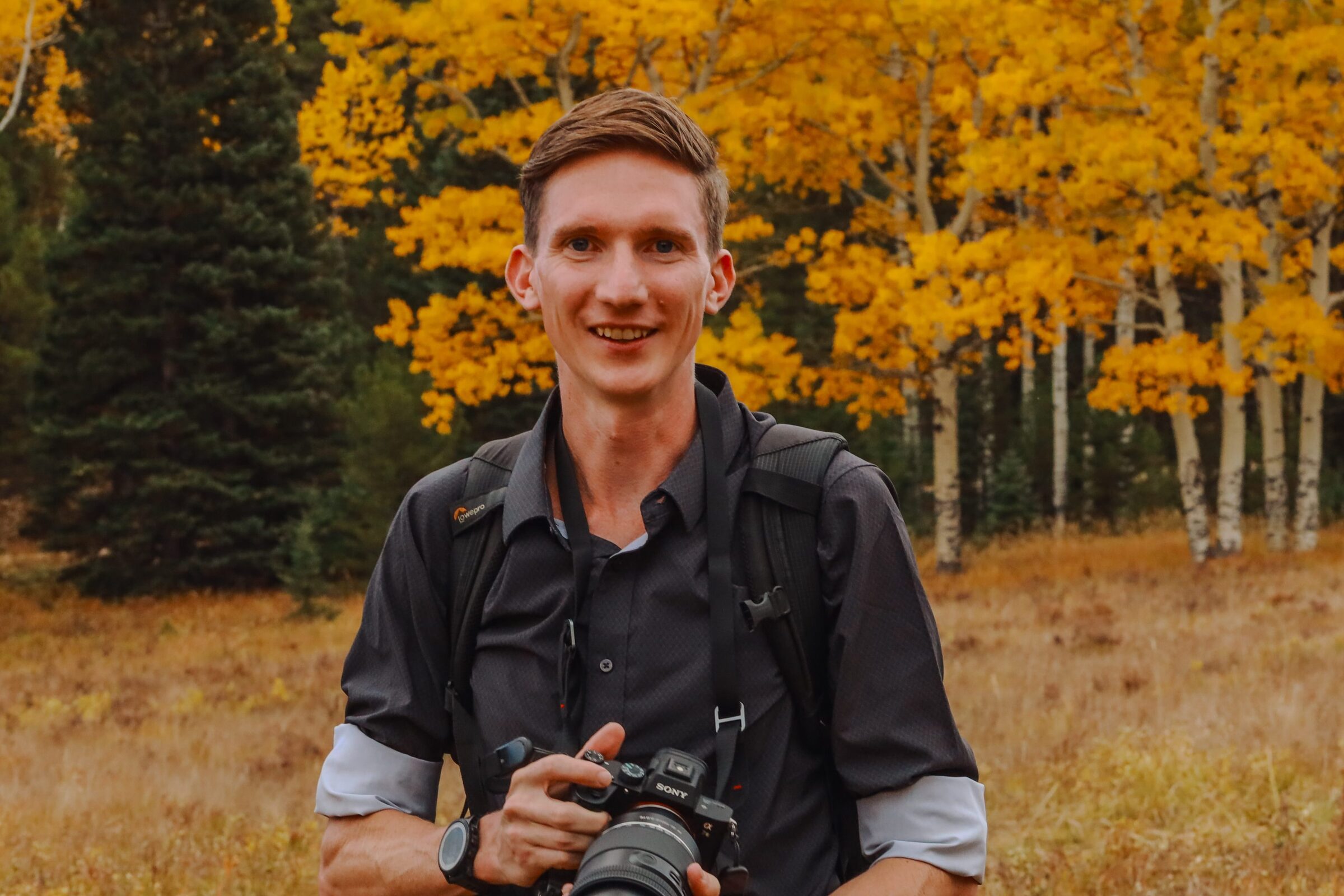 Brandon Krage is the filmmaker and owner of Motus Weddings, a husband-and-wife adventure wedding studio he runs with Aby from Colorado. He photographs and films weddings and elopements on digital, 35mm, Super 8mm, and 16mm cinema film, with Rocky Mountain National Park as home turf. More about Brandon and Aby.