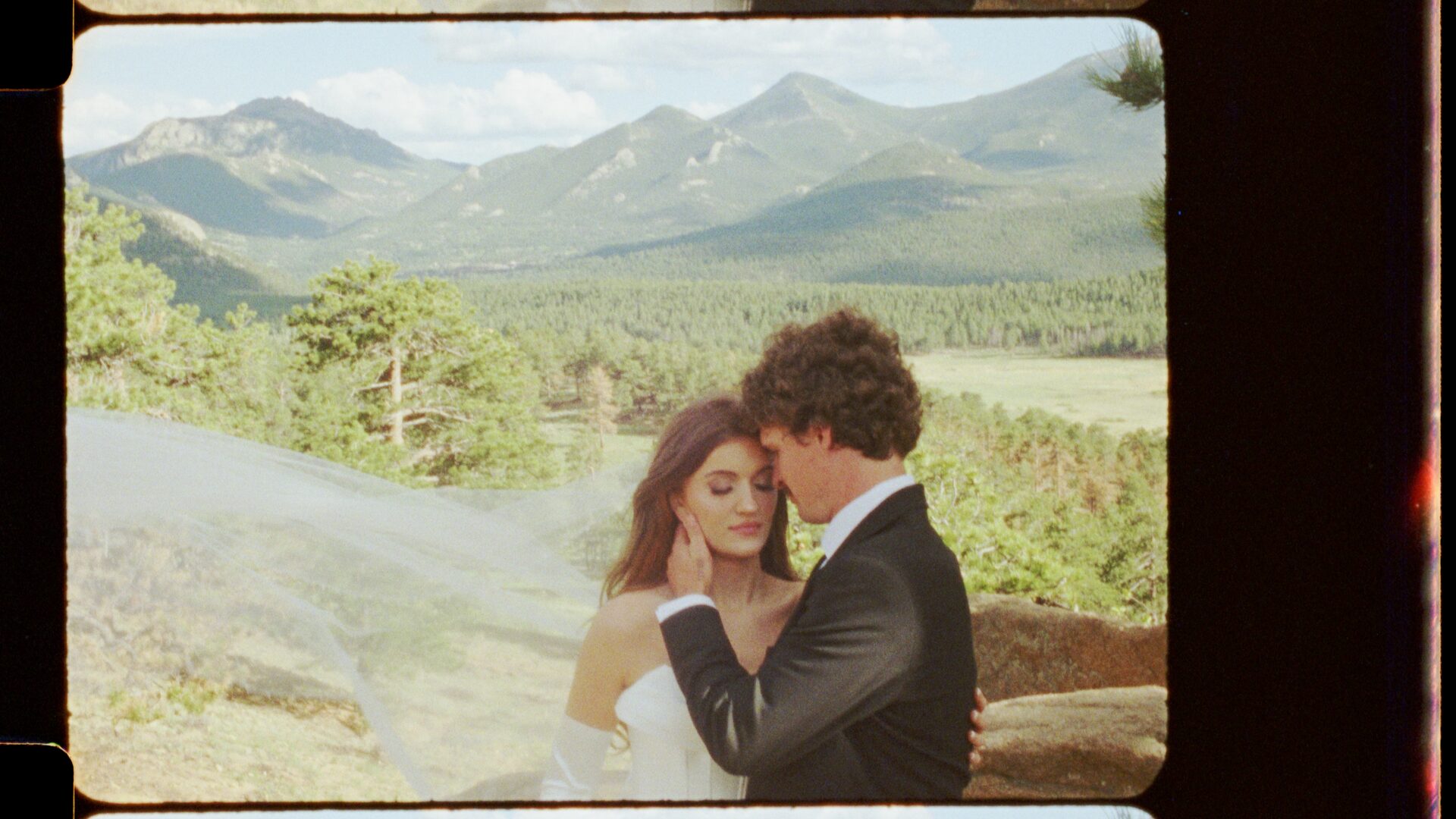
 Shot on 16mm Film
Services · Cinema Film
16mm Wedding Videographer in Colorado
Real cinema film, shot on a Bolex H16 in the Colorado mountains. We are one of the first wedding studios in the country to offer it.
Shot on 16mm Film
Real cinema film, shot on a Bolex H16 in the Colorado mountains. We are one of the first wedding studios in the country to offer it.
Home › Services › 16mm Film
16mm wedding videography is wedding film captured on 16mm motion picture film, the professional gauge that carried documentary and independent cinema for most of a century. It is real film: light exposes a frame of celluloid, the roll is developed and scanned at a lab, and there is no digital sensor in the path.
The number refers to the width of the film, and it is where everything good comes from. A 16mm frame is roughly three times the area of a Super 8 frame. More space for light means finer grain, more detail, and a wider range between the deepest shadow and the brightest highlight. It is the difference between a format built for home movies and a format built for the big screen.
If you are searching for a 16mm wedding videographer in Colorado, you will not find many. We are one of the first wedding studios in the country shooting it, on a Bolex H16 paired with Kern RX prime glass, and it is the format we are most excited about right now. You can see where film fits across our full portfolio.
 Shot on 16mm Film
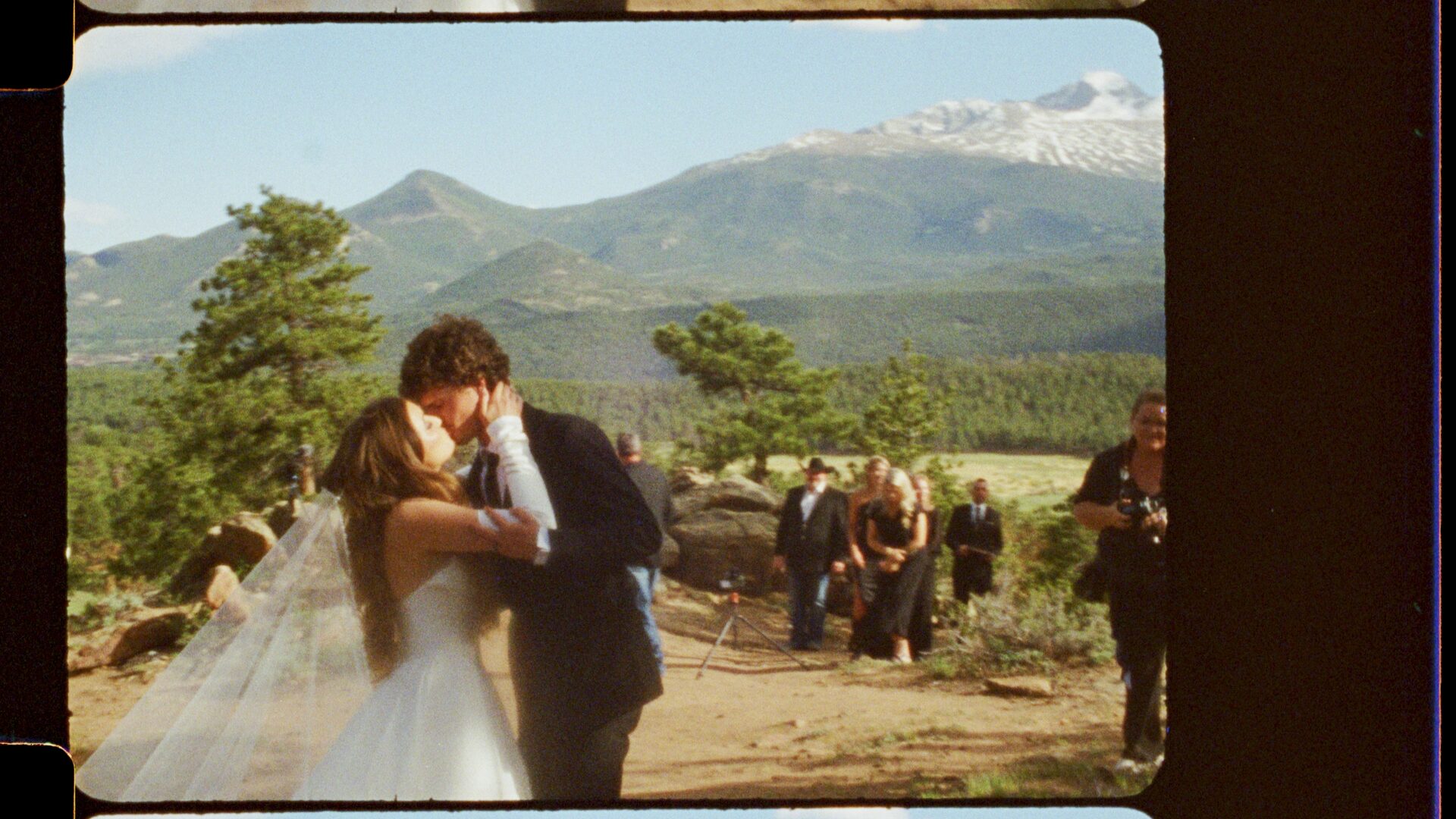
Emma + Ryan, Rocky Mountain National Park, on 16mm
The 16mm frame is more than three times the area of a Super 8 frame, and frame area decides everything on film: finer grain, richer detail, wider exposure latitude, and smoother motion. Super 8 reads as a memory. 16mm reads as cinema. Both are real film, simply built for different jobs.
Because 16mm loads on open spools rather than a sealed cartridge, light behaves differently when it sneaks in. Instead of the quick, hard flash you get on Super 8, the leak builds, lingers, and then drifts off the frame. It feels less like an accident and more like the film breathing. You cannot fake that in a grade, and you cannot get it from a cartridge.
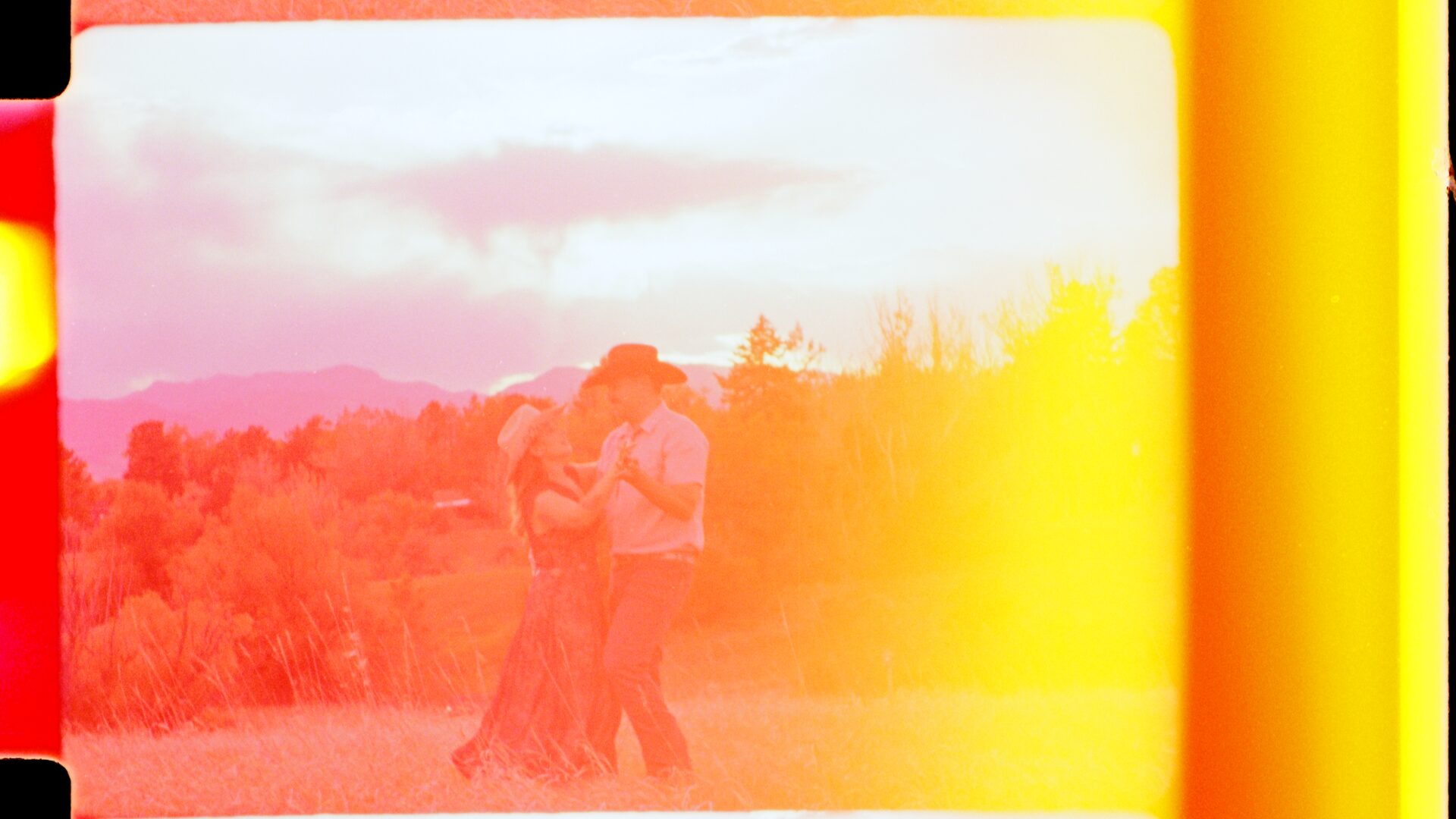
Kesia + Brian, Majestic View Park. A 16mm light leak that builds and drifts.
On a wedding day you cannot stop the moment to fix your light. 16mm holds onto detail in the shadows and resists blowing out the highlights in a way that genuinely surprised us when our first rolls came back. Even frames that were not exposed perfectly had room to recover. That forgiveness is exactly what you want when the sun is doing whatever it wants behind a mountain.
We run our 16mm at 18 frames per second on purpose, to match the cadence of our Super 8 work. The motion still comes back noticeably smoother than Super 8, which carries a little jitter from the way cartridge film travels through the camera. On 16mm the film runs cleaner, and the footage glides.
For the deeper technical breakdown, frame sizes, cameras, and all, read our 16mm vs Super 8mm comparison or the full guide to 16mm wedding videography. And if the looser, nostalgic look is what moves you, our Super 8mm film page makes that case beautifully.
You have seen 16mm even if you never knew its name. Moonlight, winner of Best Picture, was shot on Super 16. The Hurt Locker used 16mm cameras for its raw, immediate feel. March of the Penguins was filmed on 16mm in Antarctic cold, and Harry Styles shot Watermelon Sugar on it.
For most of the 20th century, 16mm was the backbone of documentary cinema, television news, and independent film. That heritage is the first thing it brings to your wedding day. Not nostalgia, legitimacy: the format the world trusts for real stories, pointed at yours. In the wedding industry, almost no one offers it.
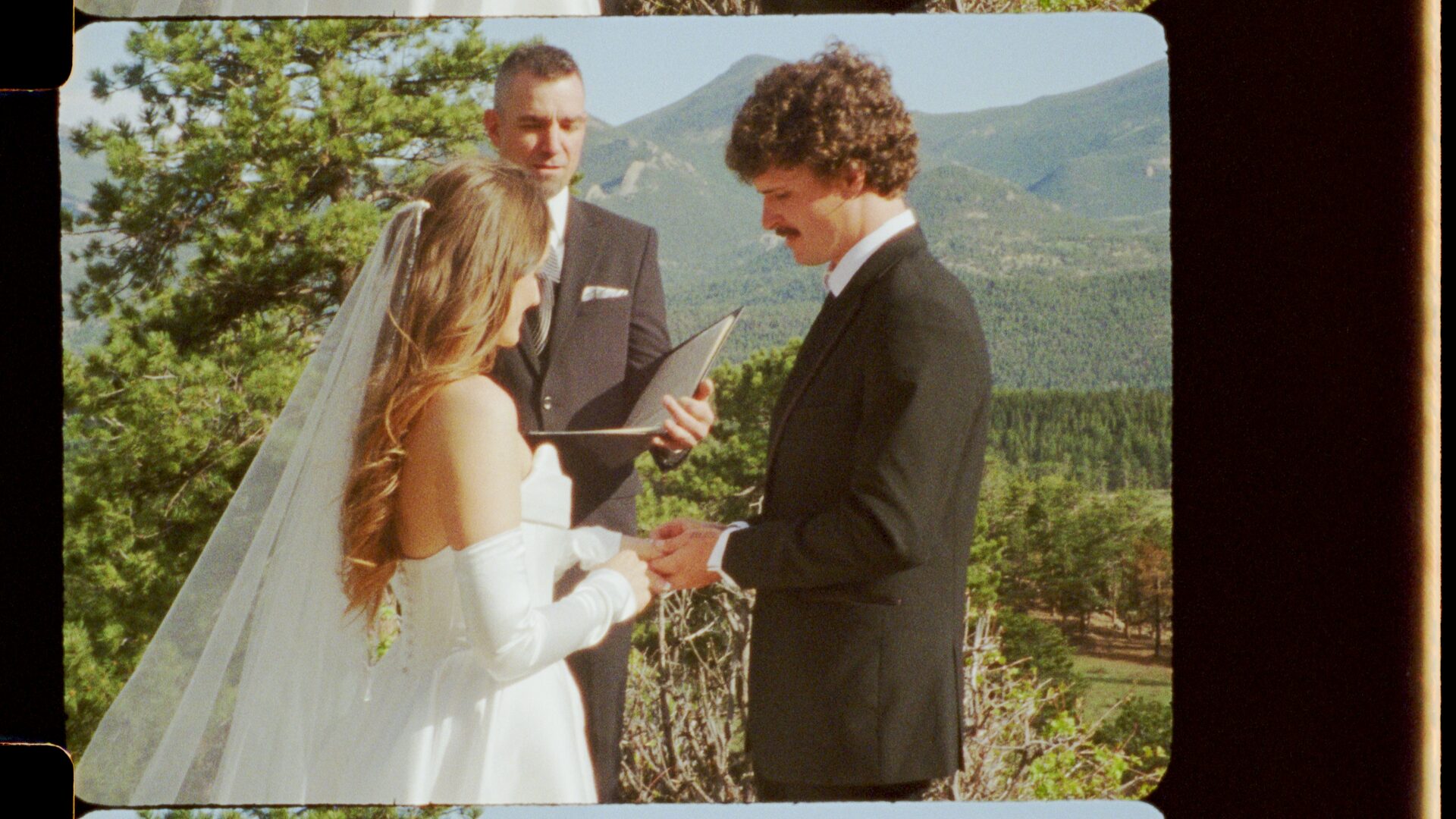
Ring exchange on 16mm, how the format holds detail in the close moments
Because it is harder. A Super 8 camera is close to automatic; a 16mm cinema camera asks you to know your craft. Our Bolex H16 is spring wound and hand cranked, focuses through a reflex prism, and gives full manual control of exposure and focus on every single shot.
That means winding the camera between almost every shot, all day long. It means working with a viewfinder that runs dim because the prism sends part of the light up to your eye, so you can pull focus in real time instead of guessing. It means knowing your film stocks, metering for skin tones, and trusting the film. None of it is automatic, and that is exactly the point. The image quality is so high that there is nowhere to hide.
People are afraid of 16mm because it is harder and it takes more skill. But the image is outstanding, and the warmth and the way it handles highlights are more dreamy, more romantic, than anything digital gives you.
Brandon Krage, Owner & Filmmaker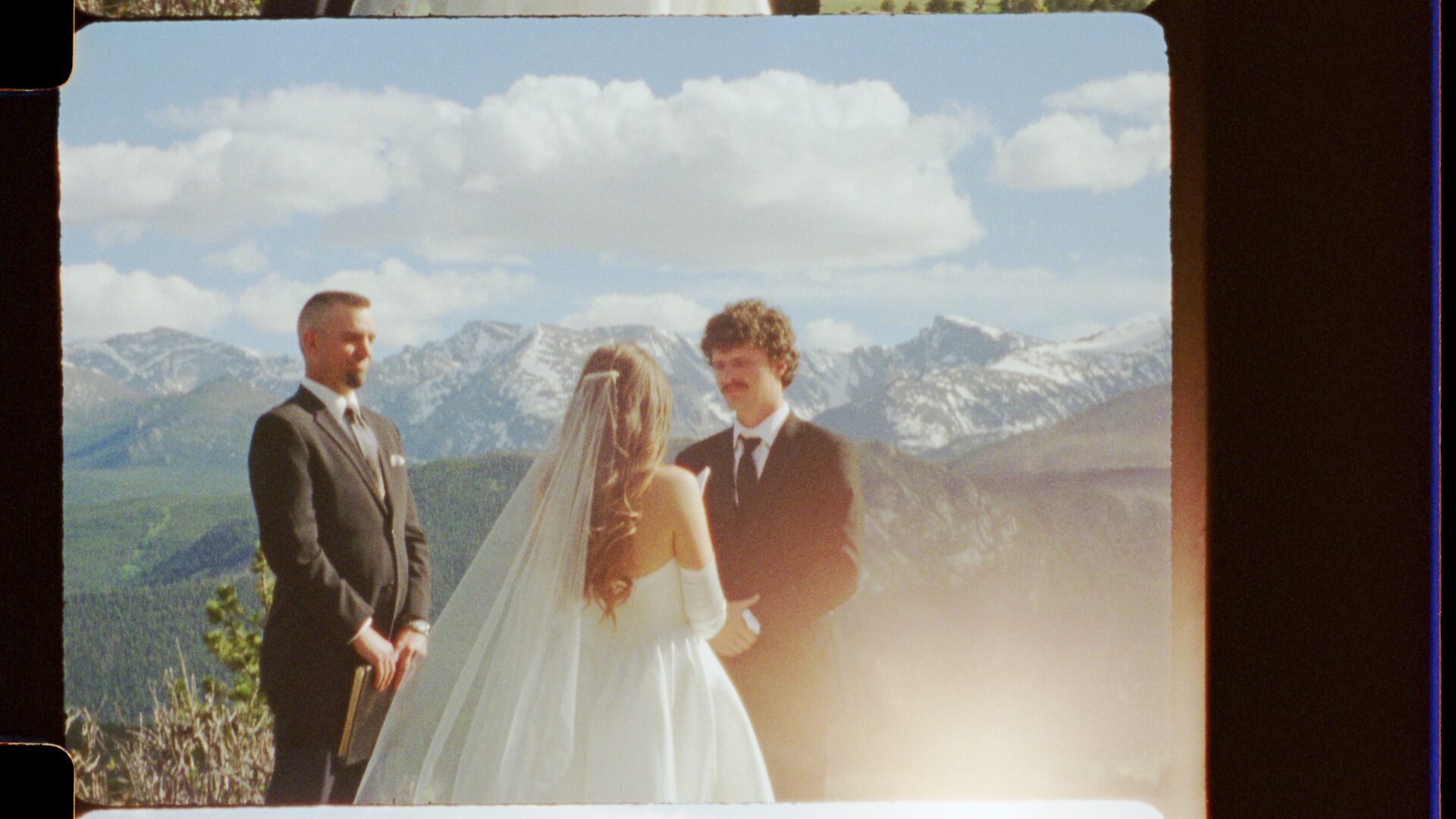
That glow rising from the bottom of the frame is light carrying over from the next shot. On film, you can shoot for that on purpose.
16mm works as a layer inside your wedding film, not the whole of it. Each roll holds a few minutes, so we point the camera at the moments that carry the most weight, the first look, the vows, the last light of the day, while digital coverage carries the full timeline from start to finish.
It pairs naturally with Super 8 in the same edit: the loose nostalgia of one against the cinema polish of the other. The 16mm we shoot is silent, so your vows and the sounds that matter are captured separately and edited together with the film. And because film is an older medium, we carry backup film cameras with digital cameras running alongside them, and run three to four independent audio sources at every wedding. Your day is not a rehearsal.
Most of our 16mm so far has come from adventure sessions and mountain weddings, including Emma and Ryan's Rocky Mountain National Park elopement. If you are planning something like that, start with our elopement coverage or see how the format sits inside full wedding videography. We are happy to talk through which formats serve your day, and we will always be straight with you about it.
16mm film stock, processing, and scanning cost more per minute than Super 8 or digital, so 16mm is a choice you make on purpose, never something quietly folded into a package. Your collection covers coverage, editing, and delivery at one flat investment, and the physical film stock is the only additional cost, quoted for your specific day before you commit.
Reach out for your investmentFull collections and details on the investment page
The questions couples ask most about bringing cinema film to their day.
16mm wedding videography is wedding film shot on 16mm motion picture film, the professional gauge used for decades in cinema and documentary work. A 16mm frame is more than three times the area of a Super 8 frame, so the footage holds finer grain, more detail, and a wider exposure range. It is real film running through a camera on your day, not a digital file with a filter applied.
Better is the wrong word. They are different. Super 8 has a smaller frame and a looser, more nostalgic home movie feel. 16mm has a much larger frame, finer grain, smoother motion, and far more exposure latitude, so it reads as cinema rather than memory. Many couples who ask for the 8mm look are actually picturing the polish that 16mm delivers.
The 16mm film we shoot is silent, and the image is the point. We pair your film with audio captured separately on the day, your vows, your music, the moments that carry sound, and edit it together so the finished film feels whole. The grain and motion stay pure film while the sound lives alongside it.
No. 16mm is a texture layer, not a replacement for digital coverage. Your digital film captures the full day from end to end, while the 16mm runs alongside it for the moments that deserve real film. Most couples love how the two formats sit together in one finished story.
We film selected moments on 16mm rather than the entire day. Each roll holds a few minutes of footage, so the format rewards intention. We point the camera at the moments that matter most, the first look, the vows, the light at the end of the day, while digital carries the full timeline.
16mm film stock, processing, and scanning cost more per minute than Super 8 or digital, so 16mm is a choice you make intentionally rather than something quietly bundled in. Your collection covers coverage, editing, and delivery at one flat investment on our investment page, and we will walk you through exactly what the film stock adds for your specific day before you commit.
Tell us about your day and your vision. We will give you a straight answer on whether 16mm is the right fit, and exactly what it adds. We take on a limited number of 16mm weddings each season.
Reserve a ConsultationLet's Talk
Collections start at $2,900 with the Motus team.
Collections with Brandon or Aby start at $5,800.
Fill out the form below to tell us about your wedding or elopement day.