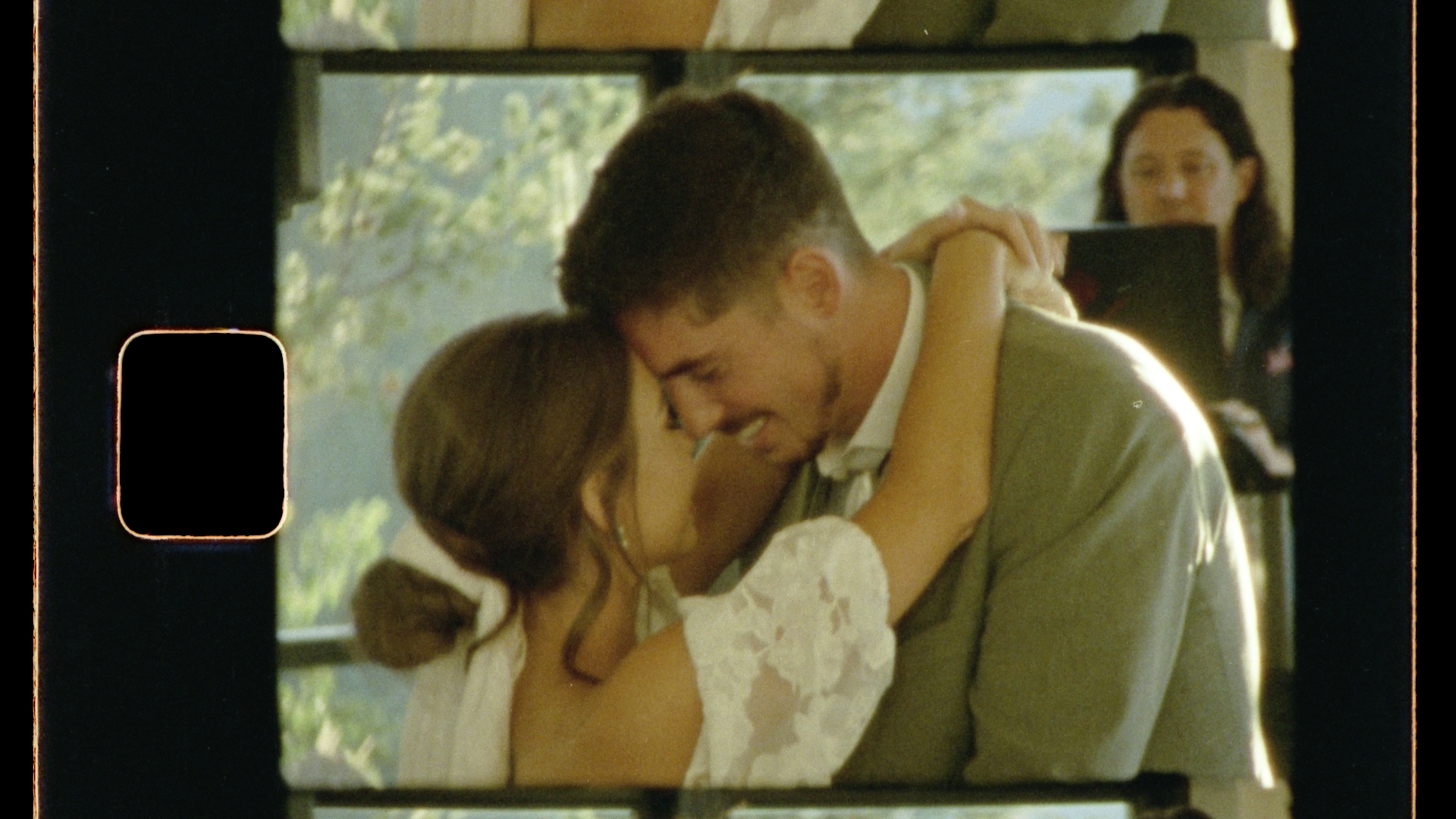
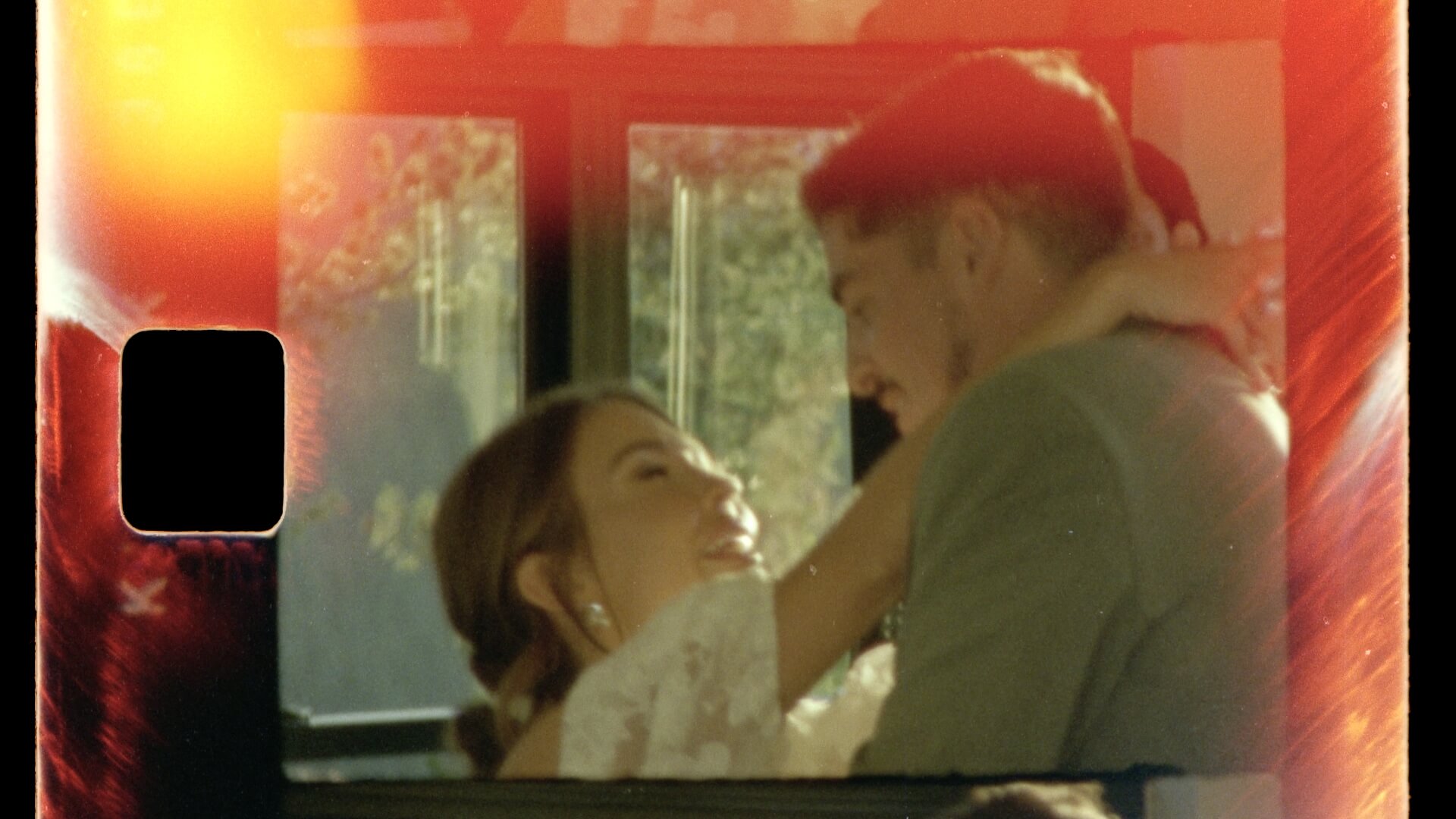
 Shot on Film
Services · Film
Super 8mm Wedding Videographer in Colorado
Real Kodak film running through a real camera on your wedding day. Grain that breathes, color that feels lived-in, and a reel you will hold onto forever.
Shot on Film
Real Kodak film running through a real camera on your wedding day. Grain that breathes, color that feels lived-in, and a reel you will hold onto forever.
Home › Services › Super 8mm Film
A Super 8mm wedding film is your day captured on real motion picture film, a cartridge format Kodak introduced in 1965. Light exposes a physical strip of celluloid, the film is developed at a lab, scanned, and edited into a finished reel. It is not a filter or a preset. It is the real thing.
You already know the look, even if you have never named it. Old footage of your parents as children. Your grandparents dancing at someone's wedding. Grain that moves like it is breathing, warmth that feels lived-in rather than graded, a flicker at the edges of motion that makes everything look like a memory you have already had.
If you are searching for a Super 8mm wedding videographer in Colorado, you are looking for someone who shoots actual film, and who has done it enough to trust it with a day that cannot be reshot. Brandon has been shooting Super 8mm and 16mm cinema film at weddings since 2020, across more than 60 wedding days in Colorado and beyond. You can see how it comes together on our portfolio page.
 Shot on Film
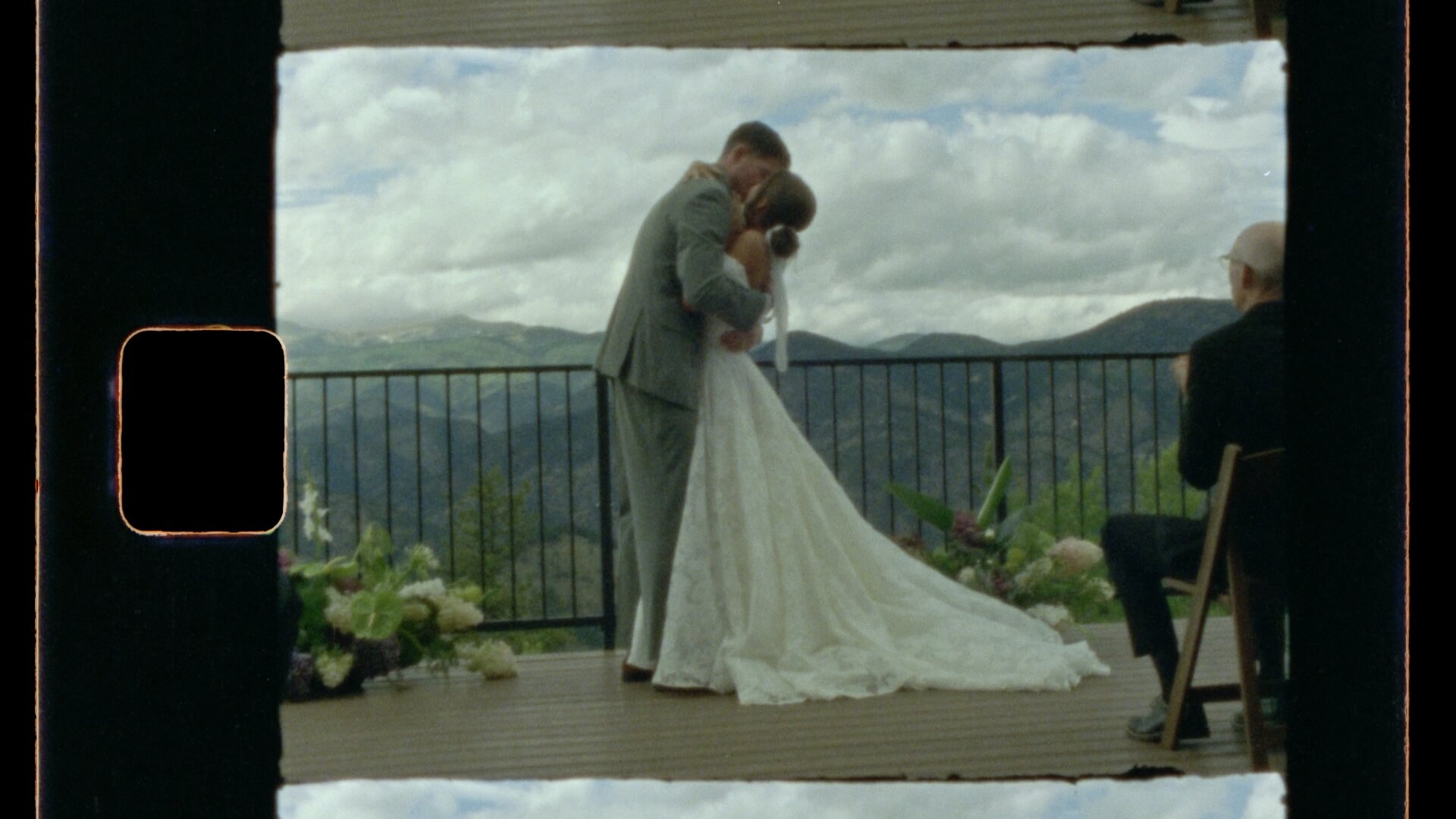
Super 8mm film frame, Colorado mountain ceremony
Super 8 looks the way it does because of physics, not processing. Film grain comes from silver halide crystals clustering differently in every single frame, the format runs at 18 frames per second, and Kodak color science is a photochemical reaction rather than a preset. None of it can be faithfully recreated in an edit.
Digital sensors render noise as a flaw to be removed. Film grain is the opposite: no two frames of your reel are exactly alike, and the texture responds to light and shadow across the image. It tells your eye that this is real, this happened, you were there. On a wedding day, that texture matters more than most couples anticipate until they see it.
Film stocks have personalities. Kodak Vision3 200T renders shadows with a blue-green cast and holds skin tones in a specific warm register, while Vision3 500T takes on a different quality entirely in available light. These are not settings that can be dialed in afterward. When colorists imitate Super 8 digitally, they are approximating. When you shoot actual Super 8, you get the real thing.
At 18 frames per second, each frame carries more motion blur than modern digital. Pull a single still from a reel and edges catch in motion, slightly soft on purpose. In the moving image, the blur becomes movement, and movement becomes memory.
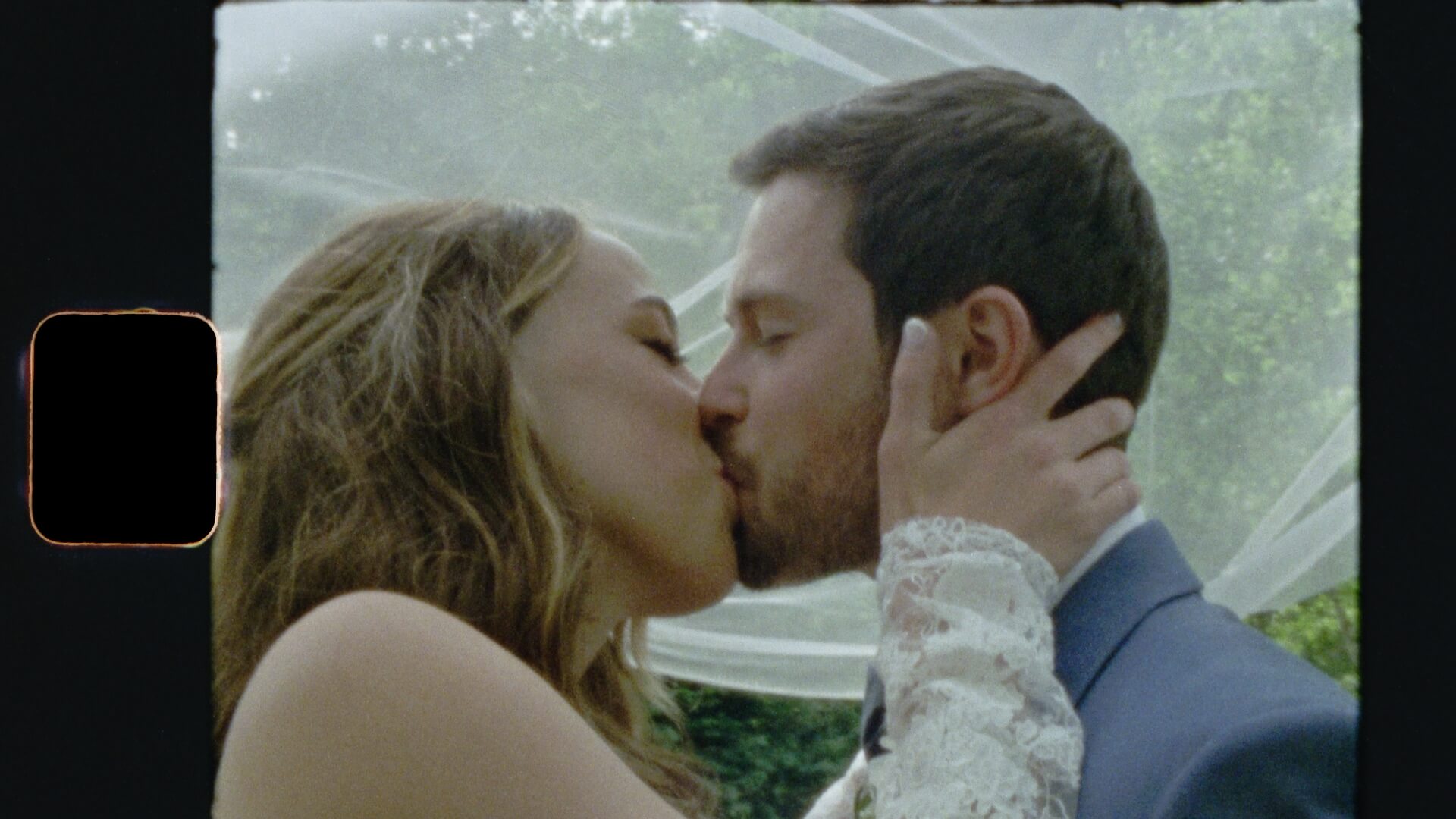
Under the veil, captured on Super 8mm film
Your footage also exists in the physical world. The developed negative is a stable archival format that has already survived seventy years, and you can hold it up to the light and see your wedding day in a series of tiny frames. For the full story of the format, read our complete guide to Super 8mm wedding video, or see how it compares to its bigger sibling in our 16mm vs Super 8mm breakdown.
Super 8 works as a layer alongside your digital coverage, not a replacement for it. A cartridge holds about three minutes and twenty seconds of footage, so the camera points only at what matters most: the first look, the vows, the light at the end of the day. Digital carries the full timeline.
That limitation is the feature. Because every frame of film costs something, every frame is considered. Most weddings use two to four rolls, enough to cut a complete short film of five to eight minutes that stands on its own or weaves through your full wedding videography edit. Super 8 is a silent medium, so the finished reel is set to music while your vows, toasts, and speeches live in the digital coverage with full audio.

Brandon with the Super 8mm camera mid-ceremony
Film is a beautiful medium and an older one, and older cameras can fail in ways you cannot always see in real time. So we plan for it: backup film cameras on every wedding, with digital cameras running alongside them. On the sound side, we run three to four independent audio sources minimum at every wedding, and we never drop below two at elopements. Your day is not a rehearsal, and we treat it accordingly.
Film takes longer than digital, and we are upfront about that. Lab processing and high-resolution scanning typically run two to four weeks, with editing time on top, so plan for six to eight weeks from your wedding to the finished Super 8 reel. Most couples, when they see it, agree it was worth every day of the wait.
His work grabbed my attention instantly, especially the Super 8mm film
I went searching for a videographer less than a month before our wedding. After weeding through many portfolios, I stopped when I came across Motus Weddings. Brandon was extremely accommodating and went above and beyond on the day. After many hours developing and editing the film, the videos turned out AMAZING. I can tell how passionate he is about his job and you can truly see it in his work. I could not recommend Brandon enough.
One flat investment covers your coverage, editing, film development, and delivery. The only additional cost is the physical film stock we shoot on, which we quote for your specific day, because how much film your day calls for is a choice you make with us, not a fee that appears later.
Reach out for your investmentFull collections and details on the investment page
The questions couples ask most before adding real film to their day.
No. A Super 8mm wedding film is a companion to your digital coverage, not a replacement for it. Think of it as a short, atmospheric film reel that captures the feeling of your day, while digital video handles the full timeline, the vows, the speeches, and everything with sound. The two formats do different jobs, and they are better together.
A single cartridge of Super 8 holds about three minutes and twenty seconds of footage. Most weddings use two to four rolls, which is enough to cut a complete short film of five to eight minutes that stands entirely on its own or sits alongside your full digital wedding video in one finished story.
No. Super 8 is a silent medium, so the finished reel is set to music, your choice or a collaborative selection. Your vows, toasts, and speeches are preserved through your digital coverage, where we run three to four independent audio sources at every wedding. One format handles sound. The other handles feeling.
Plan on six to eight weeks from your wedding to the finished Super 8 reel. The film goes to a professional lab for processing and high-resolution scanning, which typically takes two to four weeks, and careful editing time comes on top of that. Real film takes longer than digital, and it is worth the wait.
Motus wedding collections cover coverage, editing, film development, and delivery in one flat investment, listed on our investment page. The only additional cost is the physical film stock we shoot on, which we quote for your specific day. How much film your day calls for is a choice you make with us, never a surprise on an invoice.
Yes. Super 8 is especially strong at elopements, where the day is smaller and every frame of film goes further. We regularly pair Super 8 motion film with 35mm photography for couples who want the full film record without a large production. Colorado's high country is our home terrain, and we travel far beyond it.
Tell us about your day and your vision. We will reach out within 24 hours to set up a call. No pitch, just a conversation about whether Super 8 belongs in your film.
Reserve a ConsultationLet's Talk
Collections start at $2,900 with the Motus team.
Collections with Brandon or Aby start at $5,800.
Fill out the form below to tell us about your wedding or elopement day.