You've decided to elope, you want Christ at the center of it, and now you're staring at a blank page wondering what actually gets said. This Christian elopement ceremony script gives you the whole thing, start to finish, with traditional words a pastor will recognize and warmer options you can say your own way.
We're Brandon and Aby, a husband-and-wife photo and video team. We're one of the few who come along on elopements, and sometimes it's just the two of us and the two of you out there. We've stood a few feet from a lot of ceremonies, and the best ones feel planned without feeling stiff. That's what this script is built for.
If you're still working through whether eloping is okay for a Christian couple at all, start with our guide, Is Eloping a Sin? What the Bible Says About a Christian Elopement. This post picks up where that one leaves off: what to actually say. It's part of our Christian wedding and elopement guide.
How to Use This Script
Think of this as a frame, with plenty of room to change it. Every spoken part gives you words that work as written, and almost every one has a note that says you can say it your own way. Keep what fits, cut what doesn't, and swap in what matters to you two.
A few times you'll see words marked "from the Book of Common Prayer." That's the historic prayer book of the Anglican and Episcopal churches, first published in 1549, and it's where a lot of classic wedding language comes from, like "to have and to hold, for better for worse" and "those whom God has joined together." We use it because the words are time-tested, almost any pastor will recognize them, and they're free for anyone to use. In most places it shows up, you'll find a plainer option right beside it.
Anything marked Optional can come out without breaking the flow. On an elopement that's usually a lot of it. Some couples keep every piece and take their time. Others keep the vows, the rings, a prayer and the pronouncement, and they're married in ten minutes. Both are real Christian weddings.
Where you see [Name], put in your first names. The script is written for an officiant, usually your pastor or a minister you trust. If the law where you're marrying lets the two of you marry yourselves, there's a version for that further down.
In our experience, most elopement ceremonies run about 10 to 20 minutes, and anything much shorter can feel rushed. Don't be afraid to slow down. Nobody is waiting on a cocktail hour.
The Ceremony at a Glance
- Walking in
- Welcome
- Seating or standing
- Opening prayer
- Scripture reading Optional: a second reading
- A short word from your officiant Optional
- Declaration of intent
- Vows
- Rings
- Prayer and blessing over the couple
- Pronouncement
- The kiss
- Presentation and recessional
- Signing the license
The Full Script
Here it is, in order. Lines in the boxes are spoken. Everything else is a note for you or your officiant.
1. Walking in
On an elopement there's often no aisle. You might walk up to the spot together, hand in hand, or one of you might wait while the other walks in. Music from a small speaker works, and so does silence and the sound of the place you chose. Your officiant stands facing you, and you face each other or face your officiant.
2. Welcome
[Name] and [Name], welcome. We're here before God, and before the people who love you, because the two of you have decided to give your lives to each other. Marriage was God's idea from the very beginning, and today you're stepping into it together.
If it's only the two of you and your officiant, change "before the people who love you" to "in this beautiful place." Say it your own way.
3. Seating or standing
This is a step that gets missed all the time. If your guests have seats and nobody tells them to sit, they'll stand there the whole ceremony waiting for permission. Your officiant should say it right after the welcome.
Please, be seated.
Go ahead and stay standing where you are. Give these two a little room.
Standing is completely fine on an elopement. A few steps of space keeps the moment feeling like yours, and it keeps everyone out of the background of your photos and video.
4. Opening prayer
Let's pray. Father, thank you for [Name] and [Name], and for bringing them to each other. Thank you that you're here with us right now. Be the center of this marriage from its first minute. Fill these two with your love, so they can love each other well. In Jesus' name, amen.
A parent, a friend or you two can lead this instead. Say it your own way.
5. Scripture reading
Pick one reading, or two if you'd like. Your officiant can read it, or one of you can. A favorite for weddings:
A reading from 1 Corinthians 13. "Love is patient, love is kind. It does not envy, it does not boast, it is not proud. It does not dishonor others, it is not self-seeking, it is not easily angered, it keeps no record of wrongs. Love does not delight in evil but rejoices with the truth. It always protects, always trusts, always hopes, always perseveres. Love never fails."
More options, with the full text, are in Scripture readings to choose from.
6. A short word from your officiant Optional
Two or three minutes from your pastor about you and about marriage. Keep it short. A good one usually touches on three things: something true about this couple, what Scripture says marriage is, and one piece of advice they'll want to remember. If your officiant knows you well, this is often the part you'll replay the most.
7. Declaration of intent
This is the "I will." Your officiant asks each of you, one at a time. The traditional wording, from the Book of Common Prayer:
[Name], will you have this man to be your husband; to live together in the covenant of marriage? Will you love him, comfort him, honor and keep him, in sickness and in health; and, forsaking all others, be faithful to him as long as you both shall live?
BrideI will.
[Name], will you have this woman to be your wife; to live together in the covenant of marriage? Will you love her, comfort her, honor and keep her, in sickness and in health; and, forsaking all others, be faithful to her as long as you both shall live?
GroomI will.
A simpler version, if you'd like one: "[Name], have you come here freely, to give yourself to [Name] in marriage, before God?" "I have."
8. Vows
Face each other and hold hands. Your officiant can feed you the vows a line at a time so you don't have to memorize anything, or you can read them from a card. These don't have to be the traditional words. Plenty of couples write vows that are entirely their own, and there's a simple guide for that in Vow options below, along with a traditional set and a warmer one. Each of you says your vow in turn.
9. Rings
Each of you places the ring on the other's ring finger and says the words. The traditional wording, from the Book of Common Prayer:
[Name], I give you this ring as a symbol of my vow, and with all that I am, and all that I have, I honor you, in the Name of the Father, and of the Son, and of the Holy Spirit.
Two shorter options: the classic opening line from the 1662 Book of Common Prayer, "With this ring I thee wed," or something in your own words, like "[Name], I give you this ring as a sign of my promise. Every time you look at it, remember that I'm yours." Say it your own way.
10. Prayer and blessing over the couple
Your officiant, a parent, or everyone there can pray this over you. The priestly blessing from Numbers is a beautiful fit:
"The LORD bless you and keep you; the LORD make his face shine on you and be gracious to you; the LORD turn his face toward you and give you peace."
That's Numbers 6:24-26. If your officiant is an Episcopal or Anglican priest, the Book of Common Prayer has its own blessing for this moment. Catholic and Orthodox priests follow their own rite. Add a few sentences of your own prayer if you'd like.
11. Pronouncement
Now that [Name] and [Name] have given themselves to each other by solemn vows, with the joining of hands and the giving and receiving of a ring, I pronounce that they are husband and wife, in the Name of the Father, and of the Son, and of the Holy Spirit.
Those whom God has joined together let no one put asunder.
That last line is the Prayer Book's wording of Jesus' words in Matthew 19:6. Some places require particular words to make a marriage legal, so ask your officiant or the local registrar before you change this part.
12. The kiss
You may kiss.
Take your time with this one. Your officiant can take a step to the side right before, so it's just you two in the frame.
13. Presentation and recessional
It's my joy to introduce, for the very first time, husband and wife, [Name] and [Name].
For a closing line before you walk off, Psalm 118:24 works well: "The LORD has done it this very day; let us rejoice today and be glad."
14. Signing the license
Last comes the paperwork that makes it legal, and who signs depends on where you marry. In Colorado, for example, you can marry yourselves with no officiant or witnesses required. In New York, at least one witness has to be there besides the officiant, and in England and Wales you need two. Check the rules where you're marrying, bring a good pen, and sign before anyone leaves. Our Colorado marriage license guide walks through one example step by step.
Want help with yours?
We'll help you plan it
The whole day, photo and video included, and we're glad to talk through a ceremony that fits your faith and your story.
Schedule a callLike to map things out on your own first? Our free planning app keeps your budget, timeline and vows in one place.
Vow Options
Write your own, pick one of these, or mix them. Take turns, facing each other.
Traditional, from the Book of Common Prayer (1979)
In the Name of God, I, [Name], take you, [Name], to be my [wife / husband], to have and to hold from this day forward, for better for worse, for richer for poorer, in sickness and in health, to love and to cherish, until we are parted by death. This is my solemn vow.
These are the words most people picture when they think of wedding vows. The older 1662 version says "till death us do part" in that spot, if you'd like that phrasing instead.
Warmer, in plain words
[Name], I choose you. Before God, I promise to love you, to be faithful to you, and to stand with you on the good days and the hard ones. I'll pray with you and for you. I'll forgive you the way I've been forgiven. And I'll keep choosing you for as long as we both shall live.
Write your own
If you'd like to write your own, a simple frame keeps them focused and about the right length, about one minute each:
- What you see in them. One or two specific things, a moment or a quality, that made you sure.
- What you promise. Three or four real promises, the kind you'll still mean in year twenty.
- Who you're promising before. Name God's part. You're making this promise before Him.
Some churches use set wording for vows, so check with your pastor or priest before you write your own.
Scripture Readings to Choose From
All from the NIV. Pick the one that sounds most like you, or one that's carried you through a hard season.
Genesis 2:18, 24
"The LORD God said, 'It is not good for the man to be alone. I will make a helper suitable for him.'" ... "That is why a man leaves his father and mother and is united to his wife, and they become one flesh."
Ruth 1:16-17
"But Ruth replied, 'Don't urge me to leave you or to turn back from you. Where you go I will go, and where you stay I will stay. Your people will be my people and your God my God. Where you die I will die, and there I will be buried. May the LORD deal with me, be it ever so severely, if even death separates you and me.'"
Ruth spoke these words to her mother-in-law, Naomi, and they've become a wedding favorite because of the loyalty in them.
Ecclesiastes 4:9-12
"Two are better than one, because they have a good return for their labor: If either of them falls down, one can help the other up. But pity anyone who falls and has no one to help them up. Also, if two lie down together, they will keep warm. But how can one keep warm alone? Though one may be overpowered, two can defend themselves. A cord of three strands is not quickly broken."
The passage is about companionship in general, and Christians often read the three strands at weddings as husband, wife and God.
Song of Songs 8:6-7
"Place me like a seal over your heart, like a seal on your arm; for love is as strong as death, its jealousy unyielding as the grave. It burns like blazing fire, like a mighty flame. Many waters cannot quench love; rivers cannot sweep it away. If one were to give all the wealth of one's house for love, it would be utterly scorned."
Colossians 3:12-14
"Therefore, as God's chosen people, holy and dearly loved, clothe yourselves with compassion, kindness, humility, gentleness and patience. Bear with each other and forgive one another if any of you has a grievance against someone. Forgive as the Lord forgave you. And over all these virtues put on love, which binds them all together in perfect unity."
1 John 4:7-8, 12
"Dear friends, let us love one another, for love comes from God. Everyone who loves has been born of God and knows God. Whoever does not love does not know God, because God is love." ... "No one has ever seen God; but if we love one another, God lives in us and his love is made complete in us."
Optional Add-Ins
None of these are required. Drop in the ones that mean something to you, usually right after the vows and rings or right before the blessing.
Communion Optional
Some couples take communion together as their first act as husband and wife. Churches have different practices around who can serve it and how, so this one is your pastor's call. If you include it, your pastor will lead it.
Cord of three strands Optional
A popular choice with Christian couples, especially in Protestant churches. Your officiant reads Ecclesiastes 4:12, "A cord of three strands is not quickly broken," and the two of you braid three cords together, often representing husband, wife and God. It's a modern unity ritual, so you won't find it in the old prayer books, and it travels well because there's nothing to blow out in the wind.
Letters from family Optional
Ask your parents or grandparents to write you a blessing ahead of time. Your officiant can read one aloud, or you can open them right after the pronouncement. It's a simple way to bring family into a ceremony they can't attend. If you haven't told them yet, start with our guide on how to tell your Christian parents you're eloping.
A prayer from someone who isn't there Optional
A parent or pastor can pray over you on a phone call or record a short prayer to play. Test the signal first if you're somewhere remote.
A hymn or worship song Optional
Sing something you both love, or play it from a speaker while you hold each other for a minute after the kiss.
If You're Marrying Yourselves
Some places, Colorado among them, let the two of you marry yourselves with no officiant. For a lot of Protestant couples that's a meaningful way to do it: just the two of you, speaking your vows to each other before God. If you're Catholic, your church requires a priest or deacon, and if you're Orthodox, a priest, so this version isn't for you. Our Christian elopement guide explains why.
To adapt the script, keep the same order and take turns with the parts an officiant would say:
- Welcome and prayer. One of you thanks God for bringing you here and prays, out loud, for your marriage.
- Reading. One of you reads your chosen passage to the other.
- Declaration. Ask each other: "[Name], have you come here freely, to give yourself to me in marriage, before God?" "I have."
- Vows and rings. Exactly as written above.
- Blessing. Pray Numbers 6:24-26 over each other, or pray together.
- Pronouncement. Together: "Before God, we are husband and wife. What God has joined together, let no one separate."
Then sign your license. Our self-solemnization ceremony guide covers the legal side in Colorado and has more ceremony ideas.
Notes From Behind the Camera
A few things we've learned behind the camera:
- Your words matter most. We mic every couple, and your officiant when there is one, so every word of your vows and the prayer comes through clean on your video.
- Print the script. Give your officiant a printed copy, with your names filled in. Phones die, and they glow in the photos.
- Slow down. Pause after the vows and look at each other, because that's the part you'll want to see again.
You can see how we approach small days on our elopements page.
Christian Elopement Ceremony Questions
How long is a Christian elopement ceremony?
In our experience, most elopement ceremonies run about 10 to 20 minutes. A simple version with a prayer, one reading, vows, rings, a blessing and the pronouncement can take ten minutes. Adding a short message from your pastor, a second reading or communion stretches it toward twenty. Anything much shorter can feel rushed, so give yourselves time.
Do you need an officiant for a Christian elopement?
It depends on where you marry and your church. Some places, like Colorado, let couples marry themselves with no officiant. Others require one. Catholic couples need a priest or deacon, and Orthodox couples a priest, for their church to recognize the marriage. Many Protestant couples bring their pastor either way, to lead the ceremony and pray over them.
Can we write our own vows in a Christian ceremony?
Usually, yes. Many pastors are glad to have couples write their own vows, especially when the vows name God's part and make real promises. Some churches use set wording, so check with your pastor or priest first. You can also say the traditional vows and add a few lines of your own afterward.
What Bible verses are good for an elopement ceremony?
Favorites include 1 Corinthians 13:4-8, Genesis 2:18 and 2:24, Ruth 1:16-17, Ecclesiastes 4:9-12, Song of Songs 8:6-7, Colossians 3:12-14 and 1 John 4:7-12. For the blessing, Numbers 6:24-26 is a beautiful fit. Pick one or two that sound like the two of you, or one that has carried you through a hard season.
Do we need witnesses at our elopement?
That depends on the law where you marry. Colorado requires no witnesses at all, even when couples marry themselves. New York requires at least one witness besides the officiant, and England and Wales require two. Catholic weddings need two witnesses for the Church. Check the local rules before your day, and bring witnesses if you need them.
About the Author
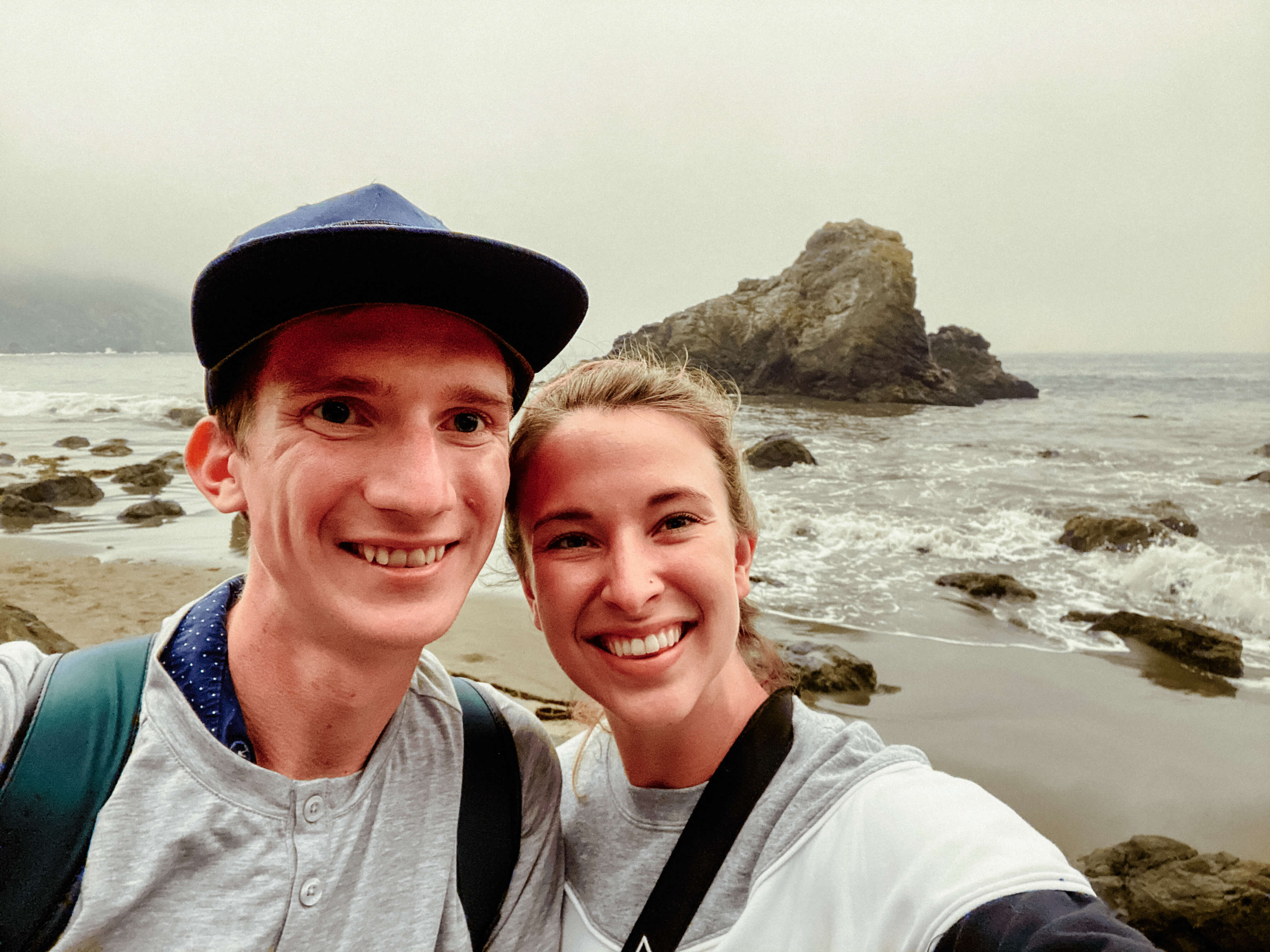
Brandon Krage is the owner and filmmaker behind Motus Weddings, an adventure wedding photography and videography studio based in Bailey, Colorado. Together with his wife and co-owner Aby, he has spent more than six years and 150+ weddings and elopements documenting couples on digital, 35mm film, Super 8mm and 16mm. They married in July 2021. More about Brandon and Aby.
Scripture quotations taken from THE HOLY BIBLE, NEW INTERNATIONAL VERSION®, NIV® Copyright © 1973, 1978, 1984, 2011 by Biblica, Inc.® Used by permission. All rights reserved worldwide. Book of Common Prayer (1979) texts are in the public domain.