You love Jesus, you want to marry your person, and a quiet ceremony on a mountain sounds like peace. Then the question shows up: is a Christian elopement okay, or is eloping somehow a sin? Maybe a parent asked it out loud. Maybe nobody did, and you keep asking it yourself.
We're Brandon and Aby, a husband-and-wife photo and video team. We're one of the few who come along on elopements, and sometimes it's just the two of us and the two of you out there. A lot of the couples we work with follow Christ and chose to elope, and plenty of them tell us they hesitated at first. They wondered if a small day would count the same in God's eyes. We get it personally too. Our own wedding wasn't the traditional kind. It was cinema themed, a nod to Aby's cinema studies background and Brandon's work as a videographer, it wasn't in a church, and we were married by a minister in training in a pirate costume. We were still married in the eyes of God, and that's what counts. If we could go back, we'd probably elope just the two of us and hold the reception separately. So we went to Scripture, read what it says about weddings and what it leaves out, and wrote the answer down for you.
The short answer: in God's eyes, a marriage is a covenant two people make before Him and keep in the open, and for most Protestant couples that covenant can be made with the two of you and a view. Catholic and Orthodox churches add requirements of their own, which we cover below. The rest of this guide shows you where that comes from, what to check before you go, and three ways Christian couples do this so their family still celebrates with them.
Is Eloping a Sin? Can Christians Elope?
Search the whole Bible and you won't find a verse that commands a wedding ceremony. There's no required venue, no guest count, no named officiant, and nothing that says a marriage has to happen inside a church building. Requiring a church ceremony came much later in church history. The wedding most of us picture, with the long aisle, the reception and the 150 guests, is a tradition. It can be a lovely one, and Scripture never requires it.
So when you ask whether eloping is a sin, start with what the Bible takes seriously, which is the marriage itself: who you're joining your life to, what you're promising, whether you're making that promise before God, and whether you're doing it in the open. Those are the things worth getting right, and every one of them fits inside a small ceremony.
If you've already searched this, you've probably found answers from Christian ministry sites like Boundless and WELS, and they agree more than you might expect. None of them calls eloping a sin in itself. Before you go, they ask you to look at three things: why you want to elope, whether your parents and pastor hear it from you first, and whether the people who love you still get to celebrate your marriage. A few still call eloping a last resort when it means skipping your parents.
We agree with all three. So can Christians elope? Yes, and a couple who answers those three questions well can do it with a clear conscience. We'll take each one below.
If you're still deciding between a small day and a big one for practical reasons, our elopement vs wedding guide walks through cost, guests and planning side by side. This post stays on the faith question. It's part of our Christian wedding and elopement guide.
What Makes a Marriage in God's Eyes
Go back to the very first description of marriage in Scripture. It comes right after God brings Eve to Adam:
"That is why a man leaves his father and mother and is united to his wife, and they become one flesh."
Genesis 2:24 (NIV)
That verse is the foundation the rest of the Bible builds on, and it describes no ceremony at all. When the Pharisees tested Jesus about marriage, He went straight back to the same verse and added the line you've probably heard at every wedding you've attended:
"So they are no longer two, but one flesh. Therefore what God has joined together, let no one separate."
Matthew 19:6 (NIV), also Mark 10:8-9
In Jesus' words, God is the one who joins you. Your marriage starts with Him, and that's true whether 200 people are watching or none are.
Scripture also calls marriage a covenant in so many words. In Malachi, God is rebuking husbands who broke faith with their wives, and in the middle of that rebuke He says this:
"...the LORD is the witness between you and the wife of your youth. You have been unfaithful to her, though she is your partner, the wife of your marriage covenant."
Malachi 2:14 (NIV)
The context is sobering, and it makes the point sharper. God says He was the witness to that vow. A covenant is a binding promise made before God, and across most Christian traditions the same three pieces show up when people describe what forms one: two people freely choosing each other, vows spoken before God, and the two becoming one flesh. Many Protestant pastors teach that marriage is a covenant two people make freely before God, and that it should be public and legal. That's what your marriage license is for. If you're Catholic or Orthodox, your church adds requirements of its own, and that section is further down.
For most Protestant couples, all of that fits on a mountain with the two of you, your honest vows and the God who hears them. In God's eyes, that covenant is the heart of your marriage, and the license and the celebration are how you honor it and share it.
Not sure where to start?
We'll help you plan it
Whether it's a mountain elopement or a small church wedding with an adventure session after, we'll help you plan the whole day, photo and video included. We're also glad to talk through how to build a ceremony that honors God.
Schedule a callLike to map things out on your own first? Our free planning app keeps your budget, timeline and vows in one place.
Weddings in the Bible Were Celebrations Nobody Was Required to Throw
If you love the idea of a party, Scripture is on your side there too. Jesus did His first miracle at a wedding:
"On the third day a wedding took place at Cana in Galilee. Jesus' mother was there, and Jesus and his disciples had also been invited to the wedding."
John 2:1-2 (NIV)
John says that turning water into wine there was "the first of the signs through which he revealed his glory" (John 2:11). He chose a wedding feast for it. Celebrating a marriage is good.
The Old Testament weddings look like celebrations too. When Jacob married, Laban "brought together all the people of the place and gave a feast" (Genesis 29:22). Samson "held a feast, as was customary for young men" (Judges 14:10-12), and it ran seven days. Jesus told parables about wedding banquets in Matthew 22 and 25. Those feasts were the custom of their time, and the Bible describes them without ever commanding one.
Then there's Isaac and Rebekah. Her family blessed her before she left home, she traveled to meet Isaac, and the marriage itself takes a single sentence:
"Isaac brought her into the tent of his mother Sarah, and he married Rebekah."
Genesis 24:67 (NIV)
No feast is described. Nobody in Scripture treats that marriage as less real for it.
So if you want a big celebration with everyone you love, have one. The covenant makes you married. The party is a gift on top, and the two don't have to happen on the same day.
Why the Most Intimate Ceremonies Are Often the Most Meaningful
Here's something we've seen again and again from behind the camera: small ceremonies where nobody is performing for anyone. Two people, maybe their parents, maybe a pastor. You can see it on their faces. They're there for the marriage, and every word of their vows is meant for God and for each other.
A big wedding can carry a lot of weight that has little to do with the covenant: the seating chart, the timeline, the pressure to make it look a certain way. All of it pulls at your attention, and many couples want that attention on their vows.
Then those same couples get together with family and friends later and celebrate the marriage, sometimes weeks later, around a full table with nobody rushing. Jesus cared enough about a wedding feast that when the wine ran out at Cana, He made more. The celebration matters, and it can have a day of its own.
Some of the best ceremonies we've ever seen were the intimate ones, where the couple was there for the marriage itself. Then they got together with their family later and celebrated.
Brandon Krage, Motus Weddings
Three Ways Christian Couples Do This
Here's what we see work, depending on where your convictions and your family are.
Elope before God, then celebrate with everyone at home
The two of you say your vows on a mountain, alone or with a few people, license in hand. Once your video is back, you hold a reception at home for everyone: family, friends, your church. It's a real, public celebration. You get a quiet ceremony and a full party, each on a day of its own.
Bring your pastor and a couple of witnesses to the mountain
If you want an officiant but not a church, bring your pastor or minister up the mountain with you, and a witness or two if you like. You say your vows in the wild, your pastor leads you through them and prays over you, and your witnesses sign your license. It's an elopement with the person and the blessing you want standing right there with you.
Marry in your church with close family, then take an adventure session
If you want your pastor and your church, keep both and keep it small. Get married in your church with close family there and your pastor leading the ceremony, so every traditional piece is in place. Then head into the mountains for an adventure session, the two of you celebrating your first hours or days as husband and wife somewhere wild. If you're Catholic or Orthodox, this is usually the path your church will ask for, since the wedding happens in a church with your priest. More on that below.
Hold the reception as its own celebration
Whichever path you choose, the reception doesn't have to be attached to the ceremony. Make it a separate public day, in a backyard, a church hall or a venue, with your wedding video playing so everyone sees the vows they missed. One worry ministry writers raise about eloping is that your community misses the celebration. With a separate reception, your community still gets the feast.
If you're not sure which of these fits you, that's a good thing to talk through with your pastor, and with us. We'll help you plan whichever one you choose.
Before You Go: Your Reasons, Your Parents, Your Church
When pastors and parents get uneasy about eloping, the worry usually comes from what the word "elope" used to mean: running off in secret, often against your family's wishes. Scripture does care about that.
Start with the first question those ministry writers ask: why do you want to elope? If it's a way to hide something, rush past a hard conversation with your family, or skip counsel you don't want to hear, slow down and talk with your pastor first. If it's because you want your vows to be about God and each other, you're in good company.
Scripture asks every believer to honor marriage:
"Marriage should be honored by all, and the marriage bed kept pure, for God will judge the adulterer and all the sexually immoral."
Hebrews 13:4 (NIV)
And marriage in the Bible is known publicly. When Boaz married Ruth, he announced it at the town gate in front of the elders, and the elders and all the people at the gate answered, "We are witnesses" (Ruth 4:9-11). That was a legal and public moment, and it shows how naturally God's people treated marriage as something the community knew about and blessed.
Pastor John Piper put both sides of this well. Asked whether a wedding has to happen in a church, he answered, "No, you don't have to be married in a church ceremony in order to be truly married." He also said marriage is "not private to the government. It is not private to the Church. It is public." (Desiring God)
Then there's the commandment every Christian couple feels when they think about telling their parents:
"Honor your father and your mother, so that you may live long in the land the LORD your God is giving you."
Exodus 20:12 (NIV)
Honoring your parents means they hear it from you, early, with kindness. You still get to plan your own day. Here's what that looks like in practice for the couples we've worked with:
- Tell your parents before you elope, in person or on a call, and tell them why.
- Ask for their blessing.
- If it fits your day, invite them. Plenty of elopements include parents or a small handful of people.
- Talk to your pastor so your church family isn't surprised.
- Make the marriage legal, and share the news openly afterward.
Do those things and you're eloping the way that matters for this question: small and honest.
If you're dreading that conversation, our guide on how to tell your Christian parents you're eloping walks through what to say and how to include them.
The Marriage License Is Part of Doing It Right
The covenant is between you and God. The license is how you honor the earthly side of it, and Scripture asks that of you too:
"Let everyone be subject to the governing authorities, for there is no authority except that which God has established."
Romans 13:1 (NIV)
Marriage laws change from state to state and country to country. Some places let the two of you marry yourselves with no officiant at all, some require an officiant and witnesses, and some have waiting periods or residency rules. Before you book anything, check the rules where you're marrying, usually on the county clerk's or civil registry's website. We help couples sort this out wherever the day happens.
Colorado is one of the simplest examples. A license from any county clerk is good for 35 days anywhere in the state, the two of you can marry yourselves through self-solemnization with no officiant or witnesses required, and the signed certificate goes back to the clerk within 63 days. Our Colorado marriage license guide and self-solemnization ceremony guide walk through it step by step, with a ceremony outline you can adapt with Scripture and prayer.
If the law where you're marrying allows it, self-solemnization can be a really meaningful way for a Protestant couple to marry: the two of you speaking your vows directly to each other before God. Many couples still ask their pastor to officiate, or to pray over them before or after. Both are good options.
If You're Catholic or Orthodox, Read This Before You Plan
Everything above reflects how most Protestant churches understand marriage. If you're Catholic or Orthodox, your church sees it differently, and you should know that before you plan anything.
Catholic couples
The Catholic Church teaches that it's the couple's consent that makes a marriage, and it also requires a specific form for that marriage to be valid. Under Canon 1108, a Catholic marries in front of the local bishop, the pastor, or a priest or deacon they delegate, plus two witnesses. A Catholic who self-solemnizes, or marries in front of anyone else without a dispensation from the Church (rare, and mostly granted when a Catholic marries a non-Catholic, Canon 1127), may be legally married where they wed but isn't considered validly married by the Church.
The good news is that small is completely fine. Canon law sets no minimum guest count, so a priest or deacon and two witnesses is a full Catholic wedding. Location is the harder part. Canon law expects the wedding to happen in a church, and some dioceses won't allow the Catholic rite outdoors at all, even with permission for the place. Many keep a list of approved chapels instead, places like St. Catherine of Siena Chapel at St. Malo or the Mother Cabrini Shrine. Ask your parish priest wherever you're marrying, and ask early. Many Catholic couples marry in an intimate chapel ceremony and then head out for an adventure session, the church wedding path from earlier in this guide.
Orthodox couples
In the Orthodox Church, marriage is a sacrament celebrated by a priest in the service of Crowning, inside an Orthodox church, and the Church sees the priest's blessing in the Crowning as what joins you. One OCA diocese's marriage guidelines, for example, say weddings are not held "in halls, gardens, or other places," with the bishop consulted only in exceptional cases. Talk to your priest before you plan a mountain ceremony, and consider the same pattern: a small Crowning in the church, then your adventure session afterward.
How Your Wedding Video Makes the Day Public
Here's the tension a lot of you feel. You want the quiet, private moment with God and each other. You also know marriage is meant to be known, and you don't want your mom, your grandparents or your church family to miss it.
Think back to Ruth and Boaz at the town gate, where the whole community heard the marriage announced. A video carries your vows home, so the people who love you see your faces and hear every word you said on that mountain.
Your grandmother who can't travel hears the two of you make your promises. Your parents see your faces when you say "I do." And when you get home, it plays at your reception, where the people who prayed for you celebrate with you.
A few things matter most when the video is doing that job:
- Every word of your vows. This is where a lot of wedding videos fall apart, with vows you can barely hear from across a field. We mic every couple so your words come through clean, and we stay focused on the emotion of the moment.
- The prayer, too. If someone prays over you, or the two of you pray together, that belongs in it.
- The quiet in-between. Walking up together, shaky hands, the hug after. Your family has never seen you like that.
- Something to share. A video you can send to grandparents and play at your reception, so your people actually get to see it.
This is why we love these days. You get the small, holy moment, and nobody you love has to miss it. You can see how we approach small days on our elopements page, and if you're curious about film, here's our Super 8 work.
Ways to Make a Small Ceremony Feel Like Worship
One of the gifts of a small ceremony is that you can shape every minute of it. Nobody's waiting on the cocktail hour. You can take your time with God. A few ideas couples bring into their day:
- Read Scripture out loud. Genesis 2, Ruth 1:16-17, 1 Corinthians 13 or a passage that's carried you two.
- Pray together before your vows. Or ask a parent or your pastor to pray over you, in person, by phone, or in a letter you read on the mountain.
- Write vows that name God's part. Promise each other, and say out loud who you're promising before.
- Read letters from family. Ask parents and grandparents to write you a blessing and open the letters right after you're married.
- Sing something. A hymn you both love, even if it's only the two of you.
If your pastor is officiating, ask what they'd usually include in a ceremony and keep what matters to you. If you're marrying yourselves, the outline in our self-solemnization guide is a good frame to build these into. For a full order of service, with traditional and modern vows, use our Christian elopement ceremony script. If you're dreaming of the Rockies, our Colorado elopement guide is a good place to start on where and when.
Christian Elopement Questions Couples Ask
Can Christians elope?
Yes. Christian ministry writers broadly agree that eloping isn't a sin in itself, and no verse requires a big ceremony. What matters is a covenant made before God, a legal marriage, parents who hear it from you, and a community that still gets to celebrate. Many couples elope on a mountain and hold a reception later, or marry in their church with close family, then take an adventure session. Catholic and Orthodox couples should talk to their priest first.
Is eloping a sin for Christians?
No verse in the Bible commands a wedding ceremony, a venue, a guest count or a church wedding. Scripture's concern is the marriage itself: a covenant made before God, honored by all and known openly. Eloping in secret, or without telling your parents, is where the real concerns come in.
Are you married in God's eyes if you elope?
Many Protestant pastors teach that marriage is a covenant made by two people freely making vows before God and made public through a legal license. A small ceremony meets all of that. Catholic and Orthodox churches also require their own form, such as a priest and two witnesses for Catholics, so talk to your priest first.
Do you need a pastor or witnesses to elope?
It depends on where you marry. Some places, like Colorado, allow self-solemnization, so the two of you can marry yourselves with no officiant or witnesses. Others require an officiant, witnesses or both. Check the rules where you're marrying. Many Christian couples bring their pastor either way, to officiate or to pray over them.
Can Catholics have an outdoor elopement?
Often not. Canon law expects a Catholic wedding to happen in a church, and some dioceses won't allow the rite outdoors even with permission for the place. Many keep a list of approved chapels instead. Ask your parish priest wherever you're marrying. Many couples marry in a small chapel ceremony, then head out for an adventure session.
How do we include family if we elope?
Tell your parents before you go and ask for their blessing. Invite a few people if that fits your day. Ask family to write you letters to read after your vows. Then bring the day home with a wedding video you can share, and hold a separate reception where your people celebrate with you.
About the Author
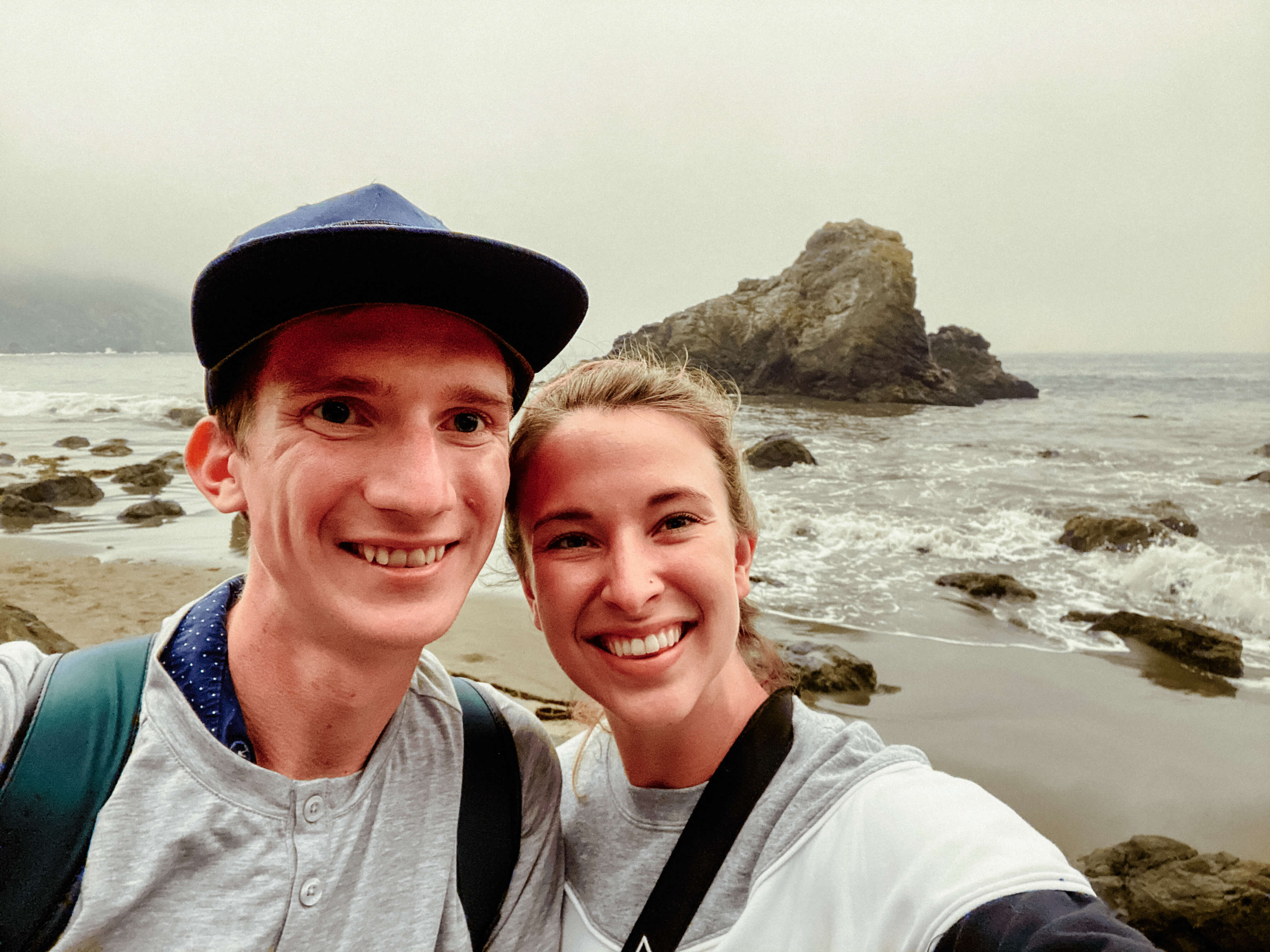
Brandon Krage is the owner and filmmaker behind Motus Weddings, an adventure wedding photography and videography studio based in Bailey, Colorado. Together with his wife and co-owner Aby, he has spent more than six years and 150+ weddings and elopements documenting couples on digital, 35mm film, Super 8mm and 16mm. They married in July 2021. More about Brandon and Aby.
Scripture quotations taken from THE HOLY BIBLE, NEW INTERNATIONAL VERSION®, NIV® Copyright © 1973, 1978, 1984, 2011 by Biblica, Inc.® Used by permission. All rights reserved worldwide.